AI Panels for Creative Agencies: Compare Concepts Before the Client Review
An AI panel lets an agency compare campaign directions, headlines, tone, and calls to action across defined audience segments before a client ever sees the work. The panel produces generated comprehension and stated-choice responses. A randomized comparison configured on that panel estimates differences in those generated responses, and it does not observe buyer behavior. An agency can spend three weeks on a campaign concept, lose the client review, then spend three more weeks on revisions. An early comparison cannot guarantee approval, but it can flag weak messages and unsupported audience assumptions before production. Human fidelity evidence is needed before the result is read as a real buyer effect.
Test the decision, not the client
A conference room may include a CMO, brand manager, and legal team. A 52-year-old executive may react differently from the 25-year-old consumers the work addresses.
Define the campaign action and the comprehension or stated choice you want to compare. Compare the same stimulus across relevant audience definitions.
Concept and copy comparisons
For a sportswear campaign aimed at Gen Z runners, a planning exercise might test:
- the core idea;
- the headline or tagline;
- the campaign tone;
- the call to action.
Ask which concept is understood, what feels credible, and what creates confusion. Do not turn simulated quotes into real-customer testimonials.
One planning example cuts twenty copy variants down to five finalists, with generated-response evidence on why those five led on the measures tested. Comparing alternatives against a defined audience before production is a documented concept-testing practice (Qualtrics, "Concept Testing: Definition, Methodology & Examples"). Brand-voice work can compare the same message in three voices, such as playful, authoritative, and conversational.
How do you define audiences beyond age?
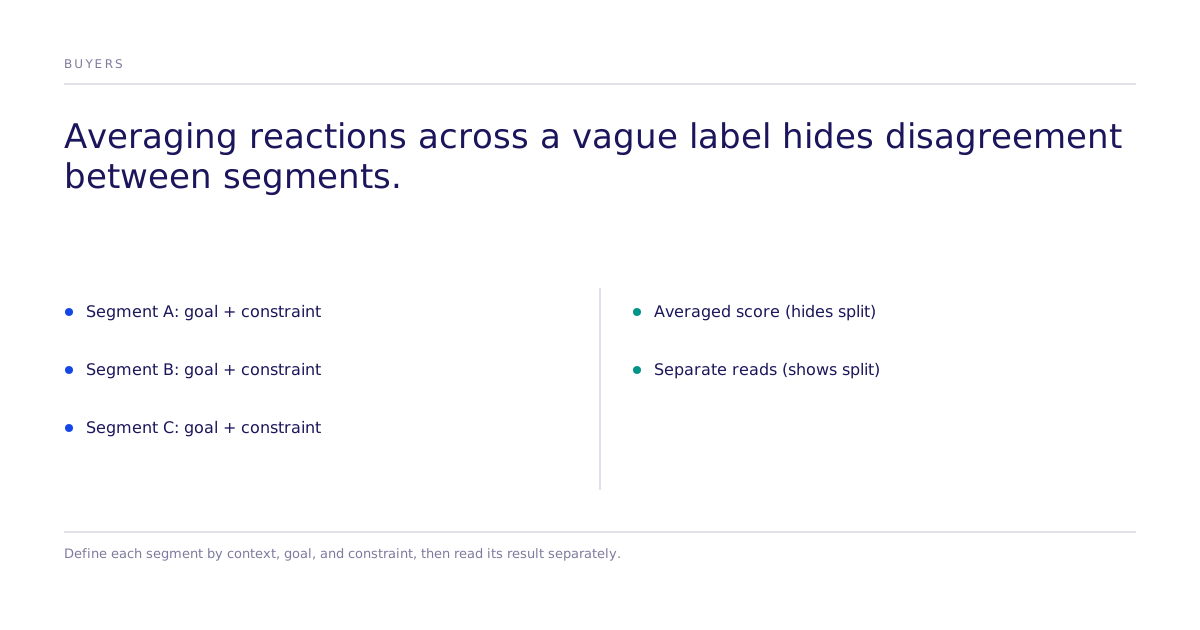
A label such as “women 25-34” is less useful than a decision-relevant audience definition that includes context, goals, category behavior, and constraints. Compare separate segments rather than averaging away disagreement.
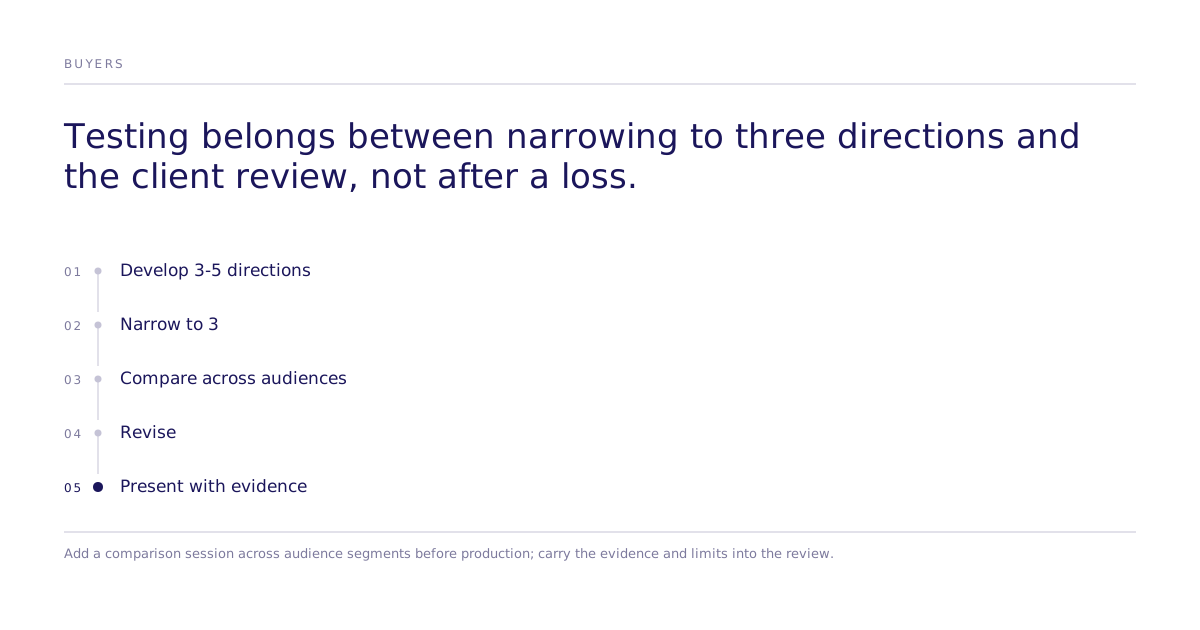
An example agency workflow
One planning workflow is:
- use early research to understand audience language;
- develop 3-5 directions;
- narrow to the strongest 3;
- compare the top 3 in a 2-3 hour session;
- revise;
- present the alternatives and the limits of the evidence.
The example adds half a day. It is not a Subconscious delivery-time or outcome guarantee. The method behind that comparison step is described on our research page.
Who stays accountable for creative decisions?
Audience evidence should sharpen an idea, not flatten it. Creative directors still decide what the brand should say. Clients still decide what to approve. Real experiments still determine how the work performs.
Start with one project and one clear decision. Use a randomized comparison on a configured AI panel to compare stated choices before spending on production. Then check the selected direction with human research or live behavior, because the panel's generated responses are not observed buyer behavior. Agencies ready to scope a pilot can book a working session.