The 48-Hour Agency Deck: Speed the Client Can't Poke a Hole In
A 48-hour deck survives client scrutiny when it keeps the same causal question fixed from the fast simulated read through a real-human check the agency names upfront. A client calls Wednesday afternoon. They need a competitive landscape read, an audience read, and a recommendation by Friday. The strategist's real decision is not whether to compress the timeline. It is whether to compress it in a way that survives the first hard question in the client meeting: "Is this real data?"
The bind agencies are already in
A traditional research cycle runs long because it stacks sequential stages: survey design and deployment (historically 1-2 weeks), fielding (2-4 weeks), analysis (1-2 weeks), and deck assembly (about 1 week). Add those up and a 5-9 week client timeline is common, a real disadvantage when a market question can't wait that long.
The wrong fix is skipping the check entirely: running a fast simulated read, presenting it as validated market data, and shipping it. If the pattern doesn't hold against real buyers, the gap surfaces after the client has already acted on it, and the account absorbs the damage, not just the deck.
Is "is this real data" a fair question to ask?
Clients who ask whether a fast synthetic read is real are asking a sound methodological question, not a hostile one. Research bodies now treat it as a mandatory disclosure issue rather than a matter of agency judgment: an ESOMAR Congress paper on synthetic data in marketing studies documents that synthetic respondents can collapse variance and, in some conditions, flip the sign of key relationships relative to real respondents (ESOMAR, "Synthetic Data in Marketing Studies"). As of the 2025 ICC/ESOMAR Code, disclosure of synthetic-data use in a study is now mandatory, not optional (GMO Research, "ESOMAR 20 | GMO Research & AI").
That is the exact gap a hedge like "directional insight, not statistically representative data" gestures at without resolving. A disclaimer explains what the data isn't. It doesn't give the client a way to check it.
Keep the causal question fixed from simulation to check
Subconscious can test or validate studies with real human participants. The practical advantage is that a team can move from simulation to real-human validation without changing the causal question. A deck built this way carries a check the client can ask for, not a hedge that dares them not to ask.
That distinction matters more than raw turnaround. A fast answer that can't be re-verified against real buyers is a bet the agency is making with the client's roadmap. A fast answer that names exactly how it would be re-verified is a claim the agency can stand behind.
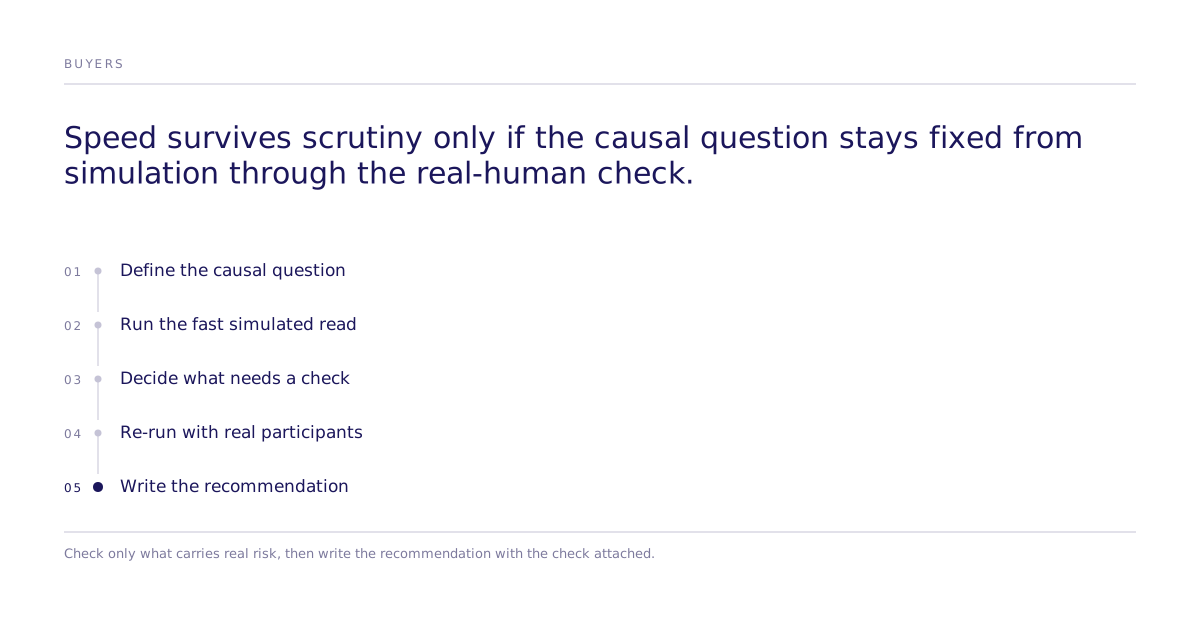
A workflow built around the check, not the deadline
The compressed timeline agencies describe tends to follow the same shape, whatever the exact hour count:
- Define the question before the method. Translate the client's business question into a specific, testable causal question: which action, tested against which alternative, for which buyer segment. Get this wrong and no amount of speed fixes it.
- Run the fast read first. A simulated experiment can surface a directional pattern in hours instead of weeks. Treat the result as a hypothesis, not a finding.
- Decide what needs a real-human check. Not every pattern needs one. A pattern that will drive a pricing decision, a message the client will run in market, or a recommendation with real budget behind it does.
- Re-run the same question with real participants. Because the causal question didn't change between stages, the check confirms or corrects the same claim the deck is about to make, rather than answering a different one.
- Write the recommendation with the check attached. State what was tested, on whom, and whether the simulated pattern held. That is what turns a directional read into something a client can act on.
A turnaround number needs its source named alongside it to be checkable. Agencies that structure delivery this way have described roughly a two-day span for the full cycle, brief to deck, as a planning example from their own workflow, not a guaranteed turnaround. Treat any specific hour or day count from a vendor as internal to that vendor's process, not as a Subconscious commitment.
Where does this approach fit, and where doesn't it?
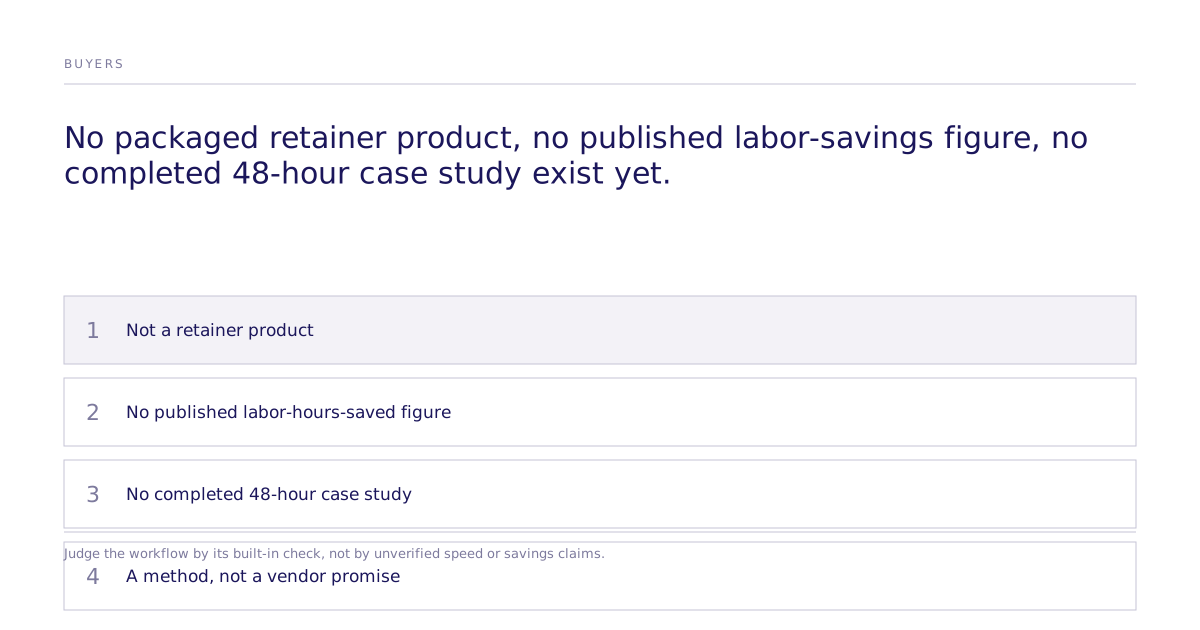
A savings number needs its limits published alongside it to count as evidence. Subconscious is not a packaged research-as-a-service product built for agency retainers, and there is no published figure for how many labor hours a causal-experiment workflow saves against a traditional cycle. There is also no case study yet of a full 48-hour agency engagement run this way. An agency evaluating this approach should treat any compressed-turnaround or cost-reduction number, from any vendor, as a claim to verify against its own pilot, not as a given.
What is supported is narrower and more useful for the client conversation: a causal experiment, once designed, can run in simulation and then be checked against real people without redesigning the study. Read more about how that method works in research, and see the operating model behind it in how we work.
Next step
Before promising a client a compressed timeline, run one internal pilot: take a real, low-risk research question, run it as a simulated experiment, then check it against real participants before it ever reaches a deck. That pilot shows what the compression actually costs, in accuracy and in effort, before a paying client finds out first. Book a walkthrough to scope a pilot against a live client question.