AI for UX Researchers: Add Speed Without Losing Depth
AI adds speed to UX research by running behavioral simulations that narrow concepts, segments, and questions before human researchers validate the survivors through real sessions. UX research teams face two demands at once: move faster and preserve rigor. Behavioral simulation can accelerate discovery and pre-testing, while human researchers retain responsibility for study design, interpretation, and validation.
Where AI can help a UX researcher
AI tools cover several jobs. Some synthesize transcripts, tag themes, analyze open text, or help draft interview guides. Simulated-buyer research serves a narrower purpose: comparing product or message actions across defined audiences before a team commits to a build or full human study.
Useful applications include:
- early discovery that turns a broad problem into testable hypotheses;
- concept pre-testing before prototype investment;
- comparison across audience definitions;
- interview-guide rehearsal to find ambiguous or leading questions;
- rapid checks between larger human studies.
A research process that keeps humans in the loop
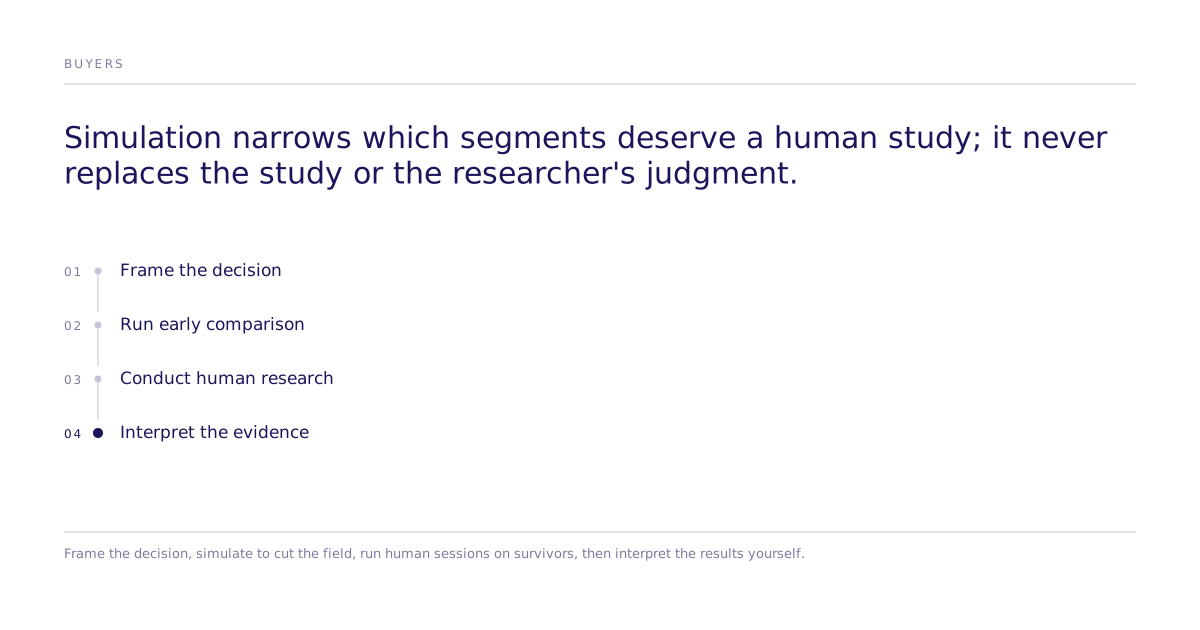
Frame the decision
Name the product action, target audience, alternatives, and behavior to compare. A good brief names which decision the research must change.
How do you run an early comparison?
Use decision-specific experiments to compare concepts or messages. If the team is considering five real user sessions for each of four segments, an early simulation can help decide which segments and questions deserve that investment.
Why is human research still necessary?
Real participant work remains the validation layer. Focus the study on the hypotheses that survived the early screen. No simulated result replaces observation of actual use, individual context, or the relationship between researcher and participant.
Interpret the evidence
Automation can reduce transcription and first-pass coding work. The researcher still checks themes against raw material, resolves contradictions, and translates findings into product decisions.
What limits should UX teams keep visible?
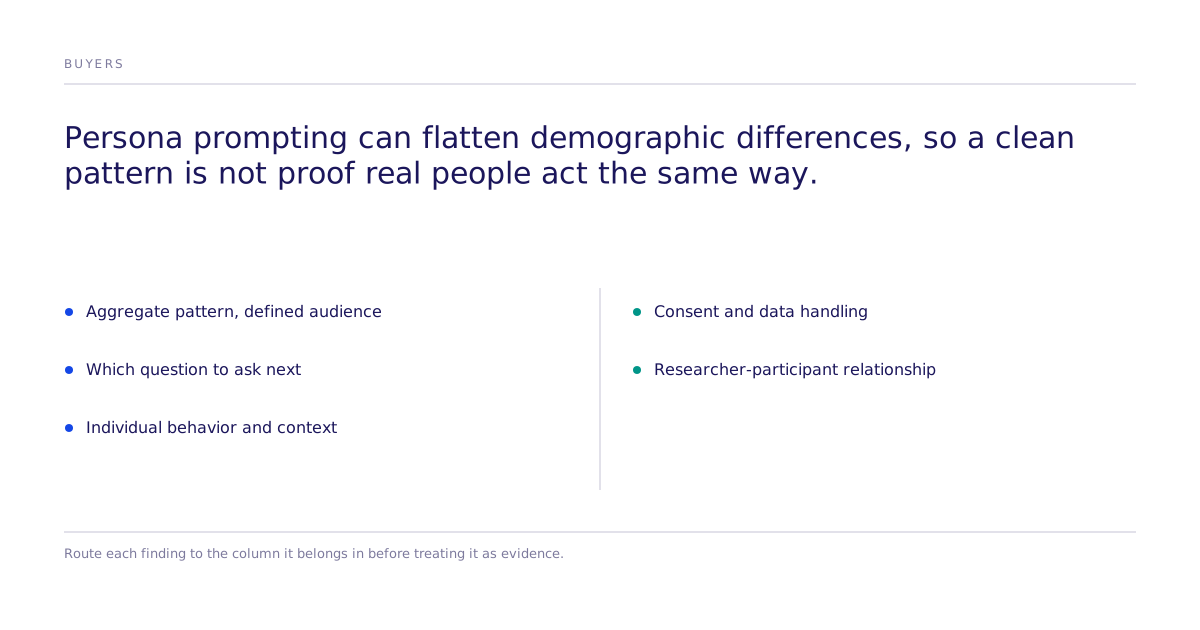
Aggregate patterns are easier to reproduce than individual behavior. Persona prompting can collapse variance, flatten demographic differences, and react to small prompt changes (Investigating Persona Collapse and Homogenization in Large Language Models, arXiv). A simulation may identify a question worth asking without proving that real customers will act the same way.
Privacy also requires a separate review. Do not send participant data to a third-party system until the team has confirmed consent, data handling, retention, and the applicable legal requirements. Synthetic audiences reduce some collection concerns, but they do not make every workflow compliant by default.
The best use of AI is not less research. It is earlier comparison, better questions, and more human attention on the decisions that need it.