How to Build Synthetic Customer Panels for Research
A synthetic customer panel is a standing set of AI-simulated respondents, calibrated to represent real customers, that a team can query on demand instead of recruiting participants for every research question. The decision that actually matters isn't whether to build one. It's whether the panel's answers get checked against real outcomes before they inform a launch, price change, or message, or whether the team trusts them on persona consistency alone. Skip that check and a panel can return a confident, wrong answer with no warning before the decision ships.
Building the panel
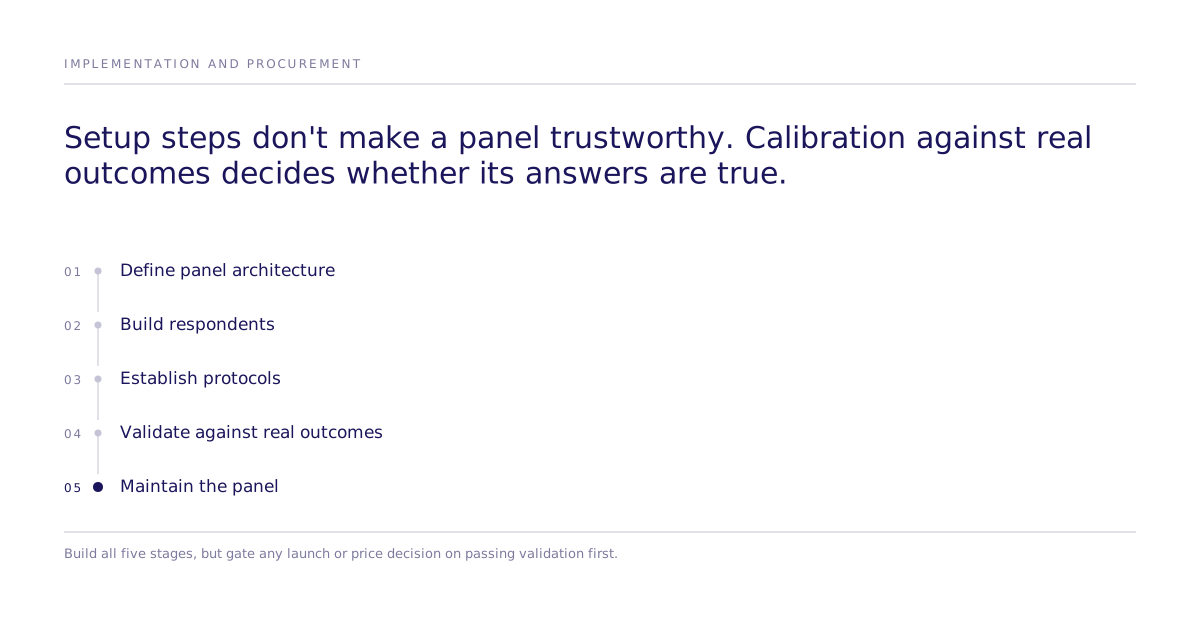
How do you define the panel architecture?
Deciding what the panel needs to represent is a segmentation exercise, not a respondent exercise. Most B2B companies land on 3-5 segments that actually matter for decisions. A SaaS company's split might run along company size, industry, role, and buying stage, while a consumer brand's split is more likely built from demographics, purchase behavior, and brand relationship. For each segment, map the dimensions that matter to the research question: functional needs, decision criteria, information sources, competitive context, and emotional drivers. A workable starting panel runs 8-15 simulated respondents: go below 8 and real variation disappears, and past 15 the extra respondents go unused.
How do you build the individual respondents?
Each simulated respondent needs a profile (demographic and firmographic basics), calibration data (interview transcripts, CRM notes, survey responses, support tickets, and behavioral data from real customers in that segment), and personality variation. Panels that vary the analytical decision-maker against the intuitive one, or the early adopter against the skeptic, produce more realistic spread than a panel built from a single archetype per segment. Depth accumulates with use: a respondent that has been through 20 sessions carries richer, more specific context than a fresh one.
Establish research protocols and maintenance
A panel without protocols becomes a toy. Standard question formats for reaction testing, competitive probing, and journey mapping, plus documentation standards (key themes, segment-level patterns, recommended actions), keep sessions and findings comparable over time. Panels also need upkeep: quarterly reviews to check the panel still reflects current segmentation, data refreshes as new customer interactions come in, and retirement of respondents built for segments that no longer exist.
What step decides whether any of it is real research?
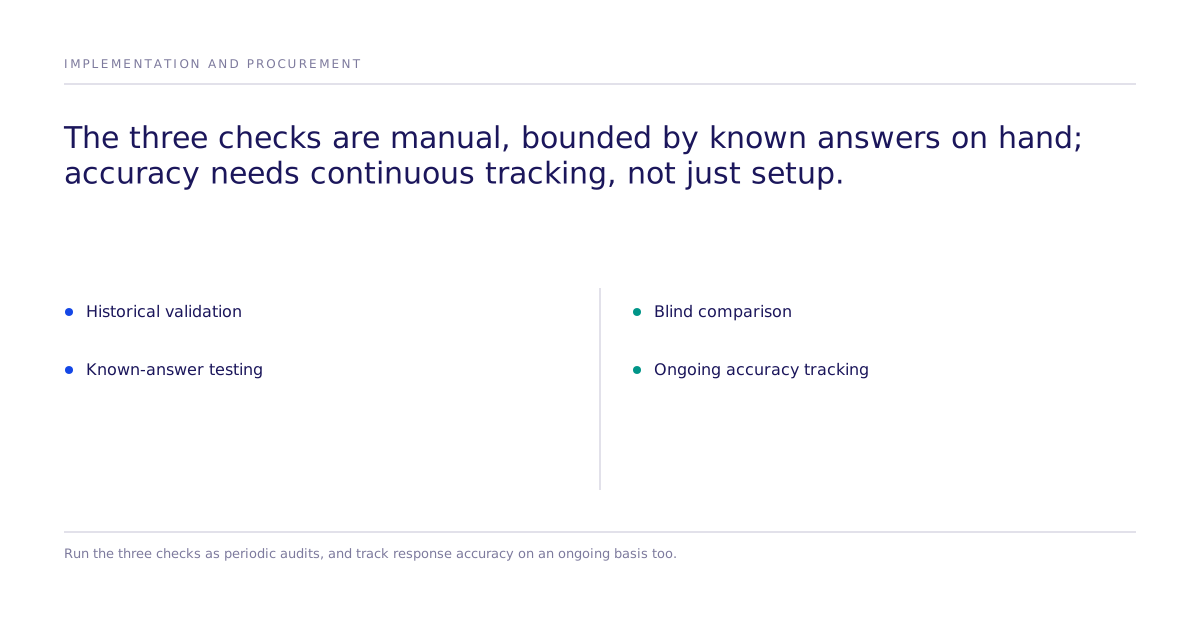
Architecture, respondent design, and protocol all matter, but none of them determine whether the panel's answers are true. That's calibration: testing the panel against known realities and adjusting until it matches. In practice this means historical validation (presenting a scenario with a known outcome and checking the match), known-answer testing (asking questions with an answer already known from prior research), and blind comparison (having someone who works with real customers review panel output without being told it's synthetic).
Skip this step and the risk isn't a bad answer. It's a good-sounding one. Independent UX research documents the same failure mode in AI-generated research more broadly: simulated respondents can produce plausible, internally consistent answers that diverge from what real people would say, with no signal in the output itself that marks the divergence (ACM Interactions, "The Synthetic Persona Fallacy: How AI-Generated Research Undermines UX Research").
What "calibrated" needs to mean
Historical validation and blind comparison are useful spot checks, but they're manual and only as good as the known answers on hand. The underlying question is measurable: how closely does a simulated respondent's answer track what a real person would actually say. Independent research has measured this directly, testing how accurately AI agents reproduce real individuals' survey responses across a large sample (Stanford HAI, "AI Agents Simulate 1,052 Individuals' Personalities with Impressive Accuracy"). That's the same class of question a calibrated panel has to keep answering, on an ongoing basis, not just at setup.
Subconscious approaches this from the causal-testing side rather than the persona side: it runs controlled experiments comparing specific actions, such as one price or one message against another, on a simulated population, and reports the directional comparison with the uncertainty the study design supports. Subconscious can also test or validate a study with real human participants, so a team can move from a simulated experiment to real-human validation without changing the underlying question being tested. Read how a study moves from a simulated experiment to a validated result.
What this doesn't replace
Subconscious does not offer a self-service builder that replaces the five-stage process above, and it isn't a source of automated next-step recommendations as a standard study output. It answers one narrower question well: given a defined set of actions, which one moves the outcome, and does that answer hold up against real human behavior. A team still has to decide what to test, define the population, and interpret the result inside its own decision. For research questions that are exploratory or discovery-stage rather than a comparison between defined actions, recruited real-participant research still does that job better than any simulated panel, calibrated or not.
Next step
If a panel is already running and the open question is whether Step 3 is solid, the useful next move is testing one real decision, such as a pricing change or a messaging choice, as a controlled comparison rather than a persona reaction. Review the published evidence behind Subconscious's method, or book time to walk through a specific calibration question.