An Automated MMM Says Shift Budget. Should You Act on It?
A marketing mix model (MMM) fits historical spend and outcome data to estimate each channel's contribution, then automates the data prep and Bayesian modeling choices behind that fit. Newer AI-driven MMM tools go further: upload data, get carryover and saturation assumptions selected automatically, and simulate "what-if" budget shifts in minutes instead of weeks.
That speed changes the decision a CMO actually faces. The question is no longer "how long will this model take to build." It is: when the model says shift budget from channel A to channel B, which of the assumptions that would make that a causal claim actually hold?
What the automation actually does
An automated MMM agent typically handles three steps end to end:
- Data prep. Reconciling platform-reported spend and conversions (TikTok vs. GA4, for example) into one modeling table.
- Model fitting. Choosing Bayesian priors and functional forms for carryover and saturation effects, tailored to the uploaded data.
- Scenario simulation. Running "what-if" budget reallocations against the fitted model and returning a projected ROI change.
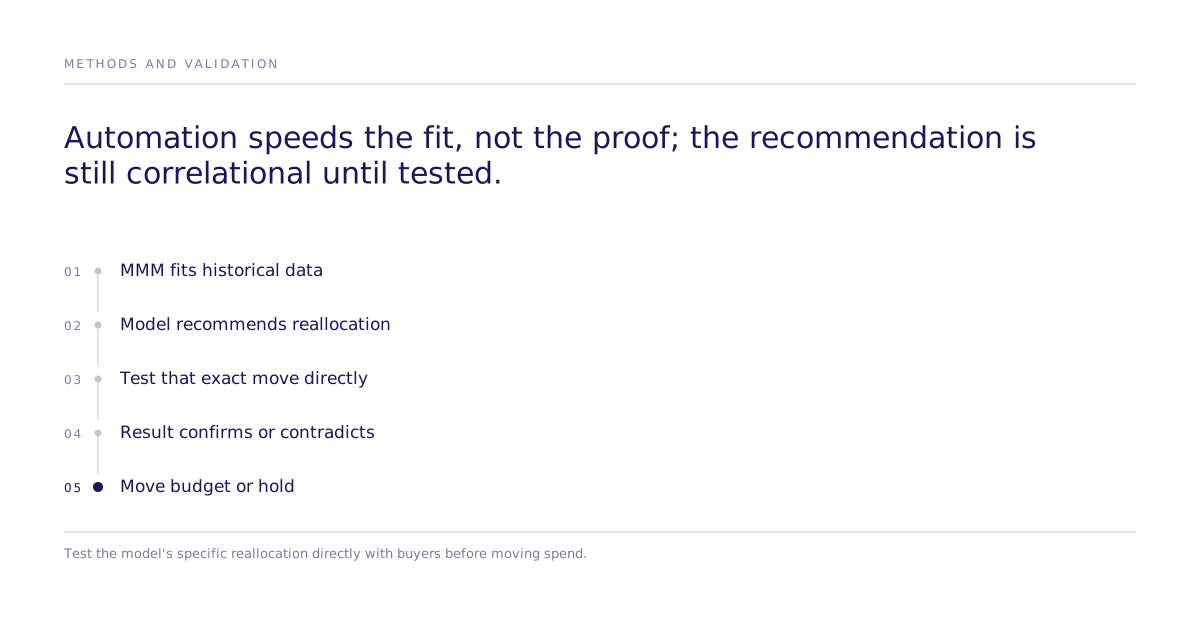
A number without its limits attached is marketing copy. Automating those three steps removes weeks of manual modeling labor. It does not change what the underlying model can prove. An MMM, automated or not, still estimates channel contribution from observational spend and outcome data. Faster fitting does not verify the assumptions, such as no unobserved confounding and correct adstock/saturation form, that would make those estimates causal.
What is the gap between a faster model fit and a causal answer?
Correlation vs. causation is the standard failure mode in marketing mix modeling: two channels that ran simultaneously, or a channel that rode a seasonal demand spike, can look like strong performers in a regression without actually driving the outcome (Recast, "How Do Causal Directed Acyclic Graphs (DAGs) Work in Marketing Mix Modeling?"). A model that reconciles TikTok and GA4 data automatically, then simulates a budget shift in seconds, is still answering "what pattern fit the historical data," not "what happens if I actually move the budget."
Some MMM approaches address this directly by incorporating experimental data, geo-holdouts, or documented interventions into the model design (Lifesight, "Causal Marketing Mix Modeling (MMM): The Complete 2026 Guide"). The practical question for a marketing analytics lead is what to do with a specific reallocation decision, say moving spend from paid search to connected TV, when the MMM's recommendation for that exact move hasn't itself been tested.
Where does a causal check fit before the budget moves?
Subconscious runs causal, discrete-choice-style experiments that test how buyers respond to a specific offer or message directly, rather than inferring it from historical spend patterns. Applied to an MMM output, that means testing the buyer-facing consequence of the reallocation the model recommends, such as the resulting creative or offer change, before spend actually moves. The misses sit next to the hits in this description, on purpose. It does not test channel-level incrementality itself; a geo-holdout or lift test is the right instrument for that question.
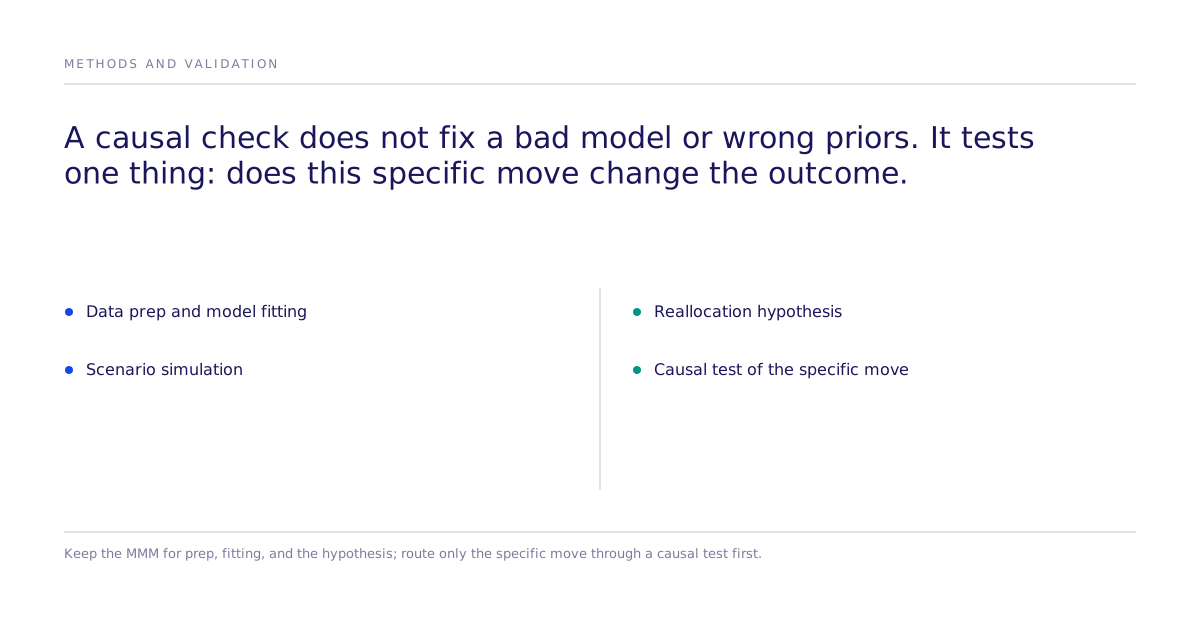
Naming what a tool doesn't do is what lets a buyer check the claim against the tool. This is a validation layer, not a replacement for the modeling step. Subconscious does not build or replace Bayesian time-series MMM software, does not do automated data wrangling across ad platforms, and does not generate model diagnostics or experiment-tracking artifacts. What a causal experiment adds is a second, independent read on the one decision that matters: does this specific reallocation actually move the outcome.
A simulated experiment against a modeled population can test the reallocation decision quickly, with results scoped to that simulated population; when the decision carries enough budget risk to warrant it, Subconscious can test or validate studies with real human participants without changing the causal question.
What this does not solve
Stating the failure mode here is what lets a team check it before they rely on it. A causal check does not fix a badly specified MMM, and it will not diagnose why a model's priors were wrong. It answers one narrow question: does the specific action the model recommends hold up when tested directly. Teams still need the MMM to generate the reallocation hypothesis; the causal experiment is what a team runs before committing that budget.
Next step
Before moving spend on an automated MMM's recommendation, isolate the specific reallocation decision and run it as a controlled test rather than accepting the model's fit as fact. See Subconscious's research for how these studies are designed, or talk to the team about testing a specific reallocation before it goes live.