AI Interview Practice: What Simulation Can and Cannot Test
Interview practice works when it exposes weak answers, vague rubrics, and missing follow-up questions before a real interview. Generic question lists rarely reproduce the specificity of a role, company, or evaluation process.
Subconscious is a causal behavioral platform, not an interview-coaching product.
Candidate rehearsal
Define the interviewer by role, seniority, interview type, and known evaluation criteria. A technical interview at a Series B startup differs from a behavioral cycle at a large company; the scenario should reflect that without impersonating a real person.
A manager might ask how a candidate would respond when a team of eight engineers includes two people publicly disagreeing about an architectural direction. A follow-up might challenge whether the candidate described their own work or the team’s work.
Run the same interview three times. Compare whether the answer becomes more specific, concise, and evidence-based. A question about leaving a role after eight months tests whether the candidate can explain a difficult fact directly.
Hiring-team rehearsal
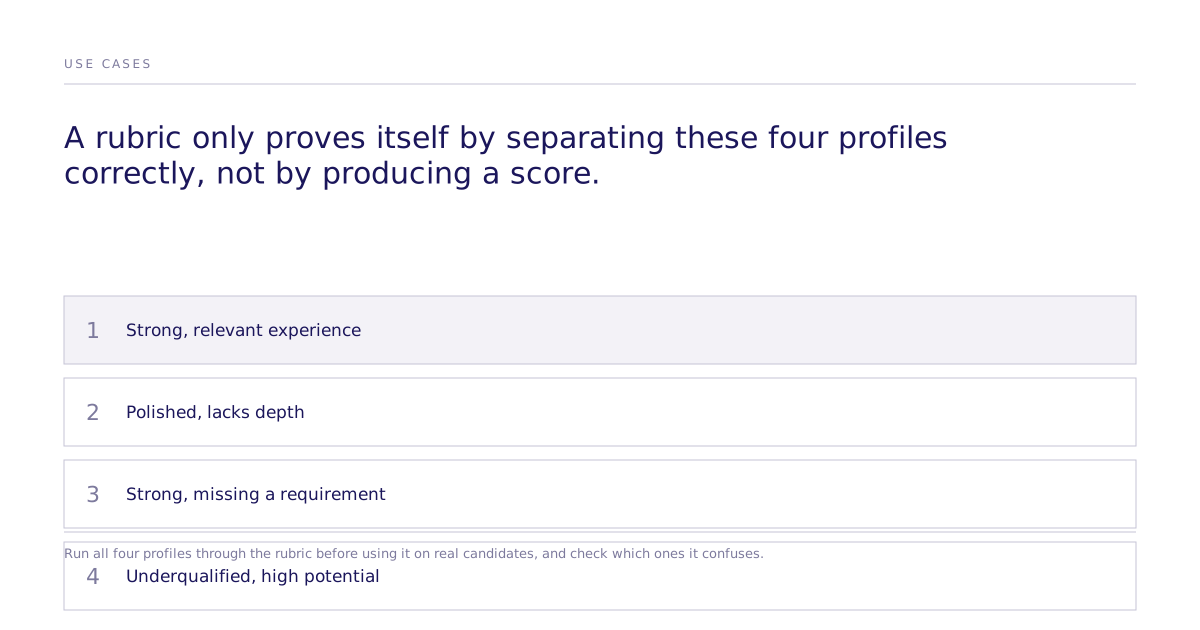
Hiring teams can test whether a rubric distinguishes:
- a strong candidate with relevant experience;
- a polished candidate who lacks depth;
- a technically strong candidate who does not meet a stated requirement;
- an underqualified candidate with high potential.
The exercise can also reveal questions that reward familiarity with one background rather than the capability the job requires, the kind of unequal effect the federal Uniform Guidelines on Employee Selection Procedures direct employers to check for in any selection process (29 CFR Part 1607). New interviewers can practice probing, redirecting, and applying the rubric consistently. Reviewing how Subconscious structures a causal read on a decision shows what evidence-backed validation looks like before applying the same standard to a hiring rubric.
"A selection rate for any race, sex, or ethnic group which is less than four-fifths ( 4/5 ) (or eighty percent) of the rate for the group with the highest rate will generally be regarded by the Federal enforcement agencies as evidence of adverse impact"
Uniform Guidelines on Employee Selection Procedures, 29 CFR Part 1607 (source)
"A selection rate for any race, sex, or ethnic group which is less than four-fifths ( 4/5 ) (or eighty percent) of the rate for the group with the highest rate will generally be regarded by the Federal enforcement agencies as evidence of adverse impact"
Uniform Guidelines on Employee Selection Procedures, 29 CFR Part 1607 (source)
What simulation does not reproduce
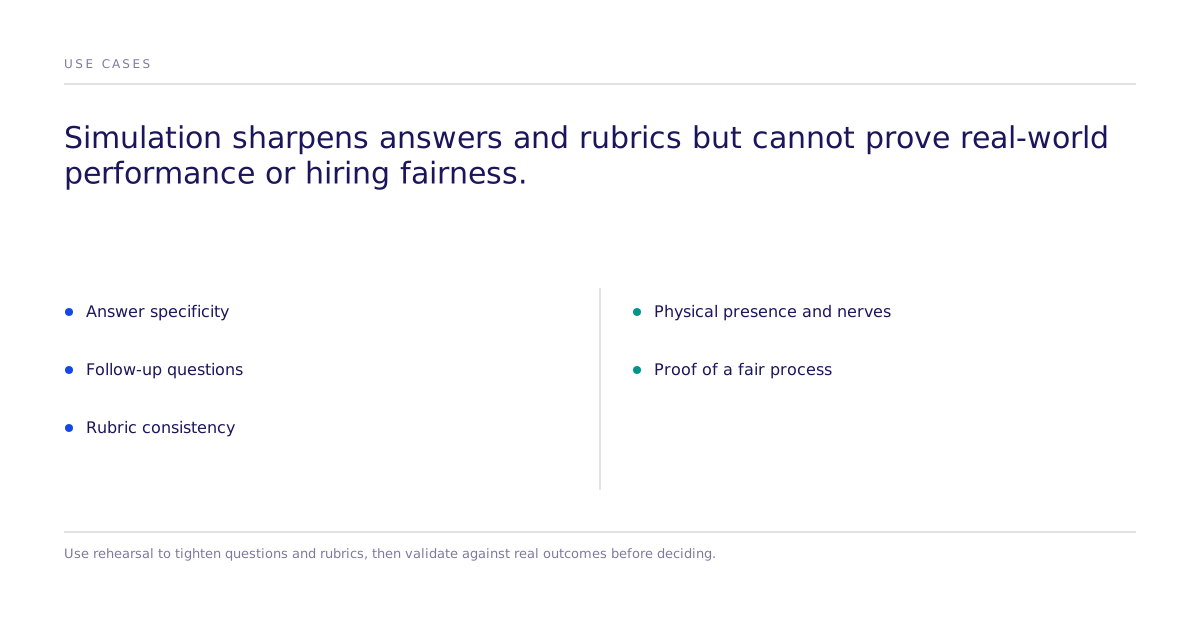
Physical presence, body language, nerves, and human connection affect real interviews. A simulated interviewer is more consistent than a person whose context changes across a week of candidates.
Do not use a synthetic rehearsal as proof that a candidate will perform well or that a hiring process is fair. Validate rubrics against real outcomes, audit adverse effects, and keep accountable people in every hiring decision, the same discipline Subconscious applies when it moves a simulated result to real-human validation before a decision ships. The useful output is a better question or clearer rubric, not an automated employment judgment.