AI Purchase Intent Research: Testing Trade-Offs Before You Launch
A product marketing or GTM leader greenlighting a launch, pricing tier, or competitive claim needs to know how target buyers actually trade the new offer against what they use today, not a stated purchase-intent score. Launch spend, sales messaging, and pricing commitments built on inflated stated-intent numbers rarely survive contact with real budget constraints and switching costs.
Why stated purchase intent overstates real demand
Asking someone to rate purchase likelihood on a 5-point survey scale captures a fleeting sentiment, isolated from budget, existing alternatives, and the complexity of the evaluation itself.
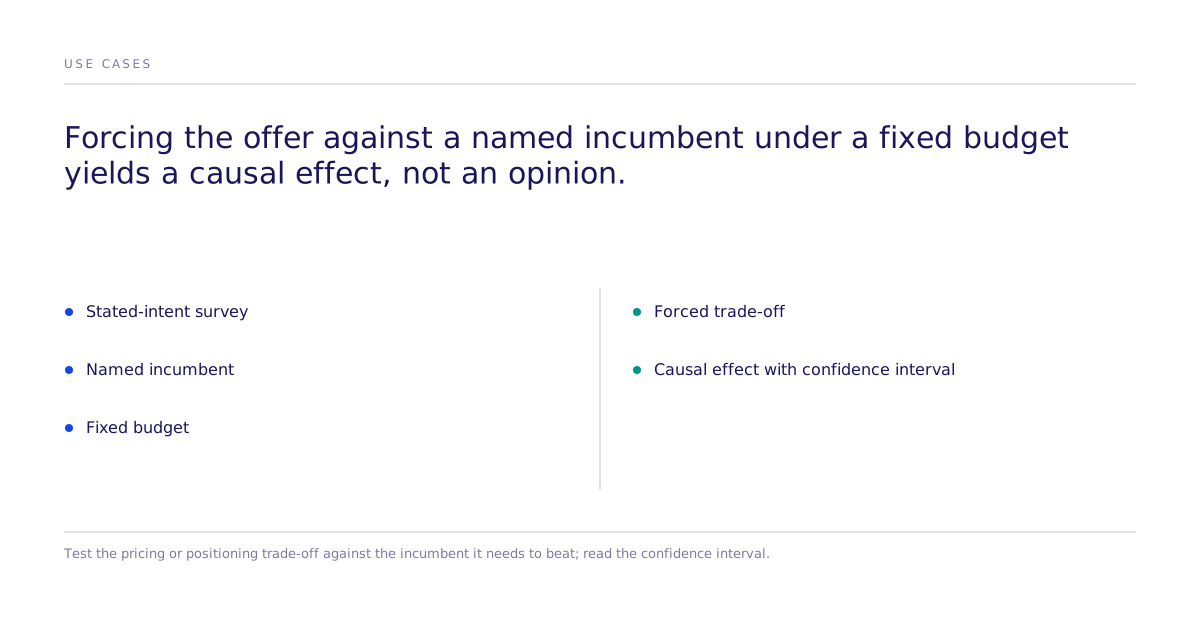
The gap between what people say and what they do is where most launches fail (Journal of Economic Behavior & Organization). In a survey, respondents are optimistic: the concept sounds appealing and they want to be helpful. Actual purchases get made more cautiously, constrained by a fixed budget, existing habits, and a pull toward whatever the buyer already uses. A stated-intent question misses this friction because it never forces a trade-off: it asks for an opinion, not a decision.
Testing the decision instead of the opinion
Buyers don't evaluate a product in isolation; they weigh it against a specific incumbent alternative and a fixed budget. A controlled discrete choice experiment puts that same trade-off in front of a target audience segment: the new offer against the named alternative, with price, features, and switching cost all forced into the decision. The output is a causal effect on choice, reported with a confidence interval, not a single intent score.
That structure supports the trade-offs a purchase decision turns on:
- The evaluation itself. The experiment can hold constant a target buyer's stated pain points, budget, and current tool stack, then measure how the new offer changes their choice relative to what they already use.
- A named competitive set. Testing against an actual incumbent, not a hypothetical, surfaces which specific attribute (price, a feature, a support model) moves the choice in either direction.
- Price sensitivity. Instead of asking whether a price point is acceptable, the experiment varies price across the discrete choice design and measures the point at which demand for the offer drops, holding the rest of the decision fixed.
Where this changes a launch decision
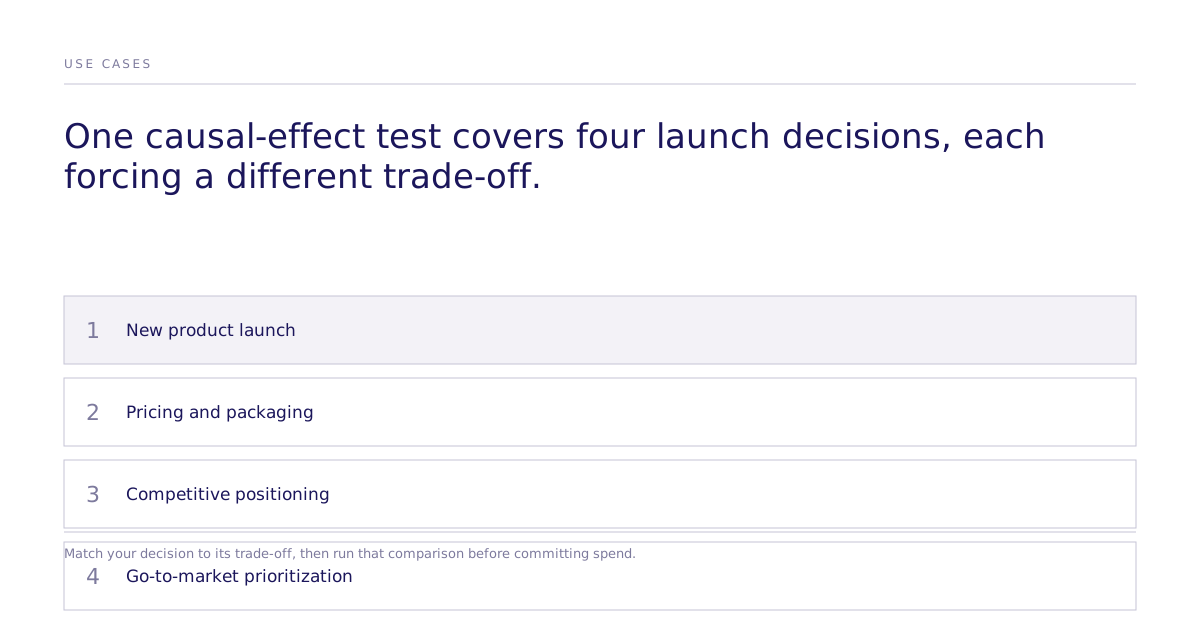
New product launches. Before finalizing a roadmap, test the proposed product against the incumbent it would need to displace, and measure the causal effect on choice, not simply whether the audience is favorable to the concept.
Pricing and packaging. Compare pricing tiers and packaging models, such as usage-based against flat subscription, and measure how the causal effect on choice differs by segment.
Competitive positioning. Rather than waiting on a quarter of closed-lost reasons, test the specific trade-off between the offer and the competitor it's losing to, and see which attribute is driving the result.
Go-to-market prioritization. Identify which features or messaging points produce the largest causal effect on choice across market segments, so marketing spend follows what actually moves demand.
Limitations
Publishing the causal effect without its limits reads as marketing copy. A discrete choice experiment measures the causal effect of the trade-offs built into its design. It does not replace watching an actual purchase happen in the market or tracking revealed sales behavior over time. Treat it as evidence for the decision in front of you, whether to greenlight a launch, a price, or a positioning claim, not as a forecast of total market performance.
When a launch decision is big enough to warrant it, the same causal question can move from a simulated audience to real-human validation without changing what's being tested, so the comparison between simulated and human-baseline results stays apples to apples.
The fastest way to see the difference from a stated-intent survey is to run one comparison directly: test a specific pricing or positioning trade-off against the incumbent it needs to beat, and look at the confidence interval instead of a single score.