How to Test Enterprise Pricing and Positioning Before Launch
A B2B product marketing or pricing team can test a proposed price, package, or position as a controlled experiment with the enterprise buyer segment. The result estimates the causal effect of each action with confidence intervals. It does not depend on treating a few sales conversations as market evidence.
That distinction matters when CIOs or VP-level economic buyers are hard to reach. A weak decision can consume months of go-to-market work and budget before the team learns the target segment would not act on the offer.
Test the action, not the room
The central question is not whether a team can assemble an executive panel. It is which concrete commercial action the target segment is more likely to choose.
A historical planning example illustrates the recruitment burden: convening eight to twelve senior buyers for a 90-minute focus group requires access and shared availability. A planning number stated without its scope is just marketing. Those figures are planning examples, not current Subconscious delivery terms or a requirement of the method.
Recruiting senior B2B respondents also creates a direct research cost. CleverX treats the cost per completed B2B interview as an explicit budget item (CleverX, "Cost per completed B2B interview: what you actually pay").
When recruitment cannot answer the question before budget is committed, the alternative should not be an anecdote from a sales rep or a conference conversation. A controlled experiment can compare the actions under consideration against the segment they are meant to influence.
Three decisions that benefit from a causal test
How do you test enterprise pricing?
Compare specific price points or commercial terms. Define the behavioral outcome in advance, such as choosing one offer over the control. The result shows the estimated causal effect for the segment and the uncertainty around that estimate.
How do you test enterprise packaging?
Compare the actual bundles a buyer would evaluate. Keep the features, terms, and alternatives concrete so the experiment tests a buying action rather than a general opinion.
How do you test enterprise positioning?
Compare complete claims or messages under the same experimental conditions. This separates the effect of the position from account-team enthusiasm, conference feedback, or other uncontrolled inputs.
Build the test around the buyer's choice
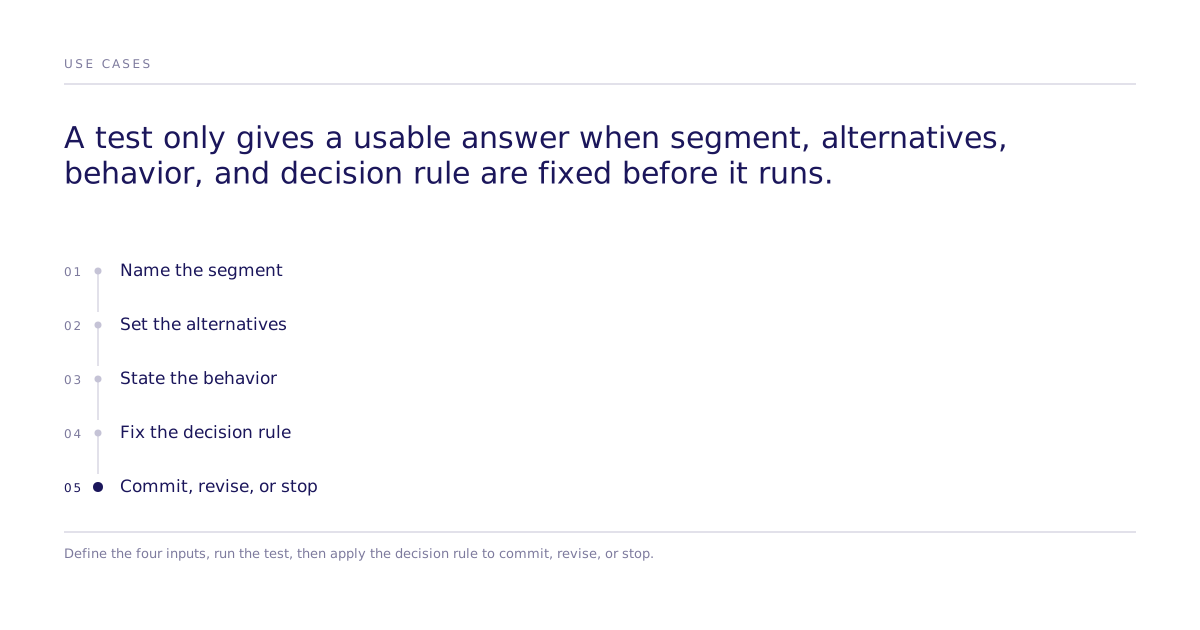
A useful enterprise-market experiment starts with four definitions:
- The segment. Name the relevant enterprise buyer role and market conditions without claiming to represent a specific individual.
- The alternatives. Specify the prices, packages, or messages the buyer will compare.
- The behavior. State the choice or action the experiment is meant to affect.
- The decision rule. Decide what effect and uncertainty would justify committing budget, revising the action, or stopping.
Subconscious can run controlled studies against a person-level audience graph covering 800 million real people. A reach number means little without its limits stated next to it. That reach is distinct from a recruitable panel of named participants. When a result needs confirmation from real people, the same causal question can move from a simulated study to real-human validation without redefinition.
Keep named executives in the right role
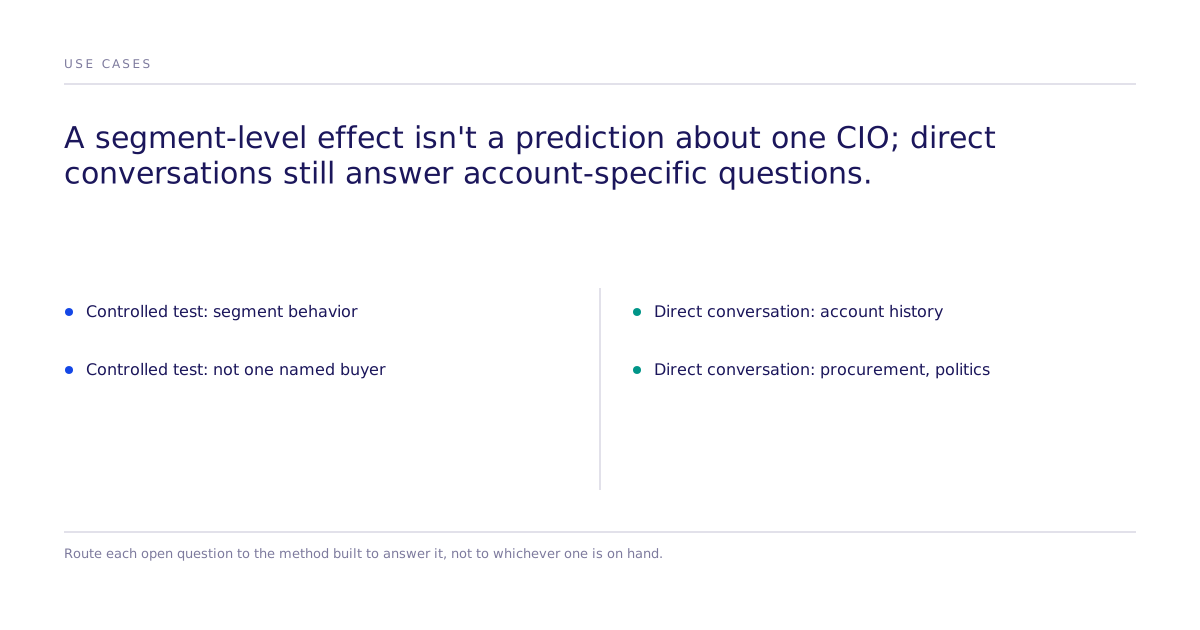
Naming what a segment-level result cannot do is what lets a buyer check it against their own account. A segment-level causal effect is not a prediction about one CIO, one VP, or one account. Subconscious does not recruit or convene a panel of named individuals, and the experiment does not replace direct executive relationships.
Direct conversations still matter when the decision depends on account history, procurement constraints, internal politics, or facts unique to a named buyer. The controlled test answers a different question: which action changes behavior across the segment, and how certain is that estimate?
Set a decision gate before committing budget
This approach fits when the team has concrete alternatives, a defined enterprise segment, an observable buyer choice, and a costly launch decision. The misses sit next to the hits on the public record here. It is a poor fit when the need is a relationship with a named executive or an explanation of one account's internal process.
Review the experimental process before choosing the actions and decision rule. If the question is ready to scope, book a working session around the price, package, or position the team must decide.