AI Decision Support for Startup Founders
Founders make decisions across every function, every day. The risk is treating one AI response as an expert network.
Use simulation to rehearse questions and test buyer-facing actions. Use accountable people for finance, law, security, architecture, and other decisions where credentials and current evidence matter.
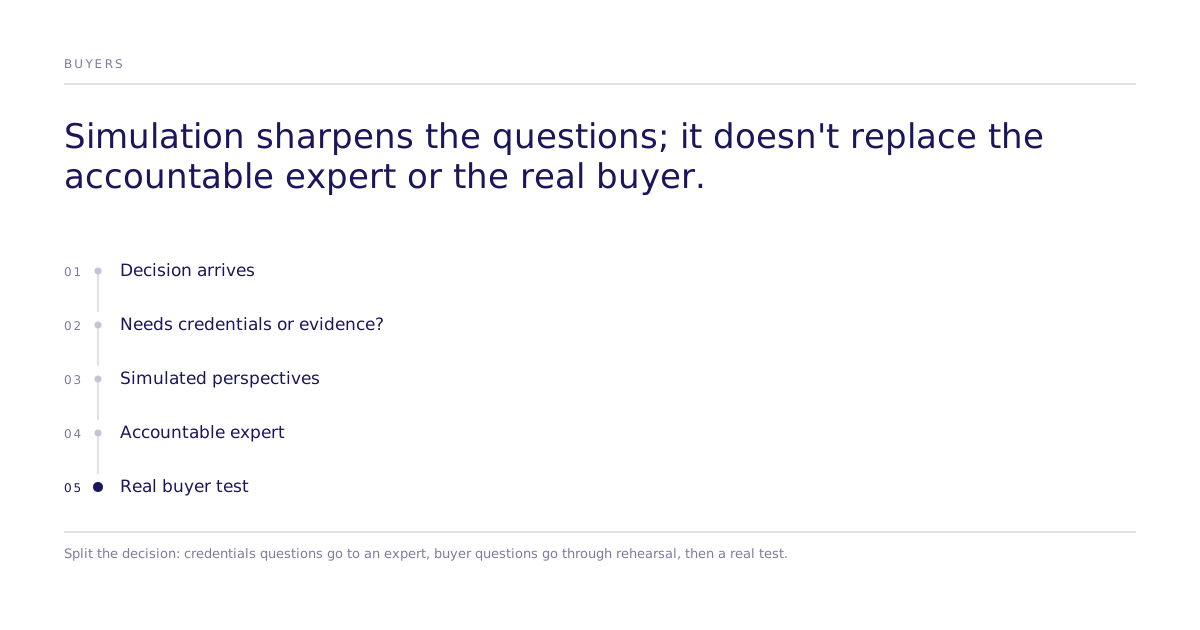
Sort the week's decisions
A founder's week may include pricing on Monday, investor preparation on Tuesday, architecture on Wednesday, compliance on Thursday, and a choice between two go-to-market approaches on Friday. All five decisions need different evidence.
Product, pricing, messaging, and go-to-market alternatives can support decision-specific experiments. A real finance professional should review the model. Engineers should own architecture. Qualified security and legal staff should own compliance.
Use perspectives as rehearsal
An investor perspective
A capability without its limits stated is marketing copy. A prompt such as, "I'm raising a Series A at $15M pre-money. What are the three biggest concerns?" can surface questions. It cannot know a current investor's portfolio, appetite, or valuation view.
What is a target-customer perspective?
A study might define a vice president at a company with 200 employees and compare buying messages or product concepts. The audience definition is an experimental input, not a living copy of a real buyer.
A domain-expert perspective
Naming what a tool cannot do is what lets a buyer check the claim before relying on it. AI can prepare a list of questions for a real regulatory, data, or supply-chain expert. It should not give final compliance or technical advice.
A competitor perspective
This tool's misses appear in the open, next to its hits. A simulated competitor lens can challenge positioning. It cannot reveal a competitor's private plan or predict its next action.
What is a senior-operator perspective?
A founder building a first sales team with two account executives might use a 90-day plan as a review artifact. An experienced operator still needs to assess the company's actual team, pipeline, and market.
Five decision rehearsals
Monday: pricing
Compare a per-user and usage-based model with three perspectives: the target buyer, an investor, and an operator. Do not let the exercise claim cannibalization, spending changes, or financing effects without real data. A thirty-minute review can produce three sets of questions. It is not three consulting projects.
Tuesday: pitch preparation
If a Series A meeting is on Thursday, rehearse objections, revise the deck, and ask which evidence would change the critique.
Wednesday: architecture
When engineers are comparing two database approaches, use AI to organize the tradeoffs and failure modes. The technical team must inspect both options and own the decision.
Thursday: enterprise sales
For a buyer with 5,000 employees, rehearse security-review questions. Answer them from approved security evidence, not generated text.
Friday: go-to-market
Compare two approaches, such as self-serve and sales-led, through three defined frameworks. Then test the buyer-facing action with the intended audience and outcome.
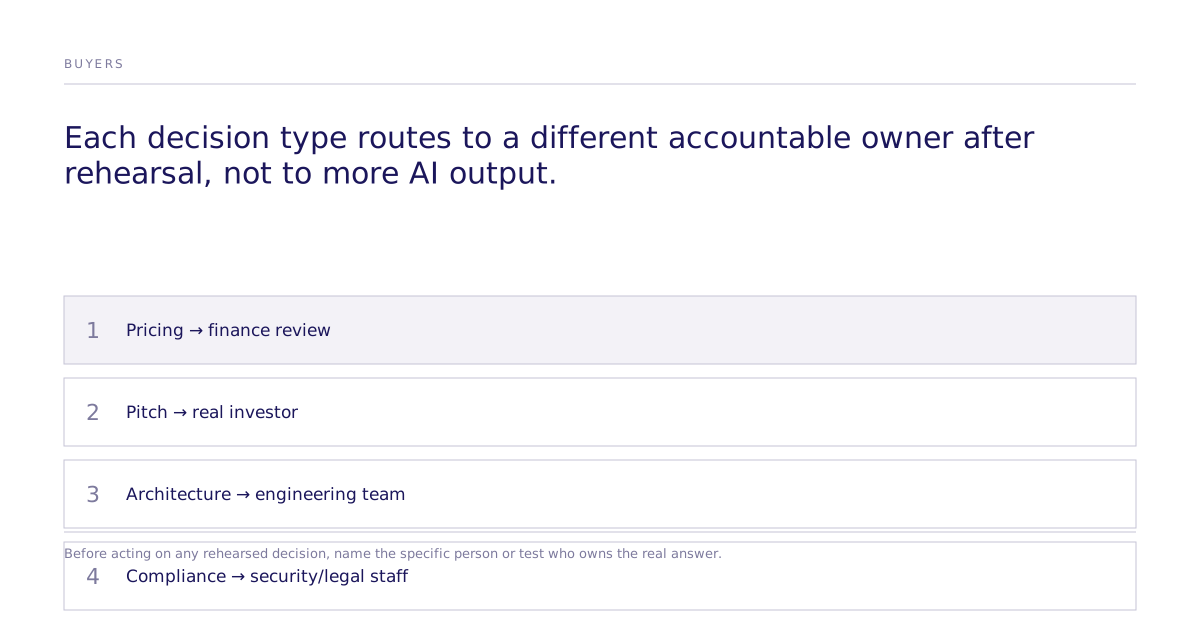
What can't simulation replace?
Publishing what the tool cannot do belongs in this record too. Real networks take years to build. Advisers provide social capital, emotional support, accountability, current information, and unexpected connections. AI does not introduce a founder to a customer, accept professional responsibility, or know what changed inside a market yesterday (Greenberg and Mollick, "Sole Survivors: Solo Ventures Versus Founding Teams," SSRN).
Start with the three people you would call most often if access were unlimited. For many founders, that means an investor, a target customer, and a domain expert. Use three simulated perspectives to improve the questions you bring to those people this week.
The goal is not to replace the relationship. It is to arrive prepared and test the decisions that can be tested.