Rehearsing a VC Pitch Isn't the Same as Proving the Numbers Behind It
The difference is evidence: rehearsal sharpens how a founder delivers a pitch, while proving the numbers behind it requires causal studies that validate the pricing, demand, or positioning claims the pitch relies on. A founder can rehearse every objection an investor might raise and still walk in with an unvalidated pricing, demand, or positioning claim under the pitch. Rehearsal tests whether the story holds together, not whether the market claims inside it are true. That gap is what a VC's pattern-matching finds.
Why pattern-matching finds the gap
Investor meetings are asymmetrical. The founder knows the company; the VC has sat through hundreds of similar pitches and evaluates each new one against that pattern history (Holloway, "Pattern Matching"). That pattern-matching is efficient for the investor and unforgiving for the founder: it surfaces the claims rehearsed least, such as why this price, why this segment, why now.
Founders whose backgrounds or markets don't fit the pattern the VC has seen before face this asymmetry even harder: there's less precedent for the investor to match against (Forbes, "The Extra Hurdles Pattern-Breaking Founders Face With The VC Industry"). A rehearsed answer to a different question doesn't close that gap.
What is objection rehearsal good for?
Practicing against a simulated investor persona, built around a stage focus, sector thesis, portfolio context, and known concerns, surfaces objections a co-founder or advisor won't raise. A well-built persona pushes back the way a skeptical investor would: on market size ("your TAM includes segments you can't realistically reach"), competitive positioning (whether the roadmap survives an incumbent shipping it as a feature), unit economics (with a $500 CAC against a $1,200 ACV, what gets that ratio to 3x LTV/CAC), team gaps, and timing.
A founder who runs the pitch, identifies the toughest objections, rewrites those sections, and runs it again tests whether the revised narrative holds up. The same rehearsal works for existing investors too, before a board meeting, a pivot, a down round, or a new fundraising round, to test how the current investor base is likely to react.
What claims can't rehearsal validate?
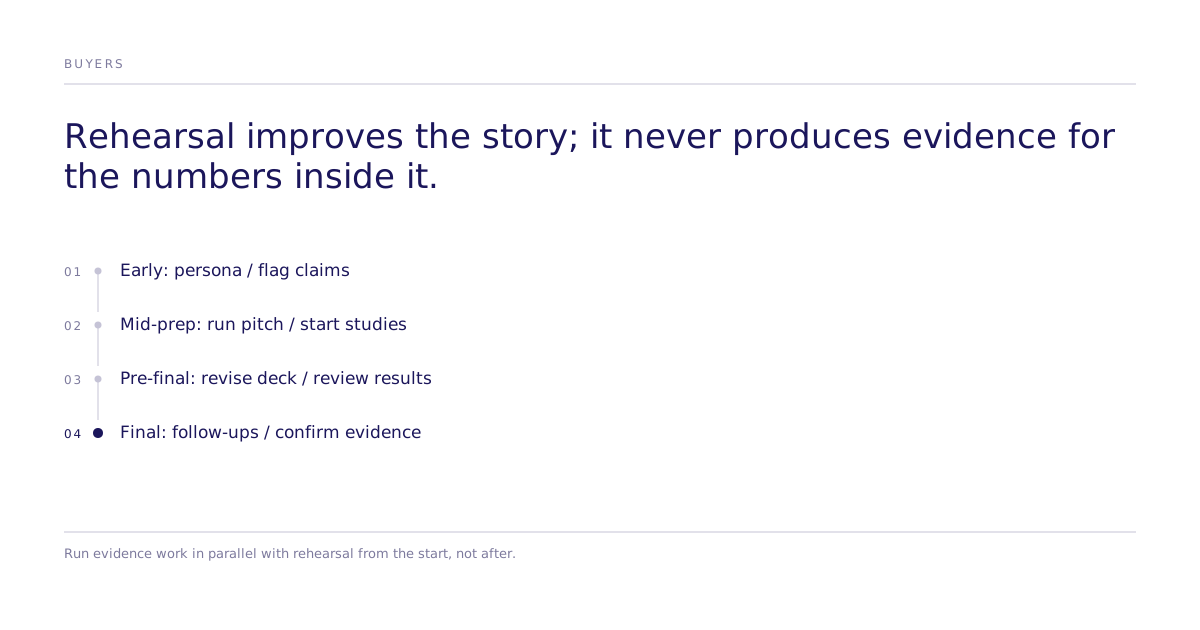
Rehearsal improves the story; it does not produce evidence for the numbers behind it. "That TAM assumes enterprise adoption rates that took a comparable company seven years; what evidence supports a different adoption curve for your category?" is a question a simulated persona can raise, but no amount of rehearsing an answer manufactures the underlying evidence. Walking into diligence with a well-rehearsed narrative and an unvalidated pricing or demand claim invites exactly that exposure, and the round stalls or re-prices down when it does.
Subconscious runs randomized experiments on a simulation of the market, validated against real human behavior, to produce a causal answer to a pricing, demand, or positioning question, evidence a founder can point to when a VC challenges the claim, not the story around it. That is separate from rehearsing objections against a persona: not whether the pitch is well delivered, but whether the market claim inside it is true. Two case studies on Subconscious's research, Finta and New Age Floral, used causal pricing studies to settle a pricing decision with a quantified result before going to market.
A two-track preparation timeline
The two tracks run in parallel in the weeks before a raise:
- Early. Build the investor persona from public research (blog posts, podcast appearances, portfolio, stated thesis). In parallel, identify which claims in the deck (pricing, demand size, positioning) lack evidence.
- Mid-preparation. Run the full pitch through the persona. Log every question and objection as expected or new. Start a causal study on any claim that surfaced weak or unvalidated.
- Before the final rehearsal. Revise the deck against the new objections and rerun the persona pitch with the updated version. Review study results as they come in.
- Final pass. Final rehearsal focused on follow-up questions, not first-order ones. Confirm which claims now have evidence attached and which are still the founder's judgment call.
Where the evidence ends
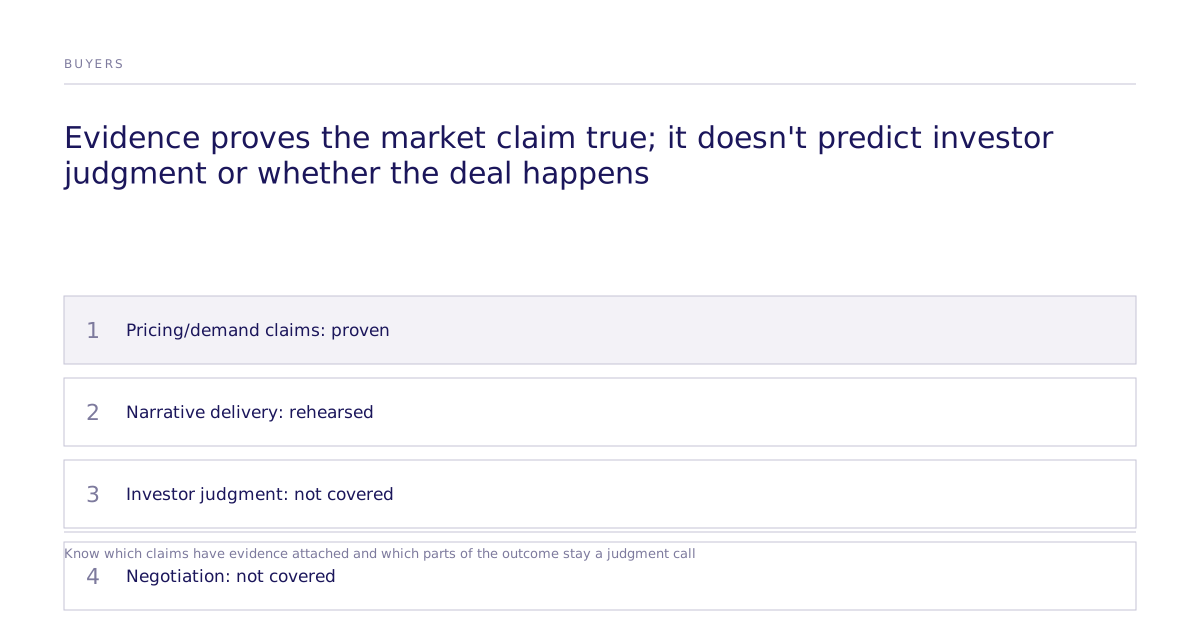
Neither track proves the deal happens. Subconscious does not simulate a VC's judgment, portfolio thesis, or negotiation behavior, and it does not predict whether a given investor says yes. Persona rehearsal has a limit: it cannot replicate the body language, rapport, and chemistry of a real meeting, or access that Monday's partner-meeting conversation or a deal the investor watched fall through. Both are preparation tools, not crutches, and neither replaces being present, adaptable, and honest about what is and isn't proven when the meeting starts.
Next step
If a claim in the deck, a price point, a market size, a positioning bet, lacks evidence, that is the one to test first. See how the studies behind Finta and New Age Floral were run, or book time to scope a study against your own pitch deck.