Test Investor Cold Email Copy Before You Burn a One-Shot List
A pre-seed or Series A founder writing cold investor outreach has one real constraint: most named investors on a target list read a first email once. A weak opening line or an unclear framing burns that contact. The founder has spent a scarce shot on a bad draft while the fundraising calendar keeps moving and the reply rate stays low.
Why the copy decides more than the channel
Founders often blame the channel: cold email is dead, only warm intros work. That diagnosis fits founders who already have a network dense enough to route around cold outreach. For everyone else, the channel is not optional, so the real lever is the copy itself: the subject line, the first sentence, and whether the ask feels proportionate to a stranger's inbox.
Reply rates on cold outreach vary widely by list quality, targeting, and how personalized the message is. Third-party benchmarking shows the same spread across cold email generally, not just investor outreach (Instantly, Cold Email Benchmark Report 2026). That spread is the argument for testing copy before sending: on a list a founder cannot easily re-run, closing even part of the gap between a generic email and a tuned one changes how many first meetings a raise produces.
What does an investor decide in the first few seconds?
An investor's inbox decision is fast and mechanical: glance at the subject line, skim the first sentence, then reply, archive, or "come back to this," which usually means archive. That sequence rewards a small set of things a founder can test directly before the list ever sees the email:
- Whether the subject line earns an open
- Whether the first sentence earns a second sentence
- Whether the reader understands what the company does and why it matters to them specifically
- Whether there is a reason to reply now instead of later
- What reads as generic, pattern-matched, or low-effort
That last point is the one founders are worst at judging on their own, because they wrote the email and cannot read it as a stranger who has seen thousands of similar pitches.
How do you test which email framing works?
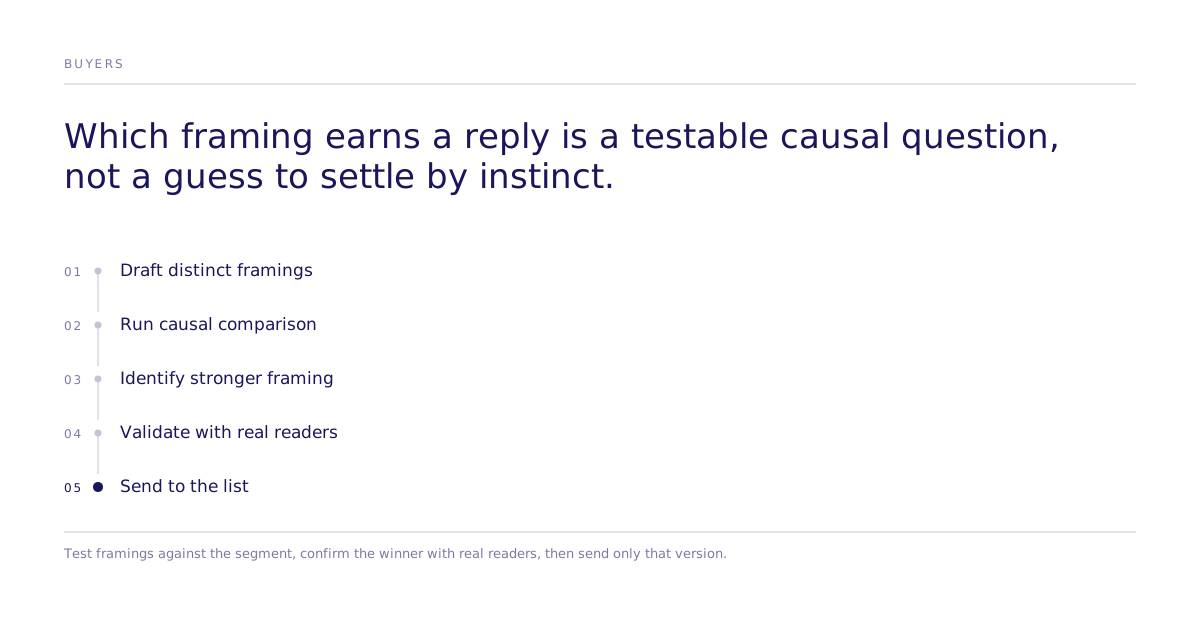
The useful reframe is to treat "which version of this email gets more replies" as a testable causal question about a defined audience segment, not a matter of instinct or a single friendly opinion. Subconscious.ai runs controlled discrete-choice experiments on synthetic populations and returns causal effects with confidence intervals for comparisons like this, for example comparing two or three framings of the same email against a segment built to resemble the investor archetype a founder is actually emailing. That is a message-testing application of the same causal-experiment method Subconscious uses for pricing, positioning, and creative testing elsewhere, not a dedicated investor-outreach product. Read more about how Subconscious structures and validates a comparison like this.
The misses get published next to the hits so a buyer can check the method. Two or three friendly investor contacts giving a quick read is not a substitute for this. It is one useful, informal data point, but it is not a controlled comparison, and it will not tell a founder which specific line is costing them replies across the segment they actually plan to email.
What this does not tell a founder
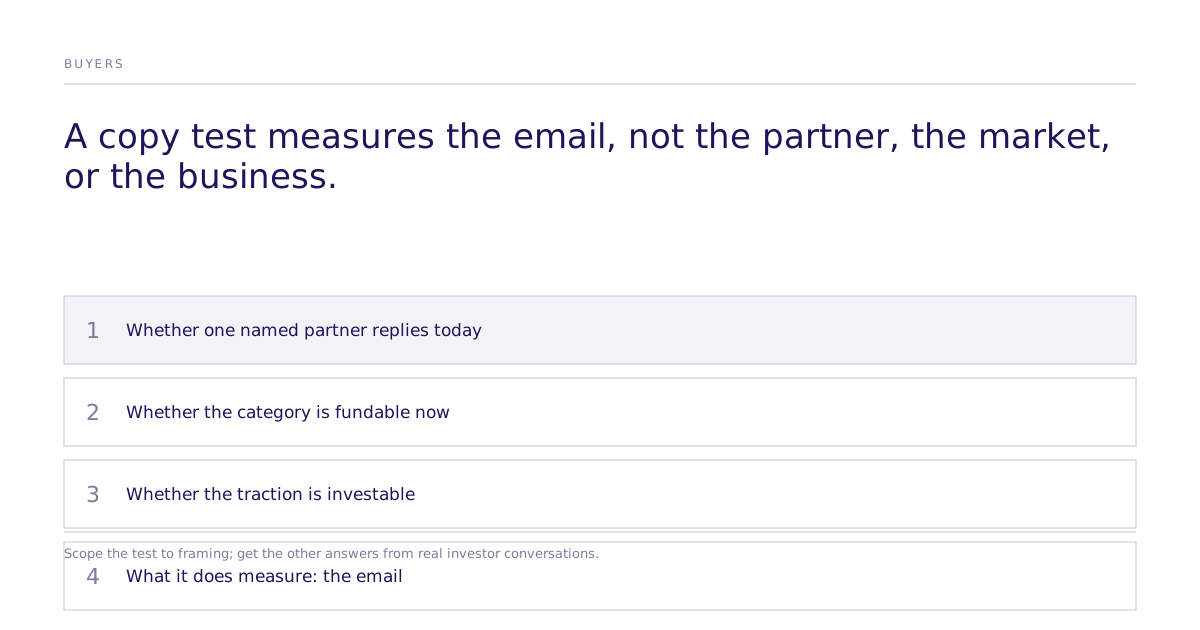
A number without its limits is marketing. Testing copy answers a narrower question than founders often expect. It does not predict:
- Whether one specific named partner replies on a given day, since that depends on the state of their inbox that morning
- Whether a category is fundable right now, since that is a market-timing question, not a messaging question
- Whether the underlying traction is investable, since a copy test evaluates the email, not the business behind it
Naming the failure mode here lets a founder verify the result before trusting it. For those questions, a founder still needs direct investor conversations and market signal. Copy testing is for the part of the outreach a founder actually controls: what the email says and how it is structured. Published research on the underlying causal-testing method covers how these comparisons hold up outside message testing as well.
Can a simulated comparison be validated with real readers?
When a founder wants more confidence than a simulated comparison provides, the same causal question, which framing gets a stronger response, can move to real-human testing without changing what is being measured. Subconscious can test or validate studies with real human participants, letting a team confirm a simulated result with recruited readers before committing a full list to one version of the email.
What to do before the next batch goes out
- Pull the current investor cold-email template and identify two or three genuinely different framings, not several minor rewrites of the same structure.
- Define the investor archetype being emailed: stage, check size, category focus, and fund profile.
- Run a controlled comparison of the framings against a segment built to resemble that archetype.
- Ship the framing with the strongest predicted response, and track the real reply rate against the previous batch to see whether the result holds.
Founders who want to scope a specific outreach test before committing a list to it can book time to talk it through. Background on the company is at About.