11 Ways to Test Consumer Reactions Before You Spend Budget
A brand, insights, or innovation lead rarely has one thing to pre-test. Before media, production, or product budget moves, several stimuli usually need a reaction check: the concept, the message that sells it, the price attached to it, the channel it runs in. Committing budget on an untested version means finding out how the audience reacts only after launch, when the spend is gone.
Running a controlled test on the specific stimulus first, instead of an open-ended chat with a synthetic panel, gives a comparative answer to the same question every time: does this version perform better than the alternative for this audience. Demand for that kind of check is not shrinking: between 2024 and 2034, the U.S. Bureau of Labor Statistics expects the market research analyst and marketing specialist workforce to keep expanding (BLS market research analyst outlook). Below are eleven stimuli worth testing that way before they carry budget.
Set the rule before you run the test
Every one of the eleven checks below works the same way:
- Write the one-sentence decision the test needs to answer.
- Define the audience and how much is riding on the answer.
- Run a controlled experiment on the stimulus, comparing it against a realistic alternative rather than judging it alone.
- Have a person review the audience definition, the stimulus wording, and whether the read actually answers the decision.
- If the decision is expensive or will support a public claim, move the same question to real-human validation before committing.
A directional read without its limits is marketing. Skipping step five is where a directional read gets asked to do a public claim's job. The ICC/ESOMAR International Code on Market, Opinion and Social Research and Data Analytics sets the same expectation for how audience and stimulus definitions should be documented and reviewed before a study result is used for a decision (ICC/ESOMAR Code).
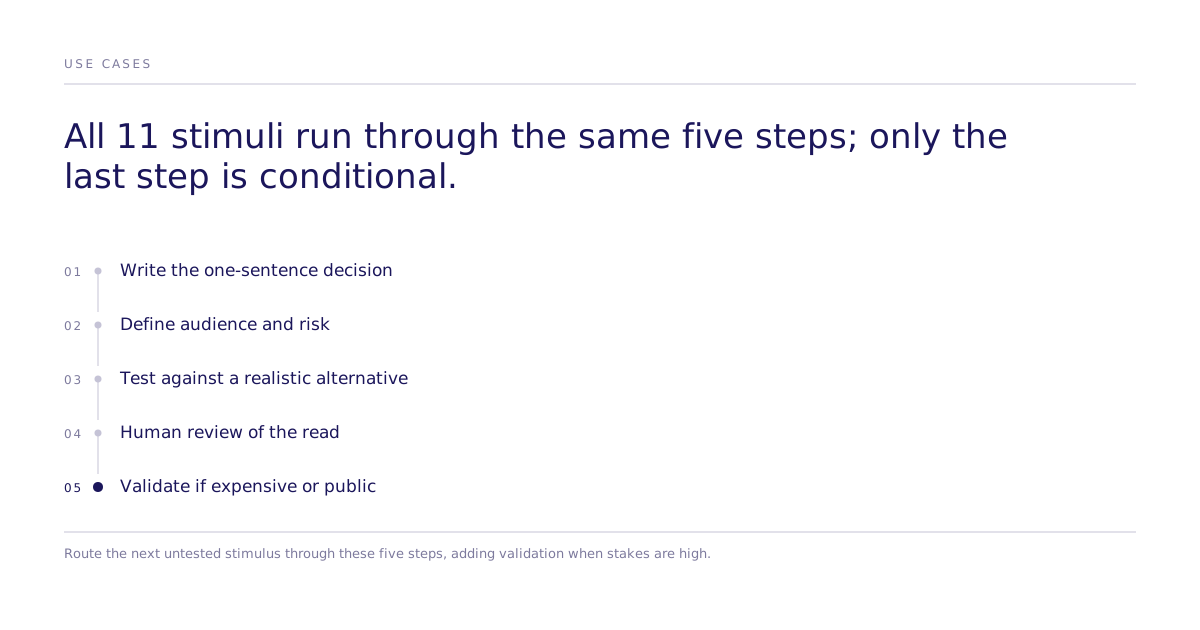
11 ways to test a consumer reaction before you commit budget
1. A product or campaign concept
Compare the concept against a realistic alternative, not against silence. A concept judged in isolation tells you it sounds fine, not that it beats the option you would otherwise run.
2. A core message or claim
Test the specific sentence the campaign will lead with. Confusing or polarizing language shows up faster against a comparison message than in an open reaction.
3. A pricing story or price point
Test how the price is framed and justified, not just the number. A price that reads as reasonable next to one comparison and expensive next to another tells you the story needs work before the number does.
4. A campaign route or creative direction
When two creative directions could carry the same message, run them against each other on the same audience definition before production budget picks a side.
5. A feature idea
Test the feature description against the current alternative the audience already uses. A reaction to the idea alone does not tell you whether it changes a real choice.
6. Where should you test a journey moment?
Test reactions at the specific point in the journey where a decision or drop-off happens, not the journey as a whole. The stimulus should match the moment, such as a specific screen, message, or offer.
7. A headline
Headlines carry a disproportionate share of first impressions. Compare candidate headlines against each other on the audience segment that will see them.
8. A channel or context pairing
The same message can land differently depending on where and when it appears. Testing the message in its intended channel catches a mismatch that testing it alone would miss.
9. A landing page or packaging treatment
Test the version of the page or pack that a person will encounter, including the surrounding layout and claims, not an isolated line of copy.
10. A strategic assumption behind the plan
Some budget decisions rest on an assumption about what the audience wants or believes, not a specific creative asset. State the assumption as a testable claim and compare it against an alternative assumption before the plan locks around it.
11. A claim intended for public use
Naming a failure mode here is what lets a buyer check it before committing budget. A claim that will appear in advertising, packaging, or a press statement carries more risk than an internal one. Treat it as the case where a directional read is not the finish line: move it to real-human validation before it goes out.
How do you move from a simulated read to real-human validation?
Subconscious runs controlled experiments on a simulated audience to compare specific actions before capital is committed, then can test or validate the same study with real human participants when the decision is expensive or public. The audience definition and the causal question stay the same across both steps; only the evidence standard changes.
A number without the limit attached to it is a marketing claim. Subconscious can run these controlled studies against a person-level audience graph covering 800 million real people. That describes the audience the experiment can be defined against, not a group of 800 million people available to answer a study in person.
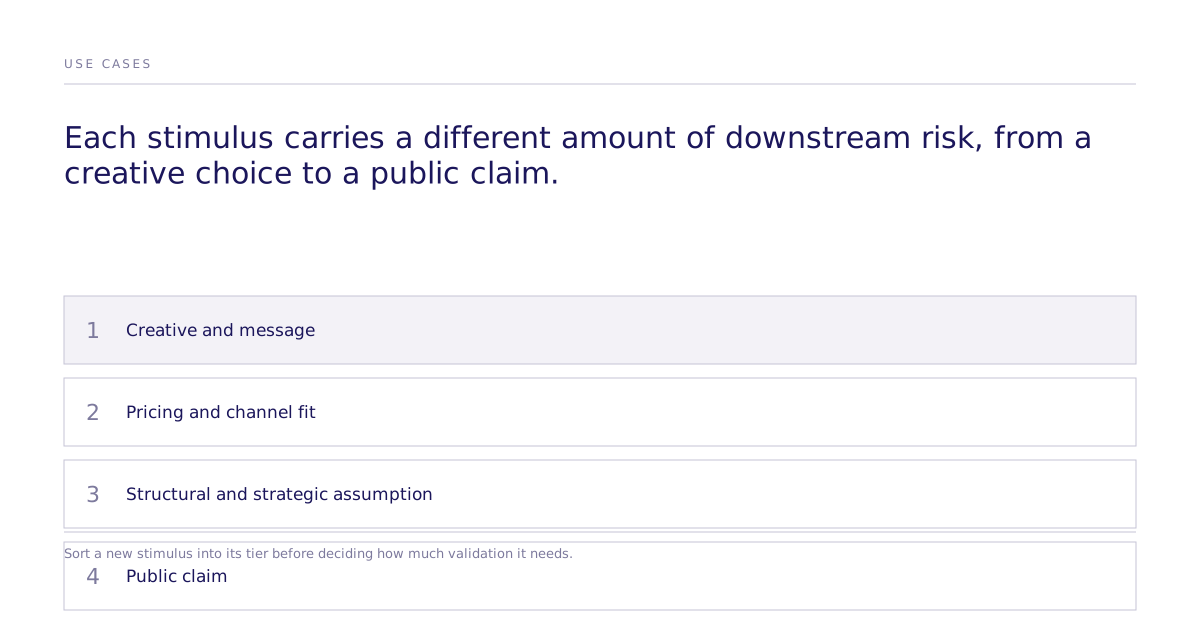
What can't these tests decide on their own?
What a method cannot do belongs on the record next to what it can. A controlled test on any of these eleven stimuli answers what changes choice among the versions tested. It does not replace human judgment, and it does not observe a real person using the interface or product. A simulated read still needs real-human validation before it supports an expensive commitment or a public claim.
Set the audience definition, the comparison, and the escalation rule before the first result comes back, and walk through the research process that fits the size of the decision. To scope a specific concept, message, or price test, talk to the team. For examples of how these tests get used, see the case studies.