AI for Brand Strategy Research: Test Before Building
A brand or marketing strategy lead weighing a repositioning, a rebrand, or a new messaging framework has to decide something narrower first: which hypothesis is strong enough to hand to a creative team, and which claims still need a real customer to confirm. As a 2026 planning benchmark, one research provider places an agency-led positioning or concept study at $43,000 to $79,000. A weak direction can consume that budget, shape the creative work that follows, and leave a gap between the voice a company intended and the voice customers actually hear.
Five questions a brand test has to answer
Most brand strategy work reduces to a short list of decisions, and each one is testable before a dollar goes to production:
Positioning. Where does the brand sit next to the alternatives, and which framing makes it the obvious choice?
Naming. What does a name imply about the company, does it match the product, and does it hold up across every segment that uses it?
Messaging hierarchy. Which benefit should lead, which supporting point backs it, and which proof point matters to a given audience instead of just sounding good in a deck?
Brand personality. Does the intended voice read the way the team thinks it reads? "Direct and confident" can land as confident or as abrasive depending on execution.
Category framing. Does the target buyer already have a mental shelf for this product, or does the company have to teach the category first?
Each of these is a comparison, not an opinion poll. The useful output is not "which version do you like," it is "which version changes what a buyer believes about the company, and why."
Why use segment comparisons instead of open-ended conversation?
Subconscious tests product, pricing, messaging, and go-to-market actions with defined buyer segments before those decisions reach creative production or an agency contract. Applied to brand strategy: describe two or three positioning statements, present them under the same conditions to the same segments, and measure which one shifts category placement, comprehension, or preference. Simulated reactions and reasoning surface a hypothesis; a single "which do you like better" answer does not.
The same design applies to naming, messaging hierarchy, and brand-voice checks. A name tested in isolation misses how it reads once a buyer understands the product; testing it against a defined segment produces a sharper signal about fit. A message tested against the objections a segment actually raises tells a team more than a preference score. Subconscious runs these comparisons against a person-level audience graph of 800 million real people, a targeting and modeling resource for defining each segment, not a panel scheduled for interviews. That distinction matters: recruiting real interview participants is a separate step with its own scheduling and screening requirements, one a team still takes when a finding needs it.
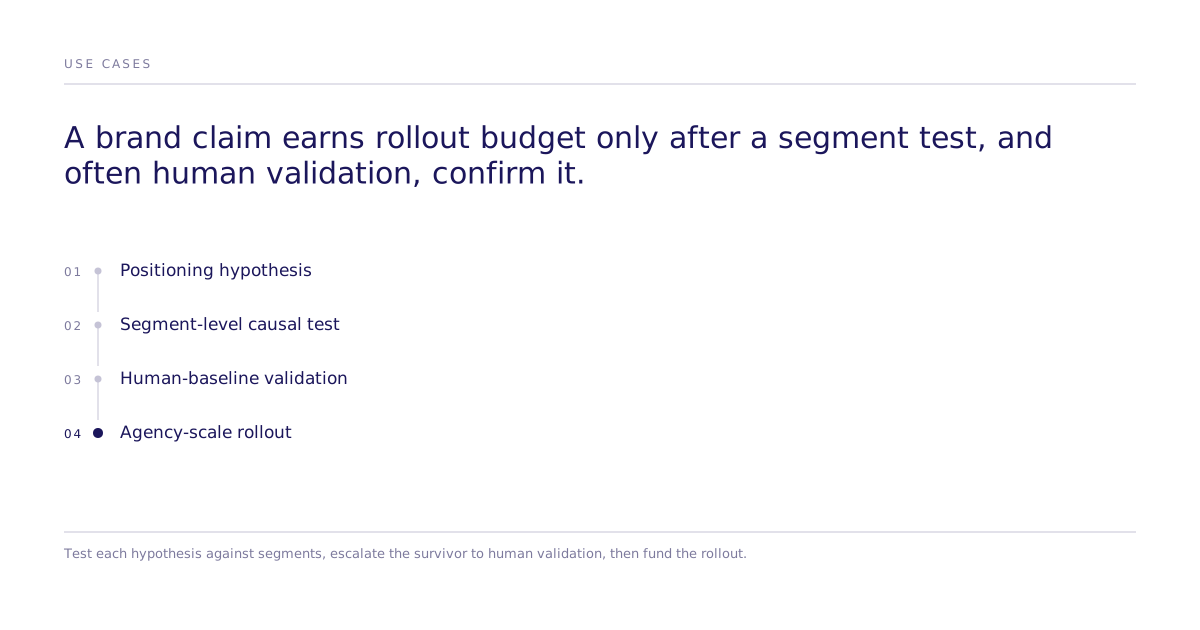
How does a brand hypothesis earn a place in the brief?
Define 4-6 segments that represent the audiences the decision depends on, and check each has the right context before comparing brand ideas.
Run 3 positioning options under the same experimental conditions, record how each changes category placement or stated preference, and capture the objections and reasoning behind those effects.
Compare message variants against one target behavior, separating an opening benefit that changes the outcome from language that only sounds polished in isolation.
Challenge the leading combination: ask what would make a skeptical buyer doubt the claim, misread the category, or reject the pitch. The final brief should show which candidate survived, why the alternatives fell away, and what still requires human confirmation. Each stage of the research process should answer a defined decision question.
Where the test stops and a human has to weigh in
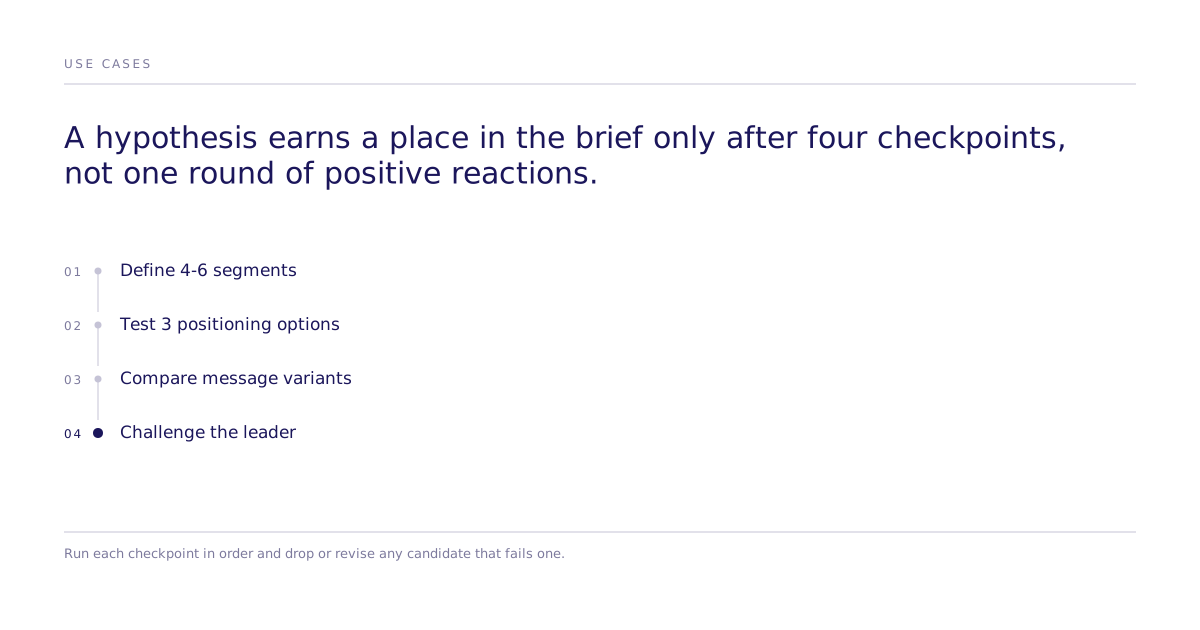
Segment comparisons surface hypotheses and the reasoning behind them. They are not a substitute for quantitative brand tracking, awareness measurement, or the sampling and validation those metrics require. A simulated buyer reasons the way that kind of buyer generally reasons, but does not know what is happening inside one specific company's category, and cannot substitute for proprietary market intelligence.
A board or an executive sponsor deciding whether to fund a full rebrand often needs "we tested this with real customers," not only "we ran a segment comparison." Subconscious can test or validate studies with real human participants, letting a team move the strongest finalists into human-baseline confirmation. Save that step for claims that carry real budget or reputational risk; running every early positioning idea through human validation adds little before the field is narrowed.
When this is worth running
A segment-comparison test earns its place in the process when:
- a rebrand or repositioning has several plausible directions the team needs to narrow before committing to one;
- an agency's recommendation needs a structured check before the company signs off on the spend behind it;
- internal stakeholders disagree on positioning and need outside signal to settle the argument;
- a launch into a new market requires evidence about how that audience categorizes the offer;
- the goal is sharper questions for a formal human study, not a replacement for one.
The result a team should walk away with is a shorter list of stronger candidates, a record of why the weaker ones lost, and a clear plan for which findings still need a human to confirm before the rollout.