AI Buyer Journey Simulation: Awareness to Purchase
A buyer journey map is a bet before it is a document. Marketing and GTM leaders build one from a handful of retrospective interviews and whatever the sales team remembers about the last few deals, then commit content budget, ad spend, and a sales script to that pattern. If the trigger, the evaluation criteria, or the last objection in that map is wrong, every stage built on top of it misses the buyer.
The map's biggest blind spot sits before any sales conversation starts. Gartner found that 67% of B2B buyers now prefer a rep-free buying experience, meaning most of a buyer's research happens away from any vendor, sales rep, or interview a team could later ask about (Gartner, 2026).
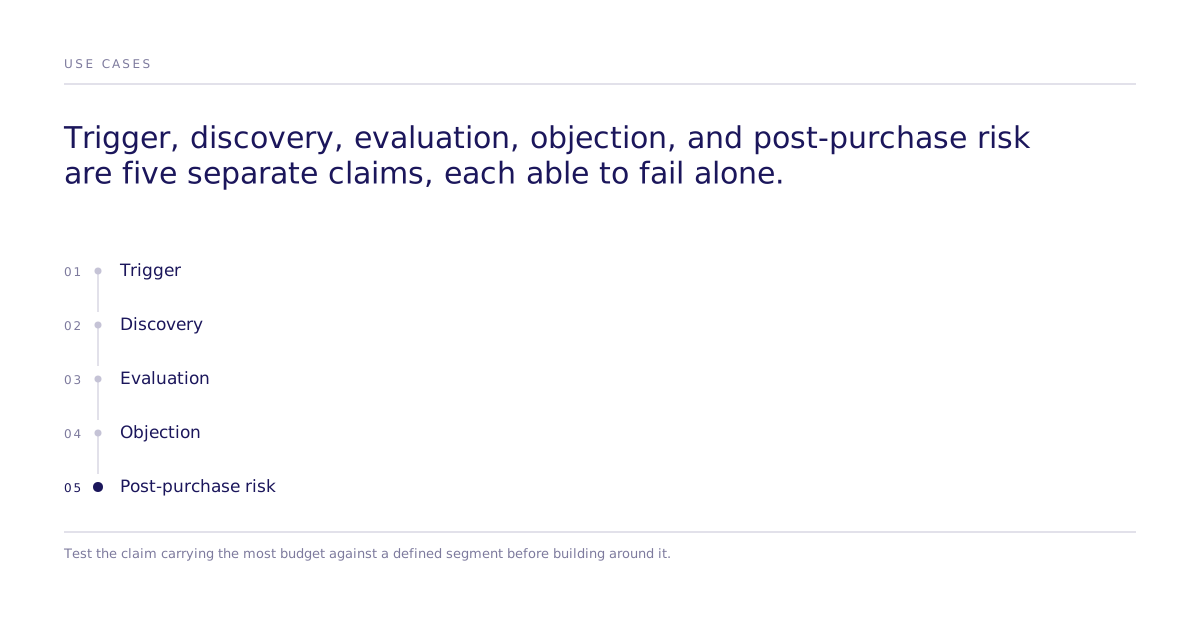
Five places the map can be wrong
Each claim can fail independently, with a different cost.
Trigger
What event or problem sends this buyer looking for a solution? Get this wrong and pain-point content, search targeting, and top-of-funnel messaging aim at a problem the buyer doesn't have yet.
Discovery
Where does the buyer look first: a peer referral, LinkedIn, a search engine, an industry publication, a review site? This claim decides where awareness spend goes, and it is usually the least tested part of the map.
Evaluation
Which criteria carry the decision, what proof the buyer trusts, and what disqualifies a vendor outright. This shapes pricing pages, case-study selection, and how a sales deck orders its arguments.
Decision objection
Who joins the approval chain, what internal steps have to clear, and what the last objection is before signing. Get the objection wrong and a proposal answers a concern nobody in the room has.
Post-purchase risk
What "working" looks like across the early weeks after purchase, and which unmet expectation is most likely to cause early churn. This claim sets the onboarding checklist and the customer-success playbook.
Turning each claim into a test
A retrospective interview can describe what a handful of past buyers said they did. It cannot tell a team whether a new trigger message or a new objection response will move a defined segment. That requires a comparison, run before the content ships.
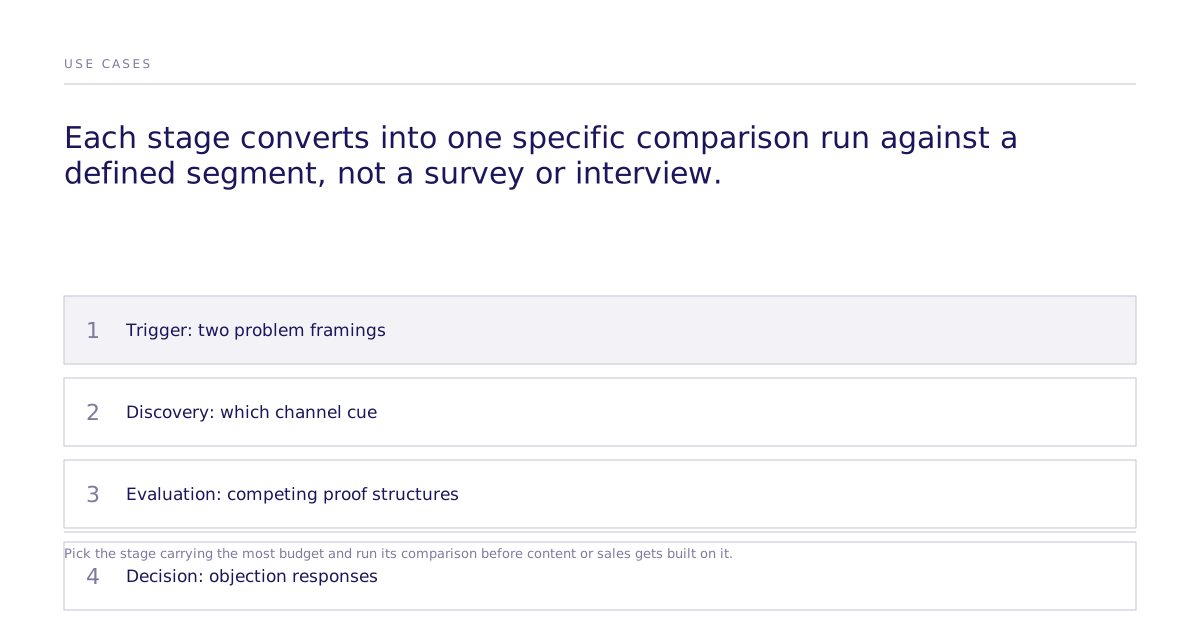
Subconscious runs controlled discrete-choice experiments against a defined buyer segment (role, company size, industry, current solution, goals, and constraints held constant across the comparison) so any difference in stated intent or choice is attributable to the thing being tested, not the audience or the question (research). Each stage above becomes its own comparison:
- At trigger, test two problem framings.
- At discovery, test which channel cue shifts stated interest.
- At evaluation, test competing proof structures or product concepts.
- At decision, test which objection response holds up best.
- At post-purchase, test which onboarding message reduces stated churn risk.
A number without its setup is a marketing line. An example study design might run 3-5 buyer types, but that count describes one study's setup, not a fixed limit. The right number depends on how many segments the decision turns on.
What does a completed test return?
Run against a real decision, this kind of test produces a causal effect with a confidence interval for a specific comparison, not a stage-by-stage narrative of "what buyers are like." It tells a team which framing, criterion, or objection response moved the number, and by how much, for a named segment. A well-scoped test at one stage tends to surface the top 3 open questions the segment has there, alongside the effect itself. That combination is evidence a team can act on, rather than a story a team has to trust.
Where does the test stop?
A causal effect only earns trust when its edges are published too. This method does not produce a free-form journey narrative, and it does not interview or roleplay a persona through open-ended conversation. It is not a replacement for qualitative discovery: win-loss interviews, sales-call review, and product analytics tell a team what already happened. What causal testing adds is a way to check a specific claim before betting a campaign or a sales process on it.
Interviews with five customers who bought over a year ago and a structured comparison run today answer different questions. One tells a team what happened. The other tells a team what is likely to move a defined segment next. A team that wants both, the retrospective account and a tested answer to the specific claim carrying the most budget, can review case studies built the same way, or start with a demo scoped to the one claim worth checking first.