AI Market Research Automation Tools in 2026: Choose the Bottleneck
Market research automation in 2026 covers three different jobs: collecting human responses, generating simulated responses, and analyzing research output. The right tool depends on which step is limiting the team.
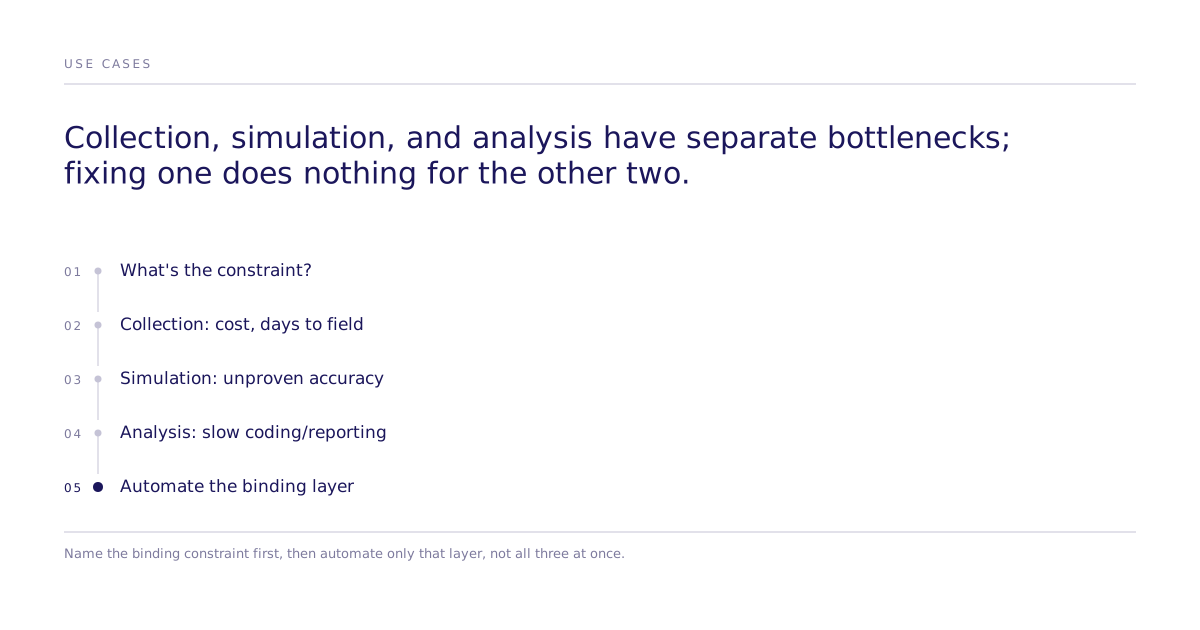
What is the collection and fielding layer?
Platforms such as Cint, Lucid, and Prolific recruit respondents, field questionnaires, and return datasets for analysis (Prolific: participant recruitment). Planning examples for hard-to-reach samples range from 50 to 150 EUR per complete and 24 to 96 hours for fielding, with complex programs taking weeks.
Use this layer for verified human respondents or primary evidence. Recruitment quality, sample design, and response quality require scrutiny.
What is behavioral simulation?
Simulated-buyer tools compare product, price, message, or GTM actions without recruiting a new panel per exploratory question. Results can arrive in minutes.
Published category examples describe stated-preference agreement moving from an “interesting demo” in 2023 to 80 to 95 percent against selected human benchmarks in 2026. Those ranges do not prove accuracy for a new decision. Aggregate agreement is easier than individual fidelity, and prompt design, calibration, and validation matter.
Subconscious belongs in this decision-specific layer. It uses causal experimentation and discrete-choice-style modeling rather than generic roleplay. The supported claim is directional comparison across configured actions, with uncertainty language only when the study supports it.
What is the analysis and reporting layer?
Platforms such as Dovetail, Notably, Looppanel, and Voxpopme apply AI to coding, theme extraction, sentiment analysis, and report drafting. Category planning examples claim 60 to 80 percent less time in analysis and reporting. Treat that range as an example, not a guaranteed saving.
Analysis automation cannot repair a weak sample or poorly framed question. Human researchers must check themes against the underlying evidence.
Match the tool to the constraint
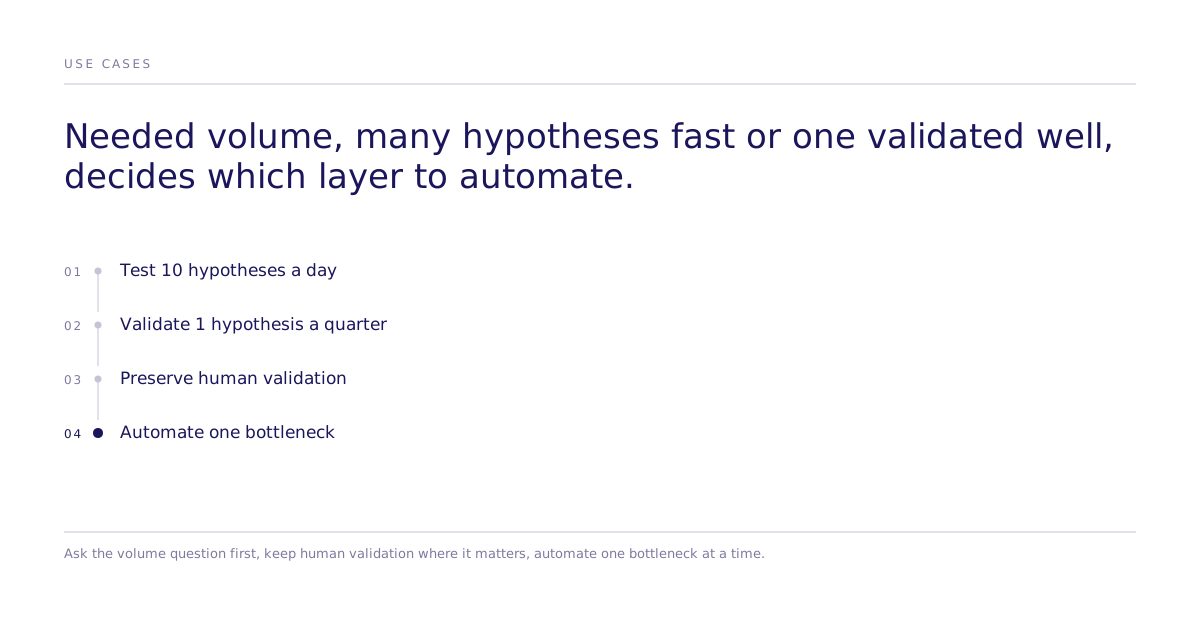
One planning example burns through the full year's research budget by June because respondents cost too much per study. Compare fielding and simulation options when recruitment is the binding cost. If a six-week cycle is caused by slow fielding, a synthetic exploratory screen may narrow what needs human validation (how a controlled study is run). If transcripts take three weeks to analyze, fix the analysis layer instead.
Some planning models propose replacing 50 to 80 percent of stated-preference exploration with synthetic work. Another example runs the three layers in sequence for two quarters and targets two to three times the research surface, including 12 exploratory panels in one week. These are workflow examples, not Subconscious guarantees.
A more useful procurement question: does the team need to test 10 hypotheses in a day, or validate 1 hypothesis per quarter? Start with that decision, preserve human validation where it matters, and automate one bottleneck at a time. Review the research basis for the simulation layer, or discuss a specific decision.