AI Research Panels: What They're For, and Where the Answer Needs to Come From Real People
A multi-persona AI panel puts several synthetic personas in the same session and asks them all to react to the same concept, message, or positioning at once, instead of interviewing one persona at a time. That's useful for a product or marketing lead who needs an early, directional read before committing budget. This page answers a narrower question: when is a panel discussion enough to act on, and when does the decision behind it need a controlled, causal experiment?
What is a research panel?
In a traditional market-research panel, real participants are recruited to respond to research questions, often repeatedly over time. Formats vary by who's recruited: consumers, B2B buyers, or subject-matter experts. All of them run on real scheduling, real incentives, and a real wait between fielding and analysis.
An AI research panel replaces those participants with configured personas: each one defined by demographics, psychographics, role, industry, and behavioral profile. A session can run from two to fifty personas, and because they respond simultaneously and in character, the output is a structured comparison of how different segments talk about the same issue.
What a panel is good for
- Early hypothesis generation. Before a concept, message, or positioning idea is worth testing formally, a panel session surfaces which reactions, objections, and phrasings are worth investigating.
- Directional depth over statistical breadth. A panel is built to expose the texture of different perspectives and the reasoning behind a reaction, not to produce a representative estimate of how a market will respond.
- Segment comparison. Running the same prompt across differently configured personas shows where reactions diverge, useful groundwork for pricing, packaging, or feature-prioritization questions.
- Structured discussion without groupthink. Traditional focus groups carry failure modes: groupthink, dominant personalities, and social-desirability bias, where a participant answers to look good rather than to say what they think (SAGE Journals, Qualitative Health Research). This caveat sits next to the strength it qualifies, the same way a public leaderboard shows misses next to hits. Because each persona responds independently, a panel avoids the groupthink and dominant-personality problems, though social desirability applies differently to a simulated respondent than a real one.
Where does a panel fall short?
Naming where a panel stops working lets a buyer check the claim before spending against it. A panel session is simulated, not real. It isn't a substitute for a randomized, causal experiment when the decision at stake is high-stakes: a launch, a price, or a positioning spend. Treating a directional panel discussion as proof of what a market will do is the failure mode a controlled test exists to prevent.
What the decision actually needs
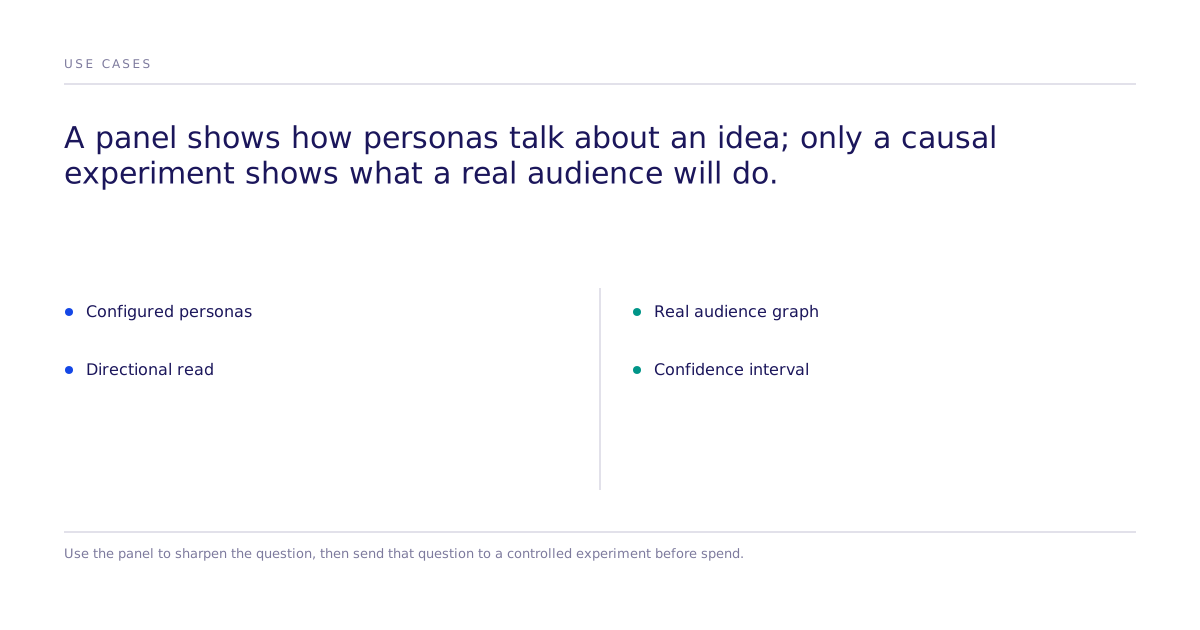
Publishing this limit is what keeps a directional read from being read as proof. A panel can tell a team which messages feel stronger to a set of configured personas. It cannot tell them which message will change behavior in the market, because a simulated persona's reaction is not a causal estimate.
For the highest-stakes version of a question raised in a panel, the next step is a controlled experiment against a real audience, with confidence intervals attached rather than a synthesized opinion. Subconscious can run controlled studies against a person-level audience graph covering 800 million real people. That's a distinct capability from recruiting a panel of participants: the audience graph describes who a study can be run against, not a pool of people recruited and waiting.
Moving from directional signal to a decision you can defend
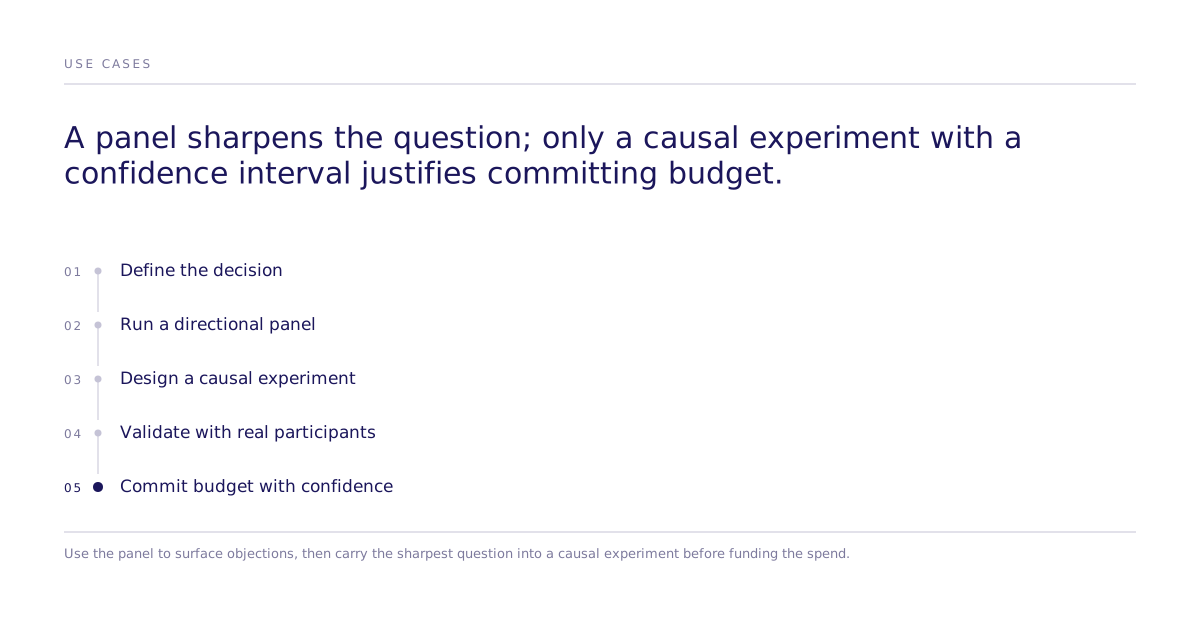
- Define the decision at stake. Not "what do people think of this concept" but the actual call that follows: ship it, price it, or fund the spend.
- Run a directional discussion. Use a panel to surface the range of reactions and sharpen the research question before committing to a formal test.
- Design a causal experiment. Take the highest-stakes version of that question into a controlled test that isolates cause from correlation, rather than reading intent off simulated reactions.
- Validate with real participants. When the decision depends on it, the same causal question can move from a simulated experiment to a study with real human participants: the question stays fixed, only the source of the response changes.
- Commit budget with confidence. A decision backed by a causal estimate with a confidence interval is a different kind of evidence than a directional panel read, and it's the standard a high-stakes call deserves.
When does this not apply?
Not every question needs this ladder. If a panel session is being used to sharpen internal thinking, draft messaging variants, or rule out weak directions before anything is spent, the directional read is the right tool for that job on its own. The causal step matters when the answer changes what gets funded.
Ready to take a directional finding to a defensible test? See how Subconscious runs causal experiments, browse prior studies, or book time to scope the specific decision.