Pressure-Test a Startup Fundraise Before Investor Meetings
A pitch deck, a model built at 2 AM, and a valuation borrowed from a comparable company do not make a defensible fundraise. An investor may challenge the assumptions in the first five minutes.
A tool that only lists what it can do is marketing copy. Here is what this one cannot do: AI can help organize an adversarial review. It is not a financial adviser, valuation opinion, or substitute for a CFO, lawyer, accountant, or investor with current market knowledge.
Where fundraising plans break
Common problems include revenue projections without a link to observed growth, valuation expectations without useful comparables, a raise amount that does not match the operating plan, weak unit economics, and an undefined use of funds. Running out of cash before the next raise closes is among the reasons CB Insights lists most often when startups fail (CB Insights, Top Reasons Startups Fail).
A deliberately sharp example: asking for a $15M valuation with $2K MRR, raising $3M when the plan needs $800K, or raising $500K when the plan requires $2M.
Build an adversarial review
Give reviewers the same inputs:
- monthly revenue for the past 6-12 months, or an explicit pre-revenue model;
- how fast the company is spending and how many months of cash remain at that pace;
- the size of the raise being sought and the valuation attached to it;
- where the new capital will actually go;
- growth, churn, and margin assumptions;
- comparable companies and the reason each one belongs.
Use several review frames. A finance leader can inspect model consistency. An investor can challenge the financing story. An operator can test whether the plan and hiring sequence fit the capital requested. Publishing the limit next to the capability is what lets a reader check the claim. AI-generated perspectives can help assemble questions, but qualified people must verify the model.
Five questions that expose weak assumptions
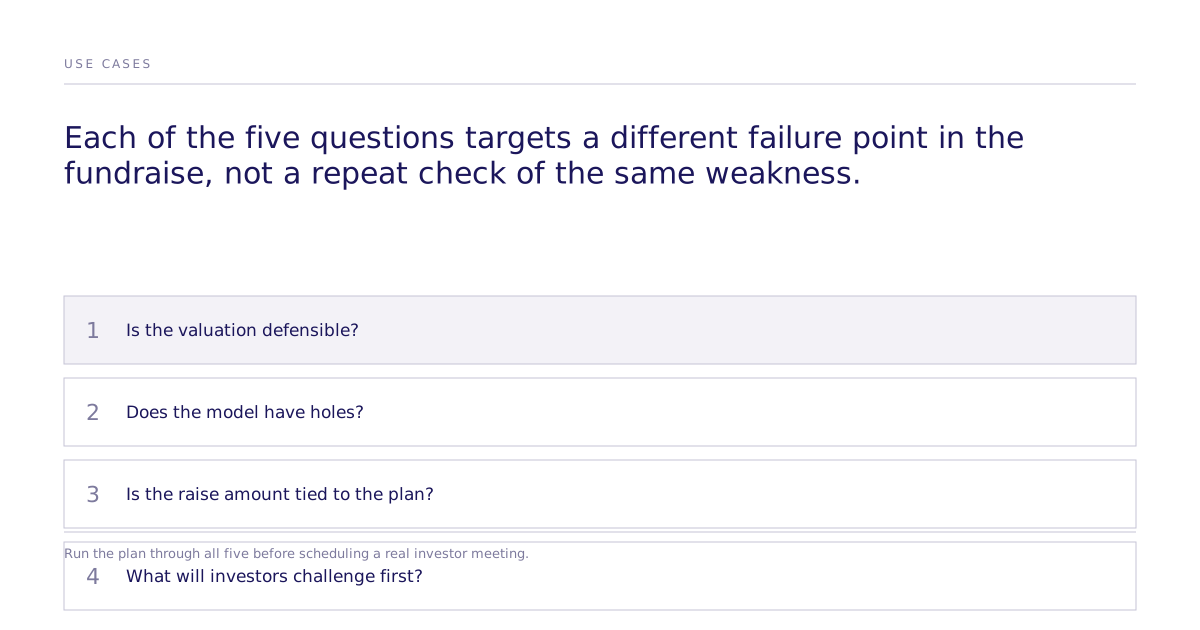
1. Is the valuation defensible?
List the evidence behind the proposed valuation. Separate company facts from market comparables and negotiation goals.
2. Does the model have holes?
Trace each projection back to an assumption. Identify which assumptions have observed support and which are still guesses.
3. Is the raise amount tied to the plan?
Too little may force another raise in 6 months. Too much may cause unnecessary dilution. Explain how the amount supports the stated 18-month plan and what changes if the raise is smaller.
4. What will investors challenge first?
Rehearse the likely objection before the meeting. A good response names the uncertainty and the evidence that would resolve it.
5. What must be true before raising?
Possible planning thresholds include $10K MRR, churn below 5%, or three enterprise contracts. Choose milestones that follow from the company's actual model and financing market.
A four-month planning example
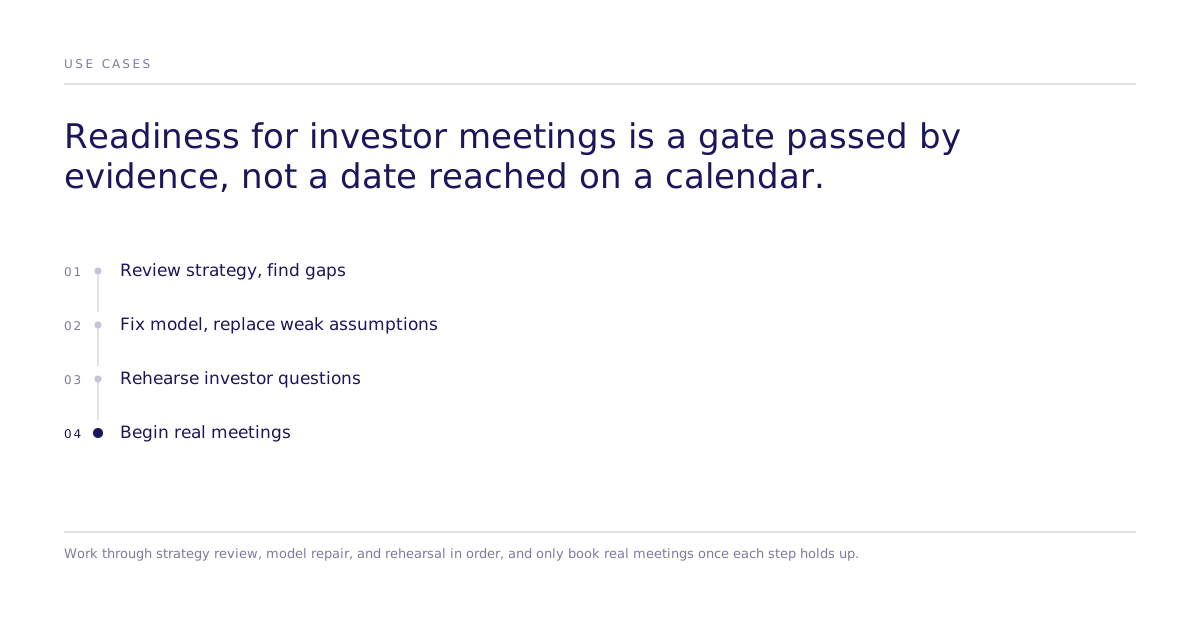
Month 1: Review the strategy and identify gaps.
Month 2: Fix the model, replace weak assumptions, and review it again.
Month 3: Rehearse investor questions and tighten the evidence behind each answer.
Month 4: Begin real meetings only if the company, advisers, and financing plan are ready.
Use experiments for claims about buyers
Subconscious can help teams test product, pricing, messaging, and go-to-market actions before committing capital; see how a study moves through the process. A decision-specific experiment can compare how defined buyer segments respond to pitch or positioning alternatives. The scope of an experiment means nothing without its edges stated plainly. It cannot validate a cap table, calculate a correct valuation, guarantee a raise, or replace financial diligence.
The practical division is clear. Use structured critique to find weak assumptions. Use causal experiments for testable buyer-response questions, with examples in the case studies. Use accountable finance and legal professionals for the financial decision.