Test a Backlog Item Before You Commit Sprint Capacity
A product team debating a backlog item has two ways to decide: argue from opinion, or run a controlled comparison against a defined audience and read the behavioral result. Teams that skip the comparison find out whether they were right only after the sprint ships.
The research gap in sprint planning
Sprints run on a fixed cycle. User research usually doesn't. Interviews take weeks to schedule, and quantitative studies often arrive after planning is already over, so teams end up prioritizing on gut feel or whoever argued the ticket best. Nielsen Norman Group finds that agile teams need research findings on a schedule the standard research process cannot sustain; the cadence mismatch, not a lack of intent, is what keeps customer evidence out of planning.
"Because of all these challenges, UX research often ends up neglected or abandoned altogether in Agile environments."
Rachel Krause, Nielsen Norman Group (source)
Turn the debate into a testable question
Define what would change your mind
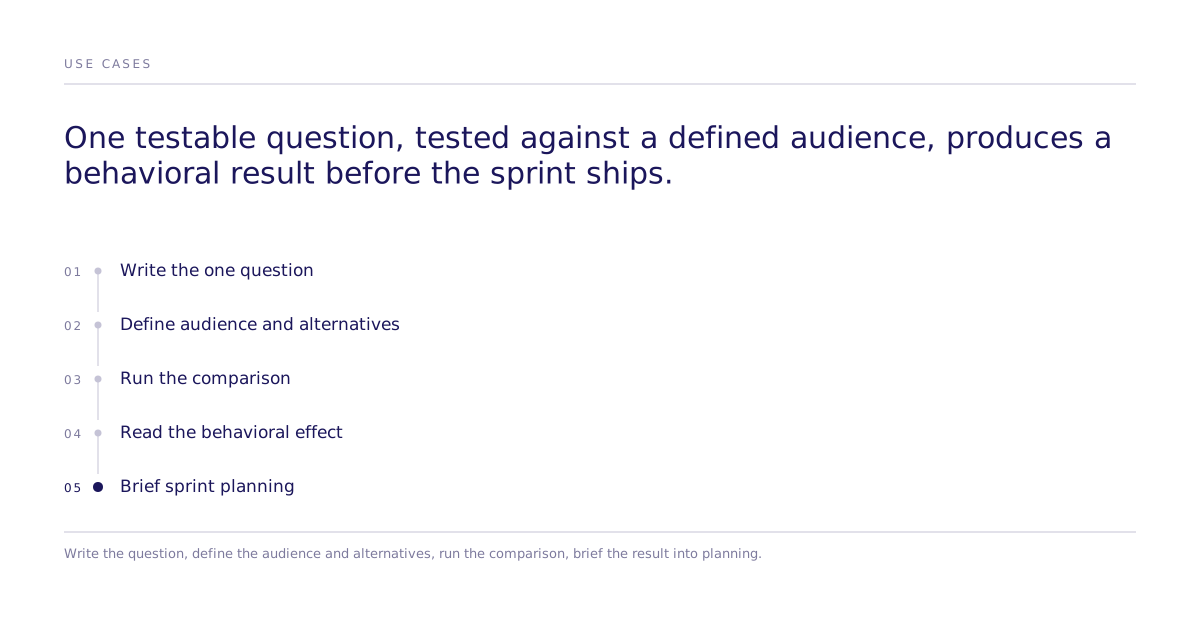
Look at the top 5 to 8 items your team is debating. For each one, write the one question whose answer would actually change the priority: would this reduce a real problem, would it change how the buyer behaves, or is it a tie-breaker between two directions the team could take. Keep the question concrete. An abstract question produces an abstract answer.
How do you define the audience and comparison?
Specify the population the answer needs to hold for: the segment of buyers the backlog item is meant to affect. Then specify the alternatives worth comparing: the proposed feature against no change, or against a competing item fighting for the same sprint slot. Subconscious runs this as a controlled experiment on a simulated market. The alternatives are held constant except for the one thing being tested, and the output is a measured difference in behavior between them, not a summary of what a single respondent said it would do. A first comparison might define 6 to 10 distinct buyer segments to represent the primary population, weighted toward the mix that actually uses the product rather than a convenient sample. The underlying audience graph covers a person-level population of roughly 800 million real people, so a team can define a fairly specific segment and still draw a study population that matches it. That graph is the addressable population a comparison is drawn from, not a pool of recruited participants.
How should you read the result?
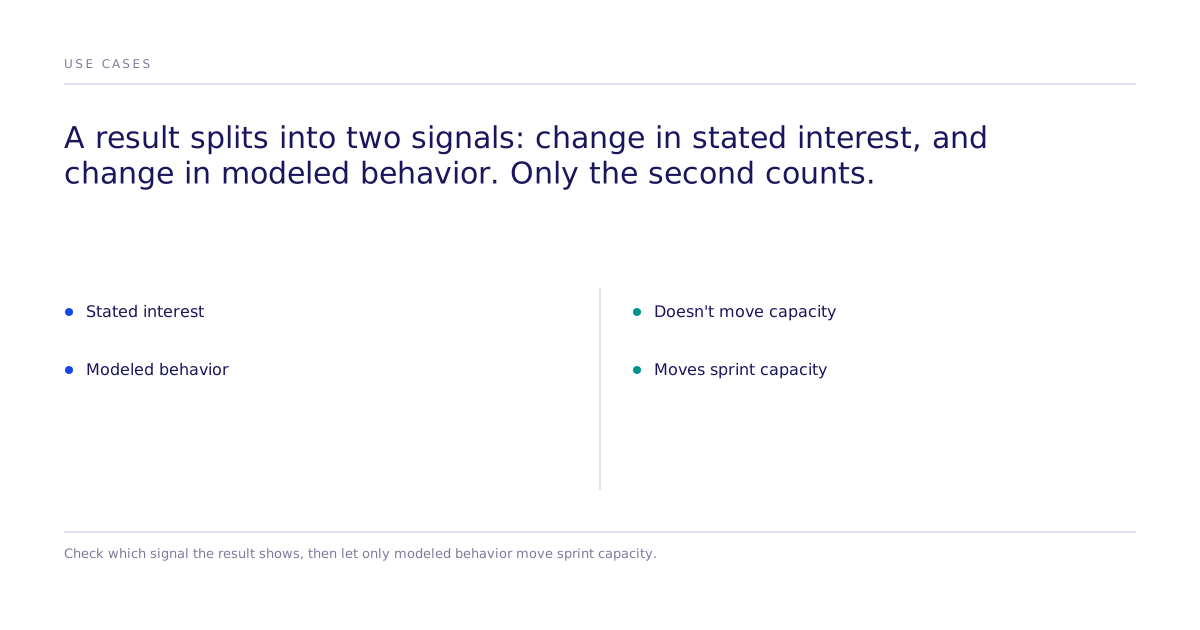
Publishing the uncertainty alongside the effect is what lets a buyer check the claim. The output is a causal effect for the population you defined, with its uncertainty, not a promise about any individual buyer. Separate two things when you read it: whether the item changes stated interest versus whether it changes modeled behavior. The second is the one that should move sprint capacity.
Bring it into planning as a brief
Summarize each item's result in one or two sentences and bring it into planning alongside the ticket. Across a set of ten debated backlog items, a team might find that one shows a strong behavioral pull, with 7 of 10 tested segments describing an existing workaround they would drop, while a second shows no measured change in behavior despite popular internal support. That split is the actual value: it separates the items worth arguing about from the items the comparison has already settled.
What doesn't this replace?
Naming what a method doesn't cover is what lets a team pick the right tool for the next question. A controlled comparison against a simulated population answers a narrower question than teams sometimes expect. It does not replace direct usability observation, moderated interviews, or product analytics. It won't show whether a real person can operate the interface, why they hesitate, or what they did last week with the product already shipped. A comparison establishes a causal effect for the tested population under the tested conditions. It does not guarantee individual-level accuracy, and it does not automate sprint planning.
When the decision genuinely depends on it, a team can move from the comparison to a study with real human participants without changing the underlying question being tested. That step matters when the stakes of a wrong call justify it, not as a routine second pass on every backlog item.
Common questions
Is this the same as asking a chatbot what it thinks of the feature? No. The output isn't a generated opinion. It's a measured difference in behavior between two defined alternatives, run against a specified population, with everything else held constant. See how Subconscious runs these comparisons for the underlying method.
What if the result contradicts what our analytics show? That's worth a conversation, not a dismissal. Qualitative and quantitative signal often disagree because they measure different things: stated preference versus revealed behavior, past usage versus a proposed change. A contradiction usually means one of the two questions was framed wrong, not that one source is useless.
Does this replace the product manager's judgment? No. It narrows the set of things worth arguing about. The team still decides what to build; the comparison tells you which arguments are backed by a measured behavioral difference and which are backed by whoever spoke last in the meeting.
Start with one contested item
Pick one backlog item your team is currently split on. Define the population it's meant to affect and the alternative you're weighing it against, then run the comparison before the next planning session. Review current research and methodology or see how the approach applies across decisions already tested before you scope the first one.