AI for Consumer Insights Analysts
Consumer insights teams face ad-hoc questions while panel recruitment and fieldwork take weeks. AI can accelerate parts of the workflow. It cannot replace human empathy, statistically representative measurement, or evidence required for a consequential decision.
The analyst's job is to know where simulation helps, where it fails, and how to sequence it with human research.
Silicon sampling and its limits
Silicon sampling conditions a language model on a defined background, demographics, or psychographics, then records the responses. Political scientist Lisa Argyle and coauthors gave the technique its name in a 2023 study that conditioned models on real respondents' backstories and checked the output against benchmark survey data (Political Analysis, Cambridge University Press).
A published limit is what separates a real result from marketing. The method approximates some aggregate opinion patterns but stays sensitive to elicitation, calibration, model choice, and prompt design. Aggregate prediction is generally easier than individual simulation.
Naming the failure mode is what lets a buyer check a number before they trust it. Commercial claims of 80 to 90 percent correlation, or 80 to 95 percent against historical benchmarks, need the exact question type, population, baseline, and validation method. Do not transfer one range to another study.
Four areas for an AI-assisted workflow
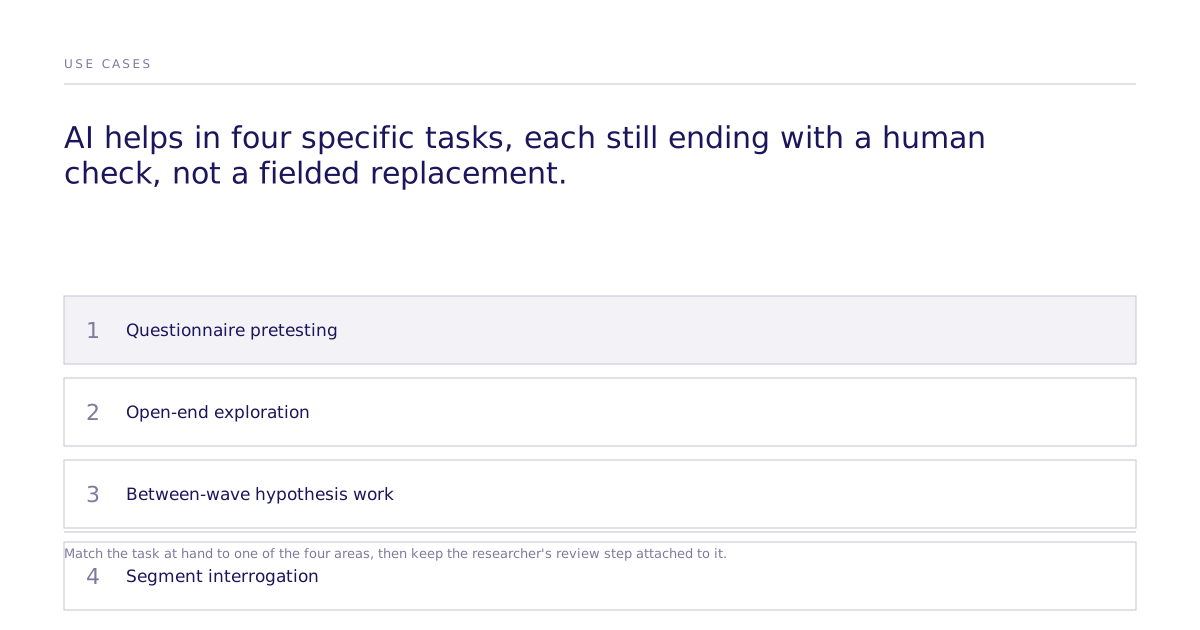
What is questionnaire pretesting?
Run a draft instrument before fieldwork to find ambiguous wording, missing options, logical dead ends, and high cognitive load. Treat the output as a review aid; a qualified researcher still owns the questionnaire.
How can AI help analyze open-end responses?
Models can cluster large sets of text into provisional themes. A first pass may turn thousands of responses into a draft taxonomy in minutes. A researcher must inspect the assignments, preserve minority themes, and interpret the result.
What can simulation do between tracking waves?
Quarterly or bi-annual tracking can show a change without explaining it. If the next wave is three months away, simulation can screen possible explanations and improve the questions used in the real study. It cannot establish the cause of the change by itself.
4. Segment interrogation
Static segment profiles can become structured study definitions. Compare reactions to the same product concept, package, or claim across those definitions. Treat differences between a working parent in Munich and a young professional in Berlin as hypotheses until people and market behavior validate them.
Hard limits
A number without its limits is marketing. Simulation does not provide statistically projectable market sizing. If a decision depends on exactly 34 percent of a market buying at a price, use representative human evidence.
The misses belong on the public record next to the hits. Do not rely on simulated respondents alone for final pricing, financial commitments, health claims, legal defenses, or regulatory submissions. Simulated participants have no bank accounts, sensory experience, or legal standing.
Novel products and unprecedented events are also difficult because historical patterns may not cover the behavior that matters.
A three-phase hybrid framework
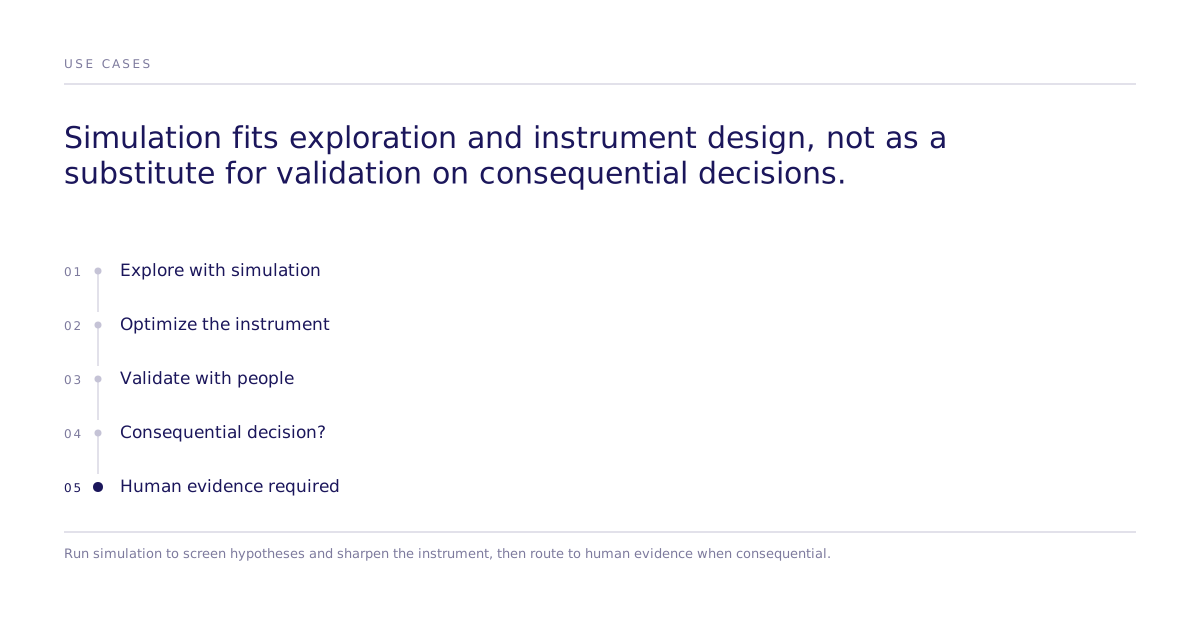
Phase 1: Exploration with simulation. Screen dozens of hypotheses, compare defined segments, and refine concepts.
Phase 2: Instrument optimization with simulation. Pretest questions and remove confusing language.
Phase 3: Validation with people. Field targeted research and confirm the selected options with evidence appropriate to the decision.
This sequence puts human attention on the questions that matter most.
Compare workflows with explicit examples
A traditional concept screen might draft 10 concepts, wait two weeks, and find that 8 were weak. A simulated-first planning example might run 50 variations, identify the top 3, then validate those options with people. The quantities are examples, not promised throughput.
For open-end analysis, an agency or analyst may spend days coding responses. A model may cluster them in minutes. Measure the actual review time and error rate before claiming a saving.
For an ad-hoc request, a simulation may return directional material within hours. Label it as hypothesis work, not representative research.
Protect research quality
Document the model, audience definition, prompt, stimulus, and version. Keep private customer inputs out of public models unless the organization's approved data process permits them. Review security, data location, retention, and sub-processors through procurement rather than relying on marketing claims.
Start with one low-risk project. Use the result to improve the next human study. The value is a more deliberate research sequence, not a replaced researcher.