AI Consumer Insights for Faster Customer Decisions
Consumer insight should shape product, marketing, and brand decisions. Traditional research arrives in weeks while product and campaign choices happen daily. AI can shorten exploratory work to minutes, but speed does not remove the need for calibration or validation.
What AI consumer insights include
Methods include:
- Synthetic audience research that probes how a defined customer type may respond.
- Automated analysis of interviews, support tickets, reviews, social comments, and feedback.
- Predictive models that estimate how segments may react to a product, price, or event.
- Open conversation that explores the reasoning behind an attitude or preference.
These methods answer different questions. Synthesis finds patterns in existing evidence. Simulation generates hypotheses. A causal experiment compares actions.
Why does the traditional research cycle create an insight gap?
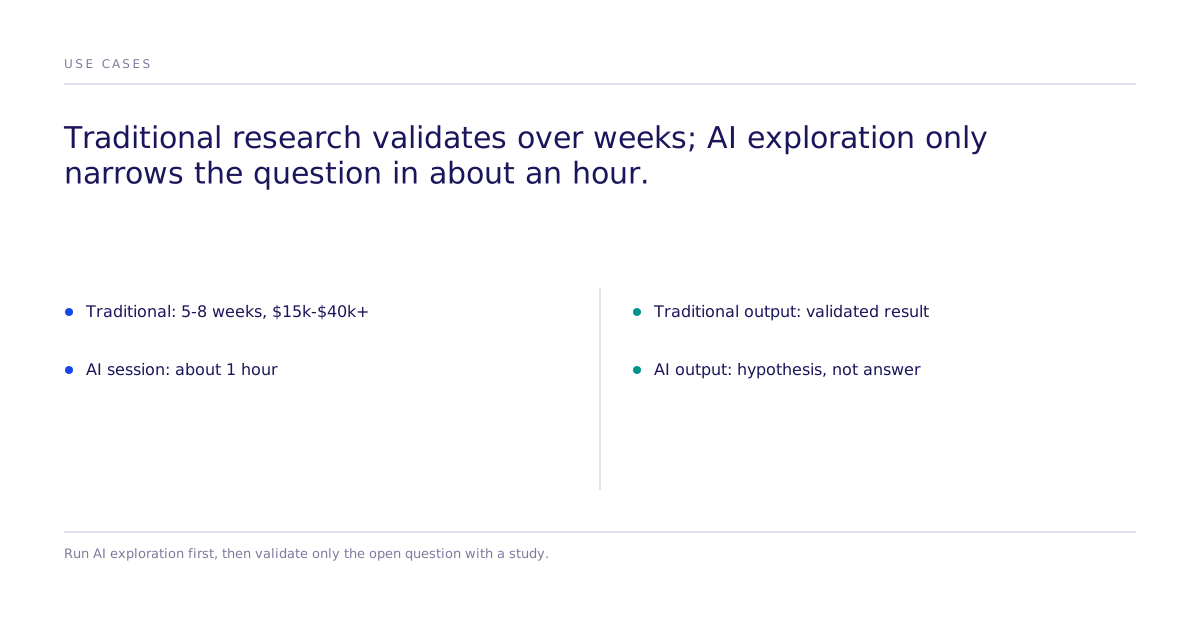
A typical study moves through three stages: about two weeks to write the brief and lock the design, then two to four more weeks to recruit participants and run fieldwork, then one to two weeks to analyze results and write the report. The decision can pass before the report arrives.
A well-designed qualitative study may cost $15,000 to $40,000. A serious quantitative study can cost more. A mid-market team may fund only a handful of studies per year, leaving many decisions without direct customer evidence.
AI-assisted exploration can help a team arrive at better questions before paying for validation. It should not be used to label an unsupported prediction as customer truth.
How the workflow works
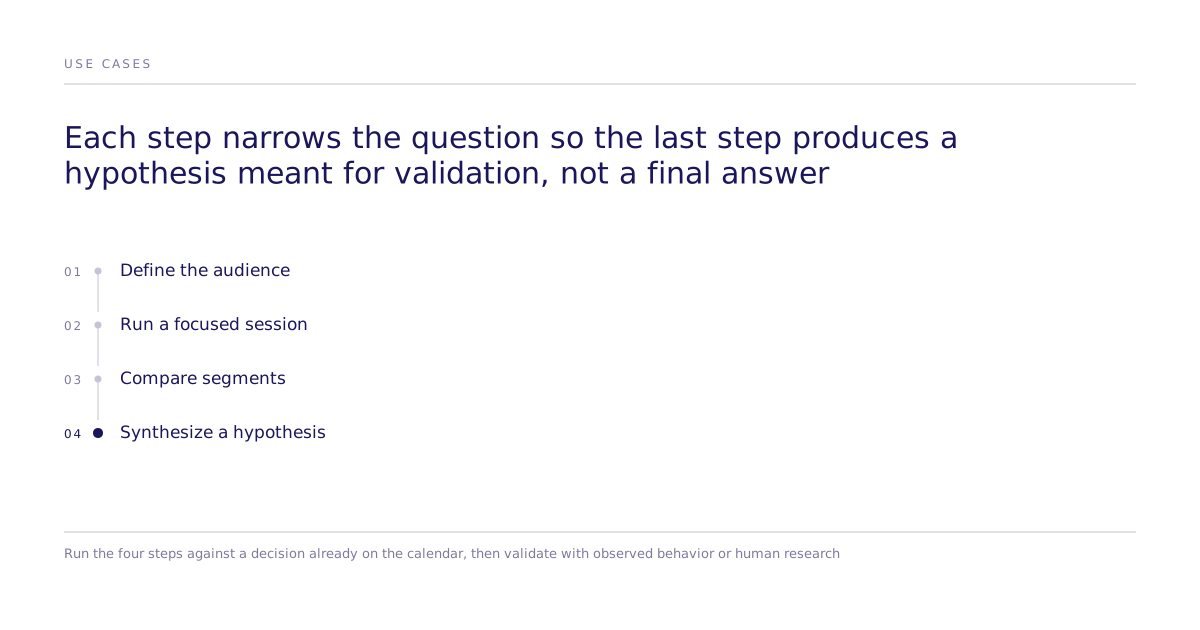
Define the audience
Specify the role, industry, company size, behavior, motivation, and category context relevant to the decision. Broad demographic labels rarely produce useful distinctions.
Run a focused session
Present a product, message, price, or go-to-market action. Ask follow-up questions about the tradeoff and expected behavior. Avoid a generic request for opinions.
Compare audience segments
Run the same protocol across several customer types. Record where responses align and where they diverge.
Synthesize a decision
Translate the result into a clear hypothesis, experiment, or human-research question. Keep the assumptions attached.
What should you look for in a platform?
Persona specificity matters because the audience definition constrains the result. Conversational depth matters when the team needs an explanation rather than a score.
The platform should fit the range of research jobs the team runs, expose enough method detail for review, protect approved customer context, and distinguish simulated evidence from observed customer data.
Self-serve access can reduce operational friction, but it does not make every employee a trained researcher. High-stakes studies still need careful design.
What are the common uses?
Product teams can compare concepts before development and identify objections or missing requirements. Brand teams can study how different audience types describe a category. Marketing teams can compare messages and creative directions.
Competitive work can model how an alternative's customers may evaluate a switch, using public evidence as a constraint. Market-entry work can explore a new geography or segment before commissioning local fieldwork. Customer-experience teams can map friction across a journey.
Start with a live decision
An example self-serve session can produce an initial result within an hour, including 30 minutes of focused conversation. Treat those durations as planning examples, not delivery guarantees.
Choose the customer type closest to a decision already on the calendar. Define the alternatives and outcome. Use the simulation to narrow the question, then use observed behavior or human research to validate the choice.
Subconscious supports decision-specific causal experiments on product, pricing, messaging, and go-to-market actions. Our best configuration reaches 87% of the measured human ceiling on one study: 0.832 rank correlation against the published human result, where two independent samples of real humans reach 0.959. Across all 43 studies that pass design filters the mean is 0.73, documented in the causal fidelity paper. See how the process runs end to end. It should not be described as automatically replacing every qualitative or quantitative research method.