AI Audience Research for Market Decisions
A marketing lead writing a segment brief needs to know which language, objections, and assumptions deserve research. An old persona document may miss a changed role or buying process. A questionnaire can test defined hypotheses, while an interview can help discover them. Simulated dialogue offers another exploration step, provided its answers remain hypotheses about customers.
Exploring a segment is not the same as proving a claim
Simulated conversation with a modeled buyer segment skips the field-recruitment step. A team can describe a role, a set of pressures, and a category, then ask open questions and follow up on the answers, like an interview. That surfaces language, objections, and framing worth testing.
Question wording also affects models. Mahajan and colleagues' Mind the Gap study, revised in May 2026, compared values that language models endorsed with choices they generated in AI-risk dilemmas. Allowing neutrality or abstention changed the agreement between those outputs. The task involved model responses, not incentivized consumer purchases. It supports checking elicitation sensitivity; it does not establish a consumer purchase say-do gap.
Why does the standard research toolkit stall the decision?
A questionnaire can include open questions, but its structure still constrains what participants can raise. Use interviews or exploratory tasks when the team cannot yet specify the alternatives worth comparing.
A moderated group can surface disagreements and shared language. Group interaction can also influence answers, so use individual follow-ups and several sessions where appropriate. Recruitment, moderation, and analysis costs depend on the audience and scope; request a project quote.
What simulated dialogue is good for
Used as an exploration step, this supports a few concrete jobs:
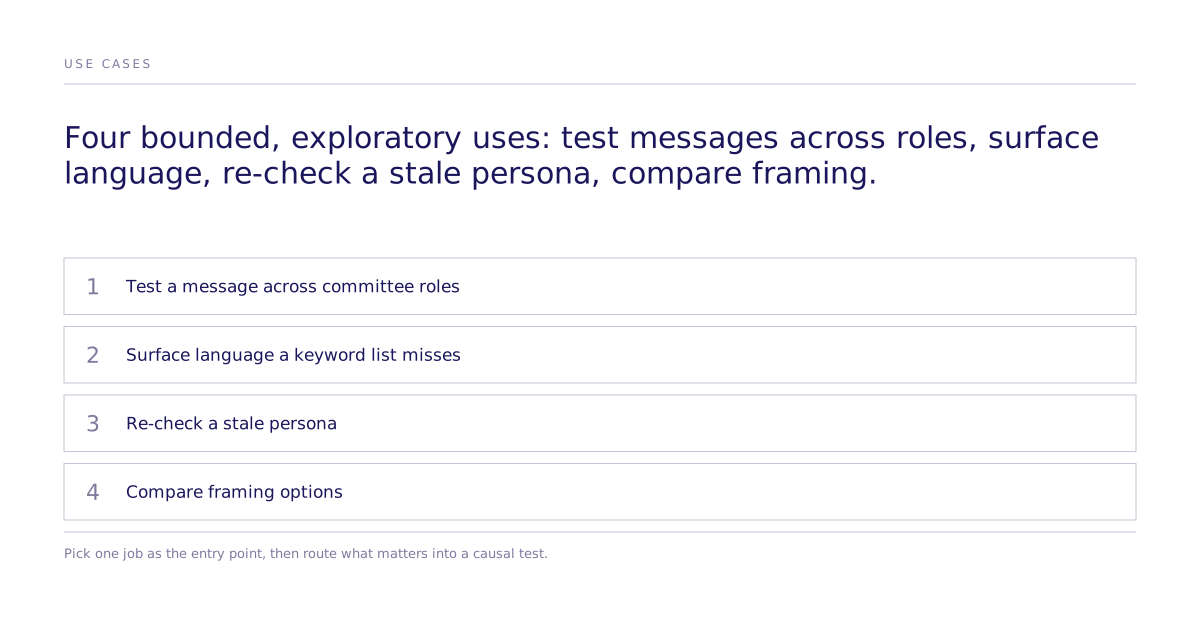
- Testing a message against several roles in the same buying committee before spending on creative.
- Surfacing language and content angles a keyword list will not turn up.
- Re-checking whether a persona built two years ago still matches how a role, its tools, or its constraints look today.
- Comparing framing options for a positioning statement to see which one confuses buyers and which one lands.
A separate paper by Sfeir and colleagues, Can large language models assist choice modelling?, studies assistance with model specification and code-based estimation. Its results concern analysts' workflows. They do not validate simulated customer interviews or establish that generated respondents replace fielded preference data.
When does a decision need a causal test?
A budget decision may require estimating how a message, price, or position changes a defined choice. Randomize the relevant alternatives, record the task outcome, and distinguish the effect in that task from a change in purchases. Qualitative research can inform which alternatives and mechanisms to test.
Subconscious designs discrete-choice experiments to compare defined actions in a modeled audience. Ask which population evidence informs the audience, which outcome the task measures, and how the analysis reports uncertainty. A matched human study can test whether an important finding transfers to its sampled participants. A purchase or sales claim requires evidence for that endpoint; a simulated choice contrast alone does not establish it.
What are the limits of this approach?
A conversation can suggest a billing preference, but it cannot estimate the population share preferring monthly billing without a sampling and measurement design that supports that estimate. It does not replace transaction data, product usage, or direct observation when the decision depends on actual behavior. Compare generated themes with customers and test consequential assumptions before using them in a media plan.
Where to start
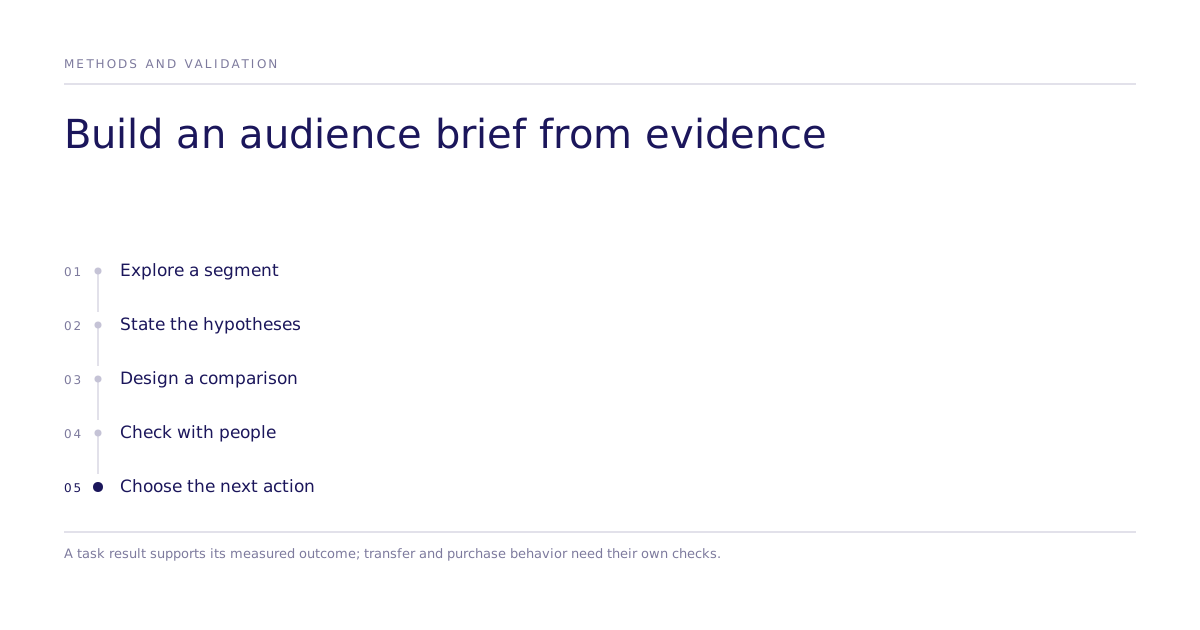
Pick one segment the team understands well. Compare the generated language and objections with customer evidence, then identify what remains uncertain. Review the research evidence, prior case studies, and how a study gets built. Bring one consequential hypothesis to a decision review to scope its experiment and human check.