What a Live Buyer-Reaction Demo Can and Can't Prove in an Agency Pitch
An agency preparing a new-business pitch must decide whether to open with a live, in-room demo of how a simulated audience reacts to the prospect's brand, or hold that moment back. The harder question: what can the agency honestly tell the prospect that reaction proves? Get that wrong with the wrong prospect and the tactic backfires on the account it was meant to win.
What a live reaction demo shows, and what it doesn't
The mechanics are simple. Someone assembles a small simulated audience matched to the prospect's buyer profile, for example eight to twelve profiles, then shares a screen and types a live question: what does this audience think of the brand, the messaging, a competitor. The room watches text responses appear in real time before the conversation shifts back to next steps.
What the room is watching is open-ended reaction to a single prompt. Nobody defined two or more specific options in advance. Nobody varied one thing at a time to isolate what moved the response. Nobody attached a confidence interval to what came back. It reads as evidence because it's live and the output looks specific, but a single open reaction to one prompt is not a comparison, and does not tell the prospect which of two messaging directions would actually change a buyer's choice.
Where does this break with the prospect an agency wants most?
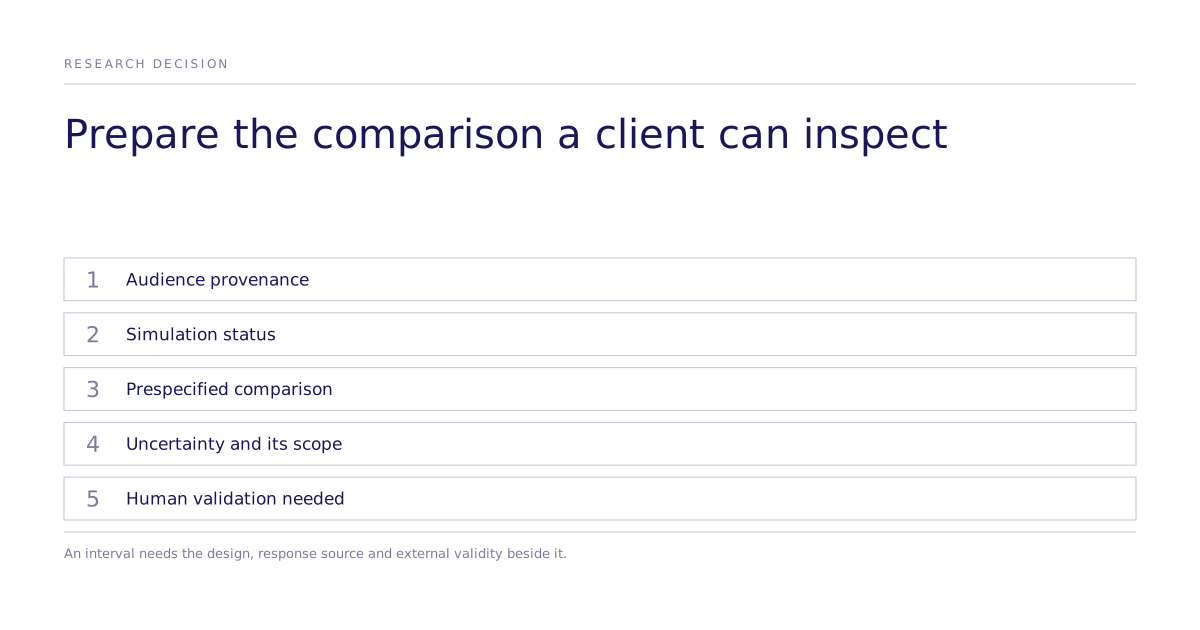
The prospects worth winning often have their own research or data function, and know the difference between a live reaction and a tested claim. If that prospect asks how the audience was built, what the sample represented, or what confidence interval sits behind the answer, and the agency has no response beyond "watch what it says," the moment built to demonstrate research capability shows the opposite: that nothing was tested. Treat the following as questions a research-sophisticated buyer may ask: how the audience was built, what it represented, what the design was, how uncertain the answer is, and what was checked against real people.
A pitch moment built around one completed comparison instead
The alternative isn't abandoning a live moment; it's changing what that moment claims to show. Subconscious can run a controlled discrete-choice experiment that compares a prospect's actual message or positioning options against a defined modeled audience and estimates differences in simulated stated choice. Request the uncertainty measure supported by the design and analysis. The July 2026 causal-fidelity working paper, not peer reviewed, reports parameter-rank agreement with human choice studies. It does not validate the result of this agency pitch or establish effect-size agreement. That's a different claim than an open reaction to a single prompt: instead of "here is what this audience says," the pitch becomes "here is which of your two options this modeled audience chose in the task, and how uncertain that difference is." An interval measures uncertainty inside the design. It does not establish that the modeled audience covers your prospect's real buyers. An agency can walk a prospect through a comparison finished before the meeting rather than improvising live, drawing on the same case study format it would use with a paying client. Describe the response source in the pitch: a modeled audience, recruited participants or observed customers. Report the comparison's scope and validation instead of implying that modeled responses came from a live human panel.
What does a completed comparison still not prove?
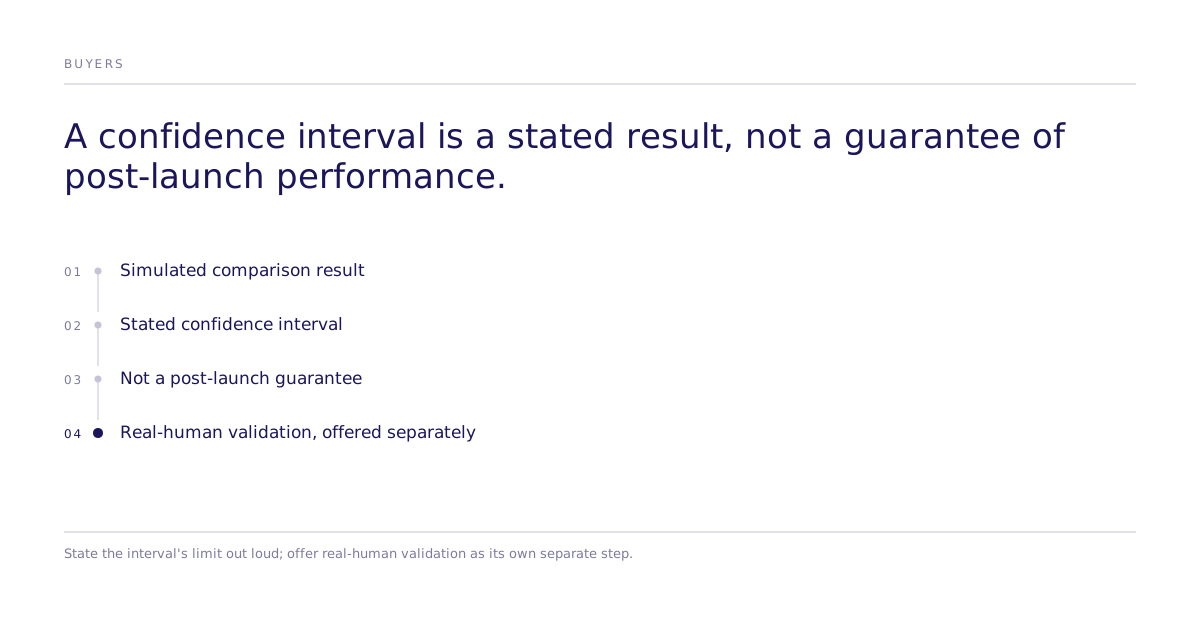
A single controlled comparison run before a pitch is not proof of what happens after launch. Report the estimate with design-appropriate uncertainty and its limits. A model-conditional interval does not cover every error in transferring a result to real buyers. Moving from a simulated comparison to real-human validation is a separate, explicit next step, not something bundled automatically behind every simulated result: a team can put the same question to real human participants in a matched study. Scope that study, and confirm its participant source, before you offer it.
What should an agency decide before the next pitch?
The decision an agency needs to make before a new-business meeting is narrower than "should we do a live demo." It is: does the planned moment answer the question this specific prospect will ask? A research-sophisticated prospect needs a defined comparison, supported uncertainty and evidence that the result applies to the intended decision. A less sophisticated one may respond just as well to a live reaction, provided the agency doesn't overstate what it means. Matching the pitch moment to the prospect, and being precise about what it proves, is what keeps the tactic from turning into the exposure it was meant to prevent. To scope a comparison for a specific prospect audience, book a decision review and bring the message options, the prospect's buyer profile and the questions you expect them to ask. You can also read how the underlying experiment process runs end to end.