How PR and Comms Teams Can Pre-Test a Narrative Before It Ships
A PR or corporate-comms lead should pre-test a narrative when choosing the wrong version would create public damage that cannot be cleanly reversed. The test should compare specific drafts against a defined audience and a defined outcome, such as trust, perception, or support. It should not ask only whether colleagues like the copy.
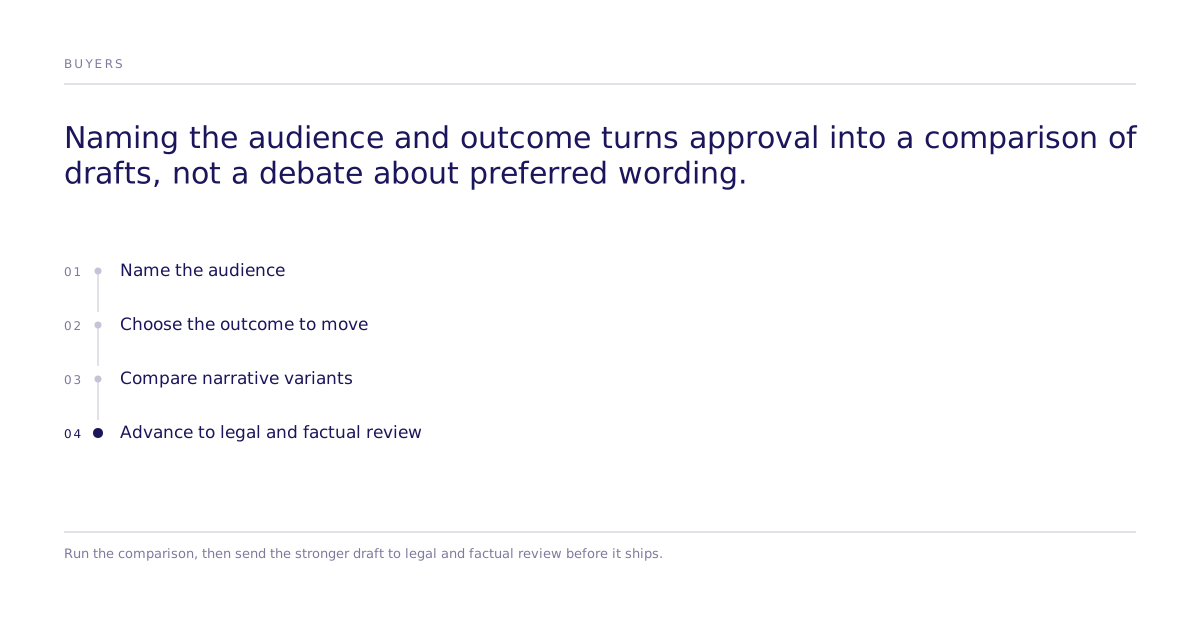
Approve the effect, not just the wording
Internal review is useful for accuracy, tone, and organizational alignment. It cannot show how an audience's response changes because one narrative ships instead of another. The people closest to a client know the intended meaning, which makes them poorly placed to detect when bold sounds overhyped, accountability sounds evasive, or a provocative thesis sounds careless.
Frame the decision as a causal messaging experiment comparing two or three narrative variants:
- Name the audience whose response matters.
- Choose the outcome the narrative is meant to move.
- Estimate the relative change in that outcome across the variants.
This separates the approval decision from a general copy critique and addresses the say-do gap: stated preference alone does not establish what people will trust, support, or act on when the message becomes public.
Three narratives with different costs of error
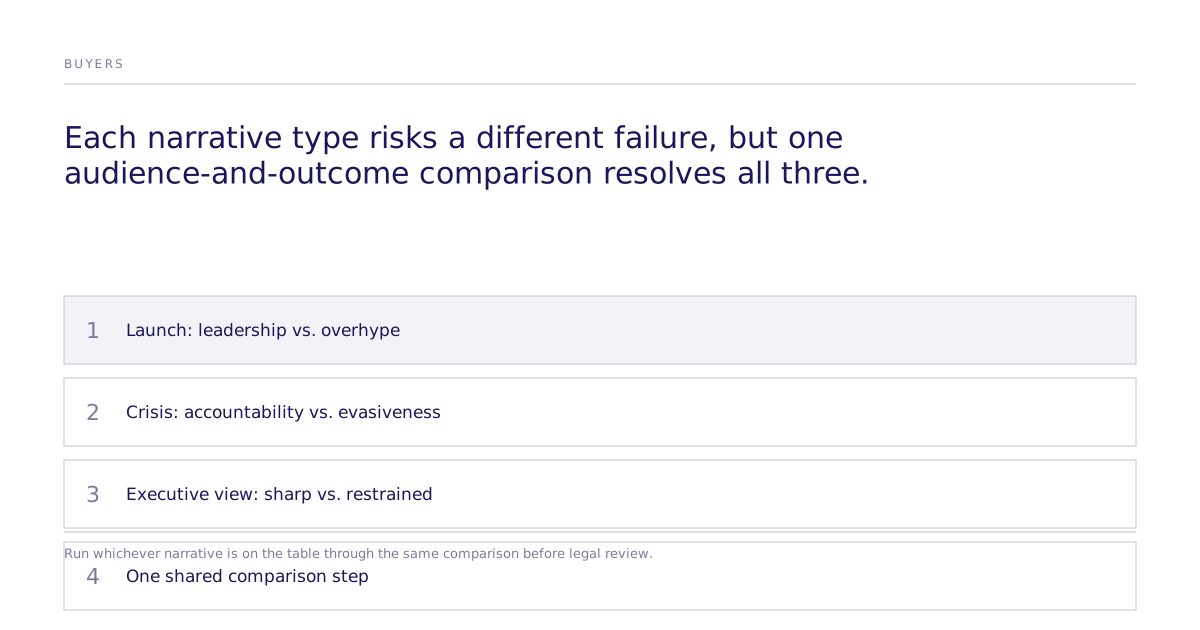
A launch announcement
A launch narrative may need to signal category leadership without reading as inflated. Compare the assertive framing with a measured alternative for the customer or investor audience that must believe it. The useful result is not a universal score for the copy but evidence about which version better moves the outcome chosen for that audience.
A crisis statement
Crisis-communication guidance treats preparation as a plan made before an incident, not only as wording improvised once scrutiny begins (Prezly's crisis communication guide). A narrative comparison applies that preparation to the statement itself. It can test whether one draft produces more trust or support than another among customers, employees, or investors.
A comparison result only means something if its edges are stated plainly. This evidence does not decide whether a statement is legally sufficient or factually complete. It helps the comms lead choose between credible alternatives before the response becomes public.
An executive point of view
A provocative thesis may be intended to win confidence from investors, peers, or enterprise buyers. The approval question is whether the sharper argument strengthens that response or causes the audience to discount the executive. Comparing the core thesis with a more restrained version makes that tradeoff explicit.
Read the evidence at the right scale
Subconscious can run controlled studies against a person-level audience graph covering 800 million real people. A reach number means little without the limit attached to it. That number describes modeling reach. It does not mean 800 million people are available to recruit for a study.
When a simulated comparison warrants another form of evidence, Subconscious can validate the study with real human participants, keeping the causal question constant while moving to real-human validation. The two forms of evidence remain distinct.
This record states what the method has not proven yet. The current proof does not establish PR-specific outcomes. Subconscious does not provide a packaged crisis-response workflow, named PR case studies, or journalist-specific recruiting. A comparison estimates the effect of the drafts and audiences actually defined in the study. It does not predict how one named journalist will react or guarantee media coverage, public approval, or market performance.
Put the comparison into the approval room
The work begins with the decision the client must make, not with a generic request to test a message. Define the cost of choosing poorly. Draft the credible alternatives. Specify the audience and the response that matters. Then use the comparison to decide which narrative advances to legal, regulatory, factual, and final editorial review.
This gives an agency or in-house team a clearer approval conversation: experience still shapes the alternatives, and evidence shows how the choice between them changes the expected audience response.
Teams considering this approach can review the underlying research, examine how a study is structured, or request a walkthrough for a specific narrative decision.