When Roadmap Debate Needs a Controlled Comparison
A founder or product manager choosing what to build next is choosing where engineering capacity goes for the next quarter. Get the sequence wrong and the cost is not the build itself. It is the months spent shipping a feature that never changes what the target customer does, discovered only after release.
Where roadmap debate runs out of evidence
Few roles in a growing company carry as much piled onto them as product management: strategy, discovery, prioritization, stakeholder alignment, specification, launch coordination, and customer feedback synthesis. Several situations strip a team of the structured judgment that usually holds those trade-offs together.
- Founder-led product teams. A technical founder is good at building. Deciding what to build is a separate skill. The common failure is not building bad things. It is building the right things out of sequence: a team can burn three months on a feature that pleases existing power users while doing nothing to grow acquisition, or ship many features at lower quality than a few would have had.
- Teams between PM hires. A PM leaves, the replacement starts in six weeks, and in the gap the engineering team still needs priorities while three stakeholders push conflicting requests. Absent a framework, the loudest voice in the room decides.
- Growing teams without senior PM leadership. Junior PMs can execute but have not yet navigated a platform pivot, a pricing model change, or an entry into a new market, and no one senior is there to reason it through with them.
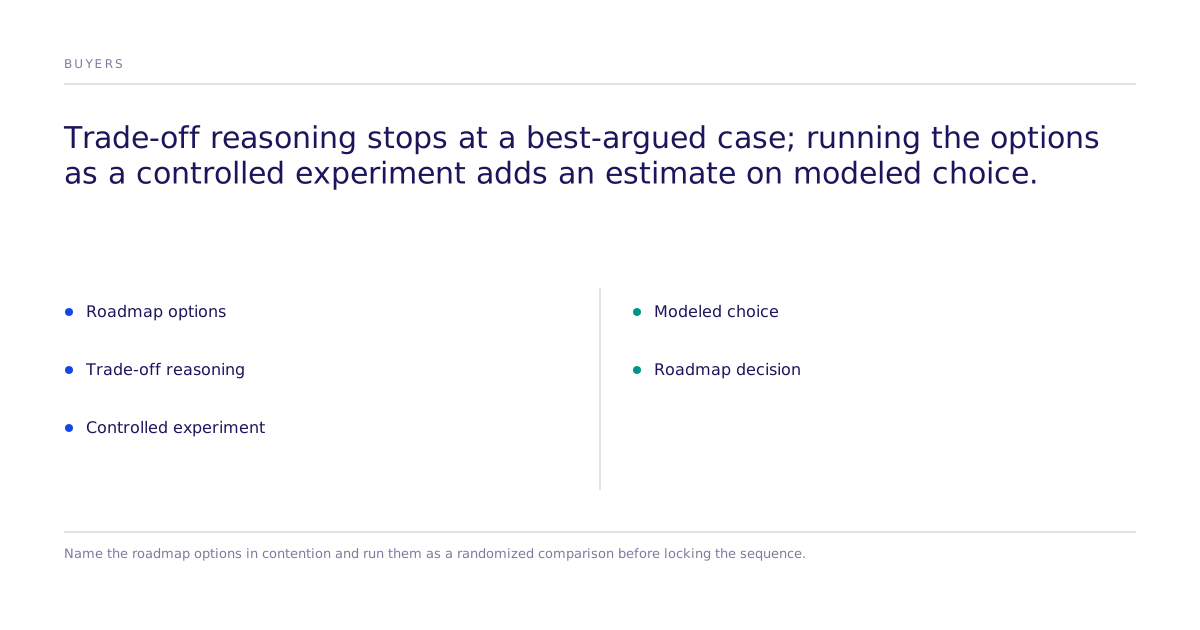
In each case, the team still has to decide: which of several roadmap items to sequence first, what an MVP should and should not include, whether a PRD's success metric actually means anything, or whether to build a platform versus stay a point solution. Structured trade-off reasoning surfaces blind spots a team might otherwise miss. But reasoning through a trade-off is not the same as measuring how the target customer responds to each option: a well-argued roadmap sequence can still be wrong about what moves the outcome the team cares about.
How does Subconscious turn roadmap debate into a measured comparison?
Where trade-off reasoning stops at "here is my best judgment on the options," Subconscious runs a controlled experiment. It defines the competing alternatives, such as feature A versus feature B, platform versus point solution, or enterprise-first versus self-serve-first, as a randomized comparison against the same population and outcome, estimating effects on the modeled choice before the roadmap is locked. This does not replace the judgment call between a platform pivot and staying focused; it gives that call a comparison to check itself against. The discrete choice experiment behind this kind of comparison is a standard method in management research more broadly (Organizational Research Methods, SAGE).
Separately scope a matched human comparison when the roadmap decision requires current customer evidence. Agree recruitment, alternatives, allocation and outcome measurement. The method evidence states the current validation task, and case studies describe other product and pricing decisions.
What does a measured comparison not settle?
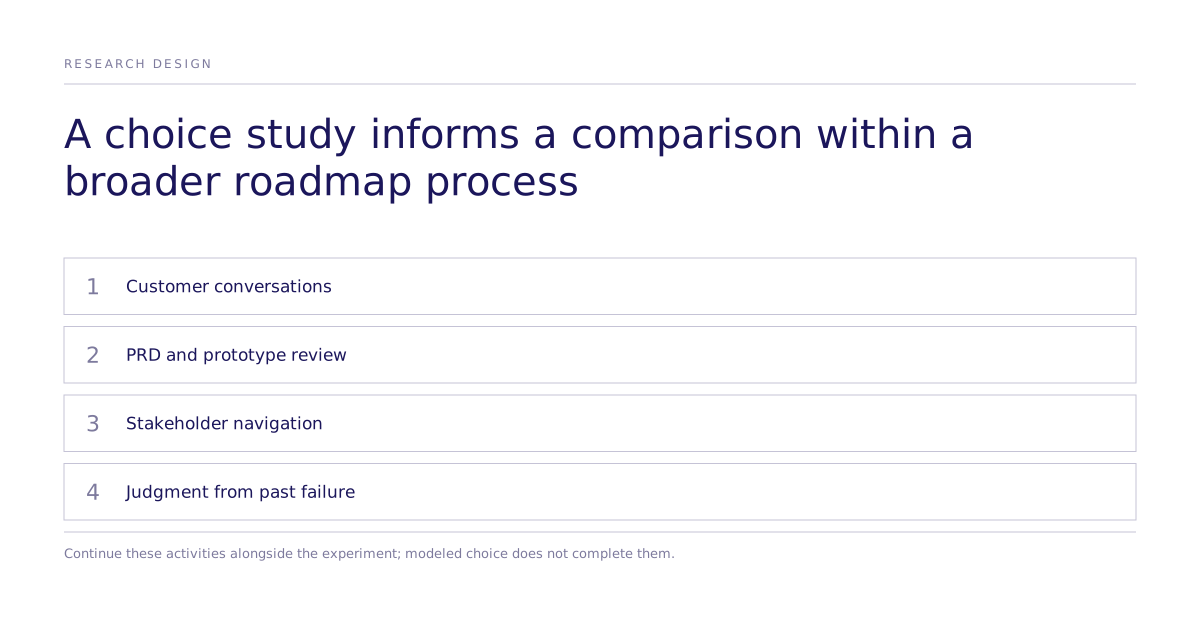
A causal comparison between roadmap options answers one question: how the tested alternatives change the response recorded by the study; simulated choices still need evidence against the intended customer task. It does not replace:
- Customer conversations. Primary research still requires talking to real customers; a controlled comparison can sharpen which questions to ask next, not stand in for the conversation.
- PRD and prototype review. Checking a specification for missing edge cases, unclear success metrics, or weak reasoning behind a feature is a different exercise than measuring customer response to a defined option.
- Stakeholder and organizational navigation. Building consensus across conflicting stakeholder requests is a negotiation problem, not a measurement problem.
- Judgment from a lived failure. A team that has shipped and watched a product fail carries a kind of calibration that no measured comparison replaces.
How do you frame a roadmap decision as a test?
Before locking a roadmap sequence, a team can name the two or three options actually in contention: which features, which market segment, which platform direction, and treat that as the experiment's design question rather than a debate to win. See how an experiment gets scoped. A team with a live roadmap decision can book a decision review.