5 Traits to Check in a Research Team’s Operating Model
A research, product, or strategy leader picking a vendor for a high-stakes causal experiment buys more than a method: a team's ability to design the test, interpret the result, and hand over an auditable decision memo. An opaque structure can hide how a conclusion was reached, even when the method is sound.
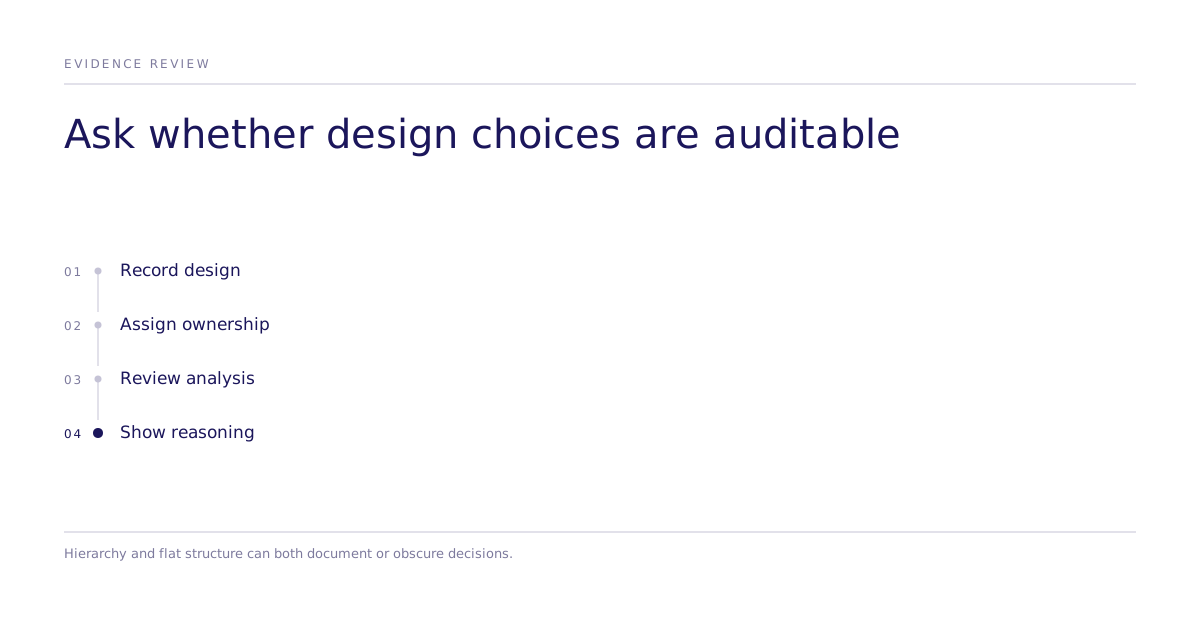
Ask how the team records design choices, reviews analysis and assigns accountability. A flat organization can hide decisions, and a hierarchy can document them clearly. Team structure alone cannot establish research quality or delivery speed.
Where the pattern comes from
The traits below borrow from research on open-source teams. Research on free/libre open-source software projects documents recognition and coordination structures that replace top-down management with visible, self-assigned work (Business Ethics, the Environment & Responsibility). Separate work from the Syracuse University FLOSS research group examines decision-making in distributed virtual teams (decision-making paper).
This is an organizational-design analogy, not a case study of any single company's team, compensation, or governance model. The five traits below are a checklist for evaluating a vendor's operating model, not a proprietary Subconscious methodology.
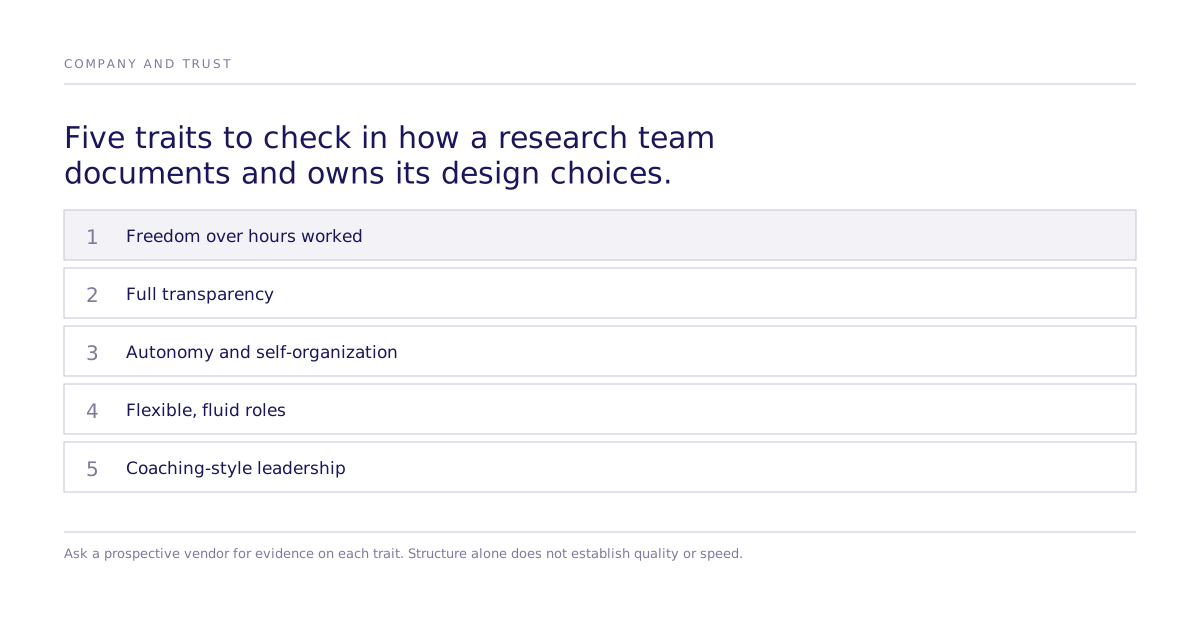
Five traits worth checking before you commit budget
1. How does the team handle freedom over hours worked?
Ask whether the team is rewarded for output, for hours logged, or for the quality of its reasoning. For a research vendor, the visible evidence is in the work: experiment designs and decision memos that show how the causal question was framed, rather than templated documents.
2. How transparent is the team's work?
A team where more people can see the state of every active engagement has more chances to review a design or an interpretation. For a buyer, the practical test: ask whether the vendor can show how an experiment's design decisions were made, not just the final slide.
3. How does the team balance autonomy and self-organization?
Ask who makes the call when the person closest to a problem disagrees with a manager or committee. Autonomy without shared goals can fragment a team, and too little autonomy can slow it down. A vendor worth trusting with a high-stakes experiment should describe how it manages that tension, not just claim to be "self-organizing."
4. How flexible are the team's roles?
When project leadership shifts based on who has the most relevant expertise, a team can reorganize around a client's specific causal question instead of forcing the question into an existing structure. This matters when a buyer's decision spans product, pricing, and messaging and no single fixed role owns all three. Ask who owns the statistical analysis for your engagement, by name.
5. How does the team's leadership style show up in the work?
A leadership style built around removing blockers, rather than dictating tasks and deadlines, keeps decision-making close to the people running the experiment. Worth probing directly: does the person leading the engagement make the calls themselves, or explain the reasoning and let the analyst closest to the data make the final judgment?
Why this matters for causal experiment work specifically
Evaluate the same concrete evidence for Subconscious: the task, population, design, analysis and stated validation limits. A simulated effect is conditional on the model; a separately specified human study can check it. The public evidence record is one input to that review, not proof that a particular operating structure guarantees quality.
Limitations
This is a framework for evaluating a vendor's structure, not a scorecard that guarantees quality. A team can score well on every trait and still design a flawed experiment, and a more hierarchical team can still produce rigorous work. Use these traits alongside the vendor's actual methodology, published evidence, and willingness to show its reasoning, not as a replacement.
Next step
Before committing budget, ask to see how a past experiment's design decisions were made and by whom. A team that answers clearly is showing the kind of auditable practice described here. Learn how Subconscious's team works or see the research behind the method.