Alternatives to Recruited-Participant Panels for Qualitative Research
Screener-based interview panels solve a real problem: finding qualified people for qualitative research. A team that needs to interview B2B buyers, niche professionals, or a specific demographic segment can use a recruitment platform to connect with pre-screened participants who match the criteria.
The trade-off is time and cost, which raises a question worth asking before every study: does this research question require a freshly recruited human panel, or can the team get a useful answer without one? Screening, scheduling, and no-shows are consistently reported as the slowest part of qualitative recruitment, adding real calendar time before a single interview happens (Norstat, "Participant Recruitment in Qualitative Research").
How do recruitment and simulation approaches compare?
Buyers evaluating qualitative research options are usually choosing among structurally different approaches, not competing vendors of the same one.
| Approach | How it works | Best for | Key trade-off |
|---|---|---|---|
| General B2B interview panels | Screens and matches human participants to a target profile for one-on-one interviews | Teams that need a broad, pre-screened B2B panel for standard qualitative interviews | Recruitment time and cost scale with every new segment interviewed |
| Large academic-rooted panels | Broad participant pool with demographic and professional filtering, spanning qualitative and quantitative work | Teams that need a large sample size or want to combine survey and interview research on one platform | Panel size does not remove screening and scheduling lead time |
| ICP-matched message-testing panels | Recruits participants matched to a defined Ideal Customer Profile to react to copy, messaging, or creative | Marketing teams testing B2B messaging against a specific buyer profile | Still bound by recruitment lead time for each new message or segment |
| Causal experiments on a simulated population | Builds a controlled experiment against a modeled population instead of recruiting people, then estimates which action changes the outcome | Early-stage exploration, cross-segment comparisons, and decisions that need a fast read before committing to recruitment | Produces an estimated causal effect on a modeled population, not raw answers from real people |
Subconscious sits in the last row. Subconscious can also test or validate the same study with real human participants without changing the underlying causal question: a team is not choosing between simulation and human validation as separate platforms, they are choosing when in the process to bring each one in.
When simulation is the right first step
Not every research question needs real participants recruited on day one:
- Exploration and hypothesis generation. When a team is still figuring out which questions to ask, a simulated experiment can explore the space before anyone books a screener call.
- Cross-segment comparisons. Comparing how five different buyer segments respond to the same question can run at once against a simulated population; a recruitment panel requires sourcing five separate groups in sequence.
- Speed-sensitive decisions. A product or marketing team may need a directional read in days rather than the weeks a screener-based panel typically takes to fill.
- Budget-constrained teams. Early-stage teams without a standing research budget still need a first read on customer behavior before deciding whether a recruited-participant study is worth funding.
How do you sequence simulation and recruitment together?
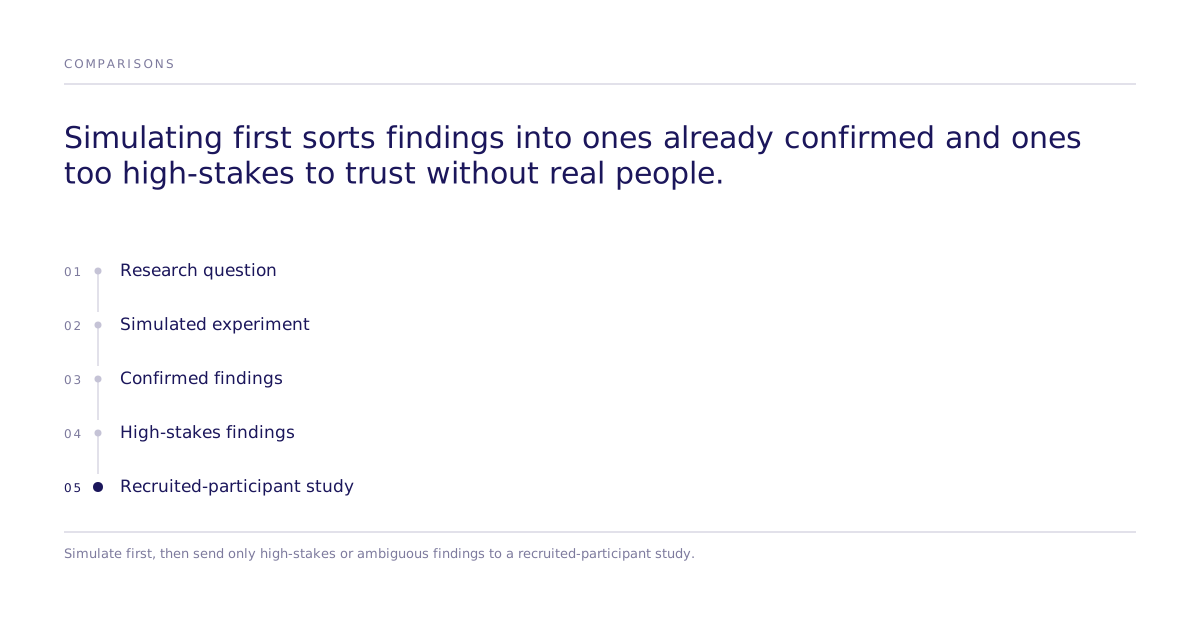
Research teams that use recruited-participant panels have historically sequenced two steps: simulate first to sharpen the question, then recruit real people to validate what emerged. A team might run an early round of simulated interviews to identify which two or three findings are ambiguous or high-stakes enough to warrant a recruited-participant study, reserving screener time and budget for the claims that need confirmation with real people, not the whole research question.
That sequencing matters most when the decision is high-stakes: a launch, a pricing change, or a claim made publicly. Simulated experiments estimate causal effects on a modeled population; they are not a substitute for a recruited-participant study when only a specific named human population's response is decision-relevant, such as a regulatory, legal, or safety-critical claim about real customers. Recruitment methodology research shows that even well-designed studies can struggle to reach and retain some populations (BMC Medical Research Methodology, "Widening participation: recruitment methods in mental health randomised controlled trials").
For teams weighing whether a research question needs a recruited panel today, Subconscious can run the simulated first pass and carry the same causal question into a validation study when the decision warrants it. Book time to scope a study.