Real Panels, Synthetic Conversations, and Causal Tests: Picking the Right Research Tool for a Launch Decision
A marketing or insights leader choosing a research tool for an upcoming pricing, messaging, or launch call is usually picking among three different kinds of evidence, not one. Each answers a different question, and using the wrong one is what makes a decision expensive to reverse after it ships.
The three questions on the table
Before comparing tools, separate what each one is actually built to answer:
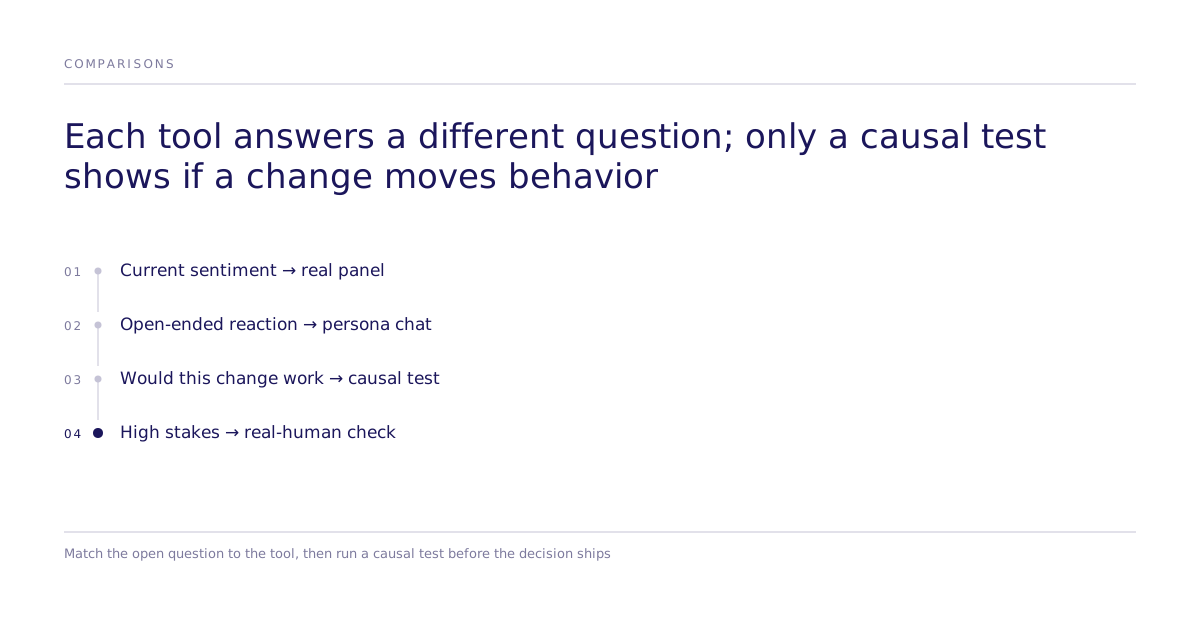
- What do real consumers currently think, want, or say when asked. A curated real-panel platform like Suzy answers this: it runs polls and structured studies against a maintained panel of recruited consumers and reports back what they said.
- What might a customer type say in an open-ended conversation. Self-serve synthetic persona chat tools answer this: a marketer builds an AI persona and talks to it, iterating in real time.
- What would actually happen to behavior if a specific price, message, or offer changed. Neither of the above answers this directly, because neither one runs a controlled test of the action itself.
A team with only the first two is still guessing at the third, and the third is usually what the launch decision depends on.
Where does a real-panel platform fit?
Suzy is built for insights and analytics teams that run structured research programs against a maintained panel and want the results flowing into existing dashboards and reporting workflows. It answers "what does our panel currently say" well; it does not isolate which specific version of a price, message, or offer would move behavior if changed today.
Where does synthetic persona chat fit, and where does it stop?
Self-serve synthetic persona chat tools let anyone on a marketing or product team create an AI persona and hold an open-ended conversation with it, without a research team in the loop. That is useful for early, low-stakes exploration: probing a rough idea, stress-testing messaging before it is written up, or surfacing questions worth testing properly. It is not a controlled experiment: a conversation with a synthetic persona reflects what that persona says when asked, not what a population of real or synthetic buyers would actually choose between two offers set up as a controlled comparison.
Testing the action itself
Subconscious runs controlled discrete choice experiments, built on McFadden discrete choice, mixed logit, and ICLV methods, against a synthetic population, and reports a causal effect with a confidence interval for the specific action under test: a price point, a message, a launch offer.
Subconscious does not run open-ended, unlimited-follow-up persona chat, and it does not operate a curated real-human panel product for ongoing sentiment tracking. Those are genuine scope boundaries, not workarounds: a team that needs live conversational exploration or an ongoing real-consumer panel still needs one of the other two tools alongside a causal test of the specific action.
Comparing what each tool actually answers
| Tool category | What it answers | Who typically runs it | What it does not do |
|---|---|---|---|
| Curated real-panel platform (e.g. Suzy) | What a maintained panel of real consumers currently says | Research or insights team | Isolate which specific change would move behavior |
| Self-serve synthetic persona chat | What an AI persona says in open-ended conversation | Any marketing, product, or sales team member | Produce a causal effect or confidence interval |
| Controlled discrete choice experiment (Subconscious) | Whether a specific action changes choice, and by how much, with a confidence interval | Teams testing a decision before it ships | Replace an ongoing real-consumer panel or open-ended chat exploration |
How do you go from a simulated test to a real-human check?
When a launch decision carries enough weight that the team wants the causal read confirmed against recruited real-human participants, Subconscious can test or validate studies with real human participants, moving from a simulated experiment to a real-human validation study without changing the underlying causal question. That step matters when the cost of being wrong is high; it is not needed for every study.
Before choosing a tool for the next decision
Match the tool to the open question. A real-panel platform answers "what does our panel currently think." Synthetic persona chat is a reasonable first pass at "what might a customer type say if we asked." "Would changing this price, message, or offer actually move behavior" calls for a controlled test of the action before it ships. Book time to scope a discrete choice test for a specific pricing, messaging, or launch decision, or see the method in more depth on the research page.