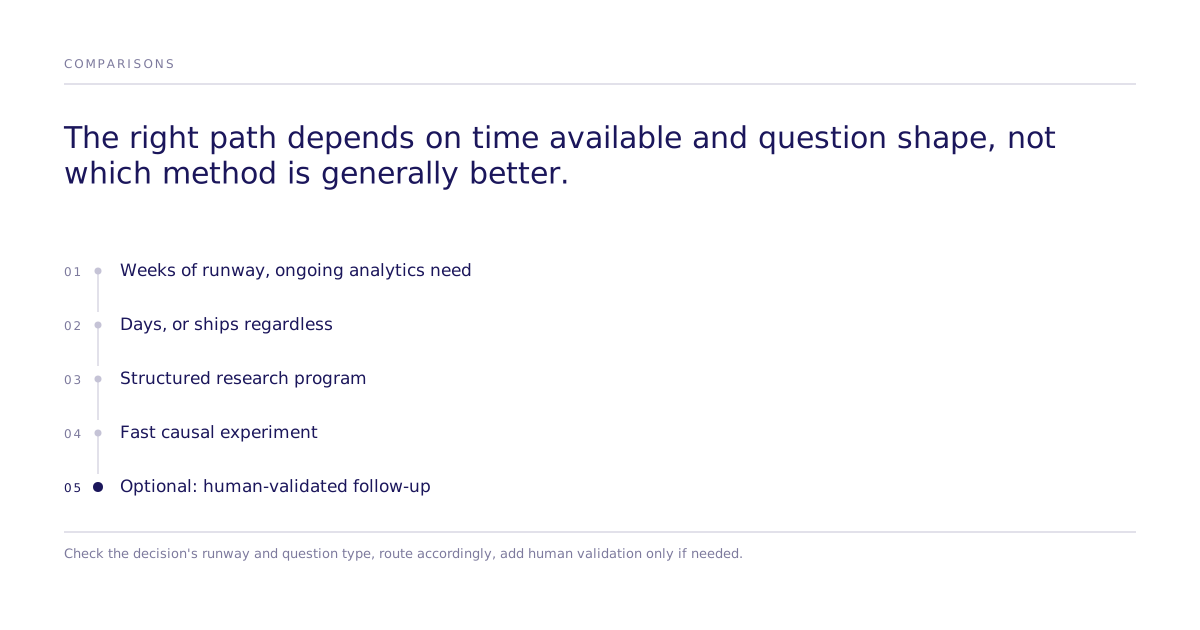
Structured Research Platform or Fast Causal Experiment: How to Route the Decision
A CMO or insights lead already running, or evaluating, a structured research program faces a recurring routing problem: some decisions belong in that program, and some will ship or die before the program can answer them. The question is not which vendor is better, but which path fits the decision in front of you: a multi-week, dashboard-integrated research cycle, or a fast, causal experiment built to test one action before the window closes.
What is a structured predictive-modeling program built for?
In the market research and consumer-data space, Civis Analytics is known for predictive modeling from aggregated consumer and voter data, delivered through dashboards and reports that plug into an existing analytics stack. That design fits organizations with a dedicated research or insights function, an established workflow, and budget allocated specifically to research tooling. The tradeoff is cycle time: defining the question, designing the methodology, collecting data, and analyzing results is a multi-week undertaking even under favorable conditions, and updating the answer means running the cycle again.
That cost buys segment-level modeling, integration with an existing reporting stack, and a methodology built for ongoing, institutional use rather than a single decision.
What is a fast causal experiment built for?
The alternative is not a faster dashboard. It is a different question shape: instead of building a durable model of the market, a causal experiment tests one specific action, such as a price point, a message, or a feature description, against a defined outcome, on a timeline set by the decision rather than by a research cycle.
Subconscious is a causal behavioral platform: randomized experiments run on a simulation of the market estimate which action moves which outcome, with confidence where the evidence supports it. The method is closer to a designed experiment than to a survey or a dashboard refresh.
Deciding which path fits the decision
| Signal | Route to a structured research program | Route to a fast causal experiment |
|---|---|---|
| Time available before the decision ships | Weeks are available | Days, or the decision ships regardless |
| What you need to know | Deep segment-level modeling, an ongoing analytics feed | Whether one specific action moves one specific outcome |
| Team involved | A dedicated research or insights function owns the question | The team making the call needs the answer directly |
| Integration need | Results must feed an existing dashboard or reporting stack | The result informs a single, time-boxed decision |
| Risk of the wrong route | Shipping before evidence arrives, or missing the decision window | Under-serving a need for durable, integrated analytics |
Most real decisions are not purely one or the other. A launch pricing call might need a structured program for the long-run pricing architecture and a fast causal test to check one price point against a deadline. The routing question is which need is binding this week.
Where a causal experiment adds a distinct capability
Where the decision genuinely needs corroboration beyond a simulated experiment, Subconscious can test or validate the same study with real human participants without changing what is being tested. That keeps the simulated and human-validated results answering the same question, rather than switching methods and losing comparability.
Subconscious can also run controlled studies against a person-level audience graph covering 800 million real people, which supports targeting a specific buyer segment rather than a generic panel. That is a targeting capability, not a claim that all 800 million are recruited study participants: the audience graph and a recruited human sample are different things, and only the latter is a live validation study.
When is a fast causal experiment the wrong tool?
A single causal experiment does not replace a dedicated research or insights team, a dashboard-integrated analytics program, or a long-running segmentation study. If the real need is an ongoing feed of consumer data into an existing reporting stack, or statistically rigorous modeling maintained by a research function over time, a structured program remains the right infrastructure.
Timeline, pricing, and accuracy comparisons between the two are not included here, since no sourced benchmark supports a direct comparison. The distinction that matters is methodological, not a speed or cost claim.
Making the call
Start with the decision, not the vendor. If a team already has budget and a mandate for a structured, dashboard-integrated research program, and the decision has weeks of runway, that program is infrastructure worth keeping. If a specific action needs a causal answer before a deadline the research cycle cannot meet, a fast, targeted experiment is the better-fitted tool, and it can graduate to real-human validation without changing the question asked. Reviewing current causal research methods or how a causal experiment moves from design to evidence is a reasonable next step.