AI Focus Groups: Uses, Limits, and a Practical Workflow
An AI focus group is a simulated research panel. Defined audience models respond to questions, stimuli, and scenarios. The output can expose agreement, objections, and questions worth testing with people.
Generated responses can suggest hypotheses. Claims about study speed or accuracy need a defined scope, task, human baseline, and validation design before a buyer can assess them.
What problem the method addresses
Human focus groups can expose needs and language while also being affected by group dynamics, recall, and recruitment. Therese Fessenden's Focus Groups 101 explains why those accounts should be paired with methods suited to the later decision.
A small discussion group provides qualitative observations rather than a population estimate. A participant saying, "I would pay €50," reports a hypothetical preference; the statement is not a purchase. Obtain a quote for the actual recruitment, markets, moderation, analysis, and schedule.
These limits make method choice important, not focus groups worthless.
"Focus groups don't accurately predict future behavior. However, they can help gauge attitudes and guide future exploration, thus avoiding wasted research time."
Therese Fessenden, Nielsen Norman Group, "Focus Groups 101" (source)
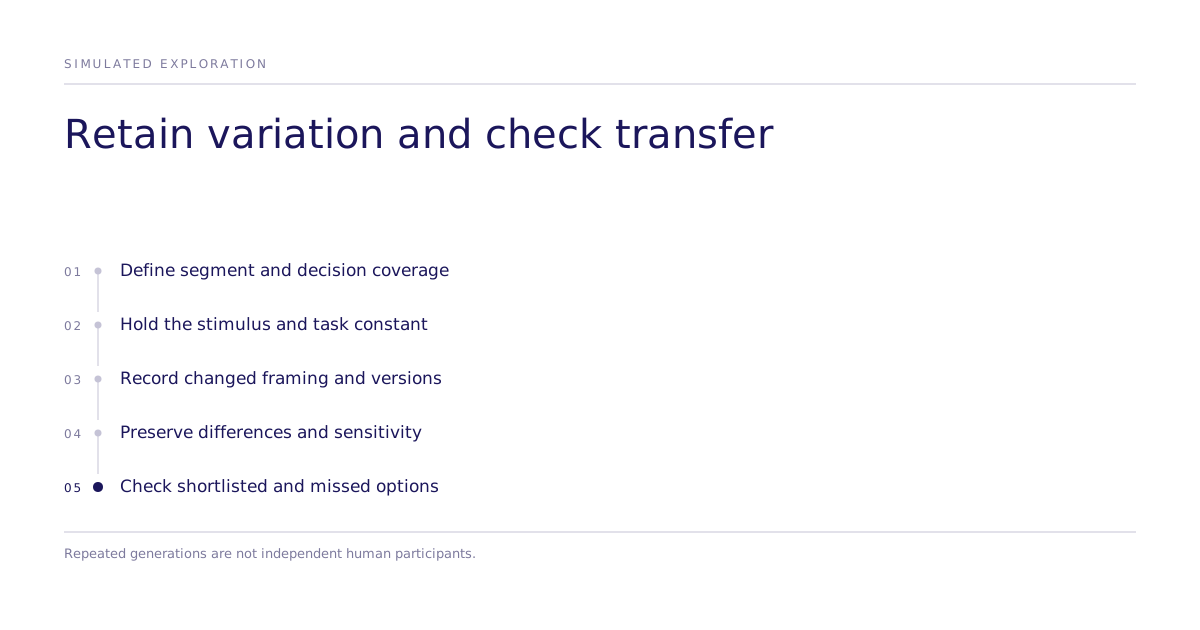
A four-step simulated workflow
1. Define the audience
Specify the roles, context, attitudes, and constraints that matter to the decision. Map the intended segment coverage and identify missing groups before creating the modeled perspectives.
2. Hold the experiment constant
Present the same stimulus and question to each audience definition. If the study tests group effects, state what information each participant can see and when.
3. Probe divergence
Ask follow-up questions when responses differ. If framings change, record each change and retain model, prompt, stimulus, and version information. Repeated generations from the same system may be dependent and do not add independent human audience evidence.
4. Synthesize without hiding variation
Record where responses agree and where they differ. Divergence may signal a segment difference, a weak audience definition, or model sensitivity. It does not establish the cause by itself.
What questions can AI focus groups help screen?
Early concept tests can ask whether a problem and solution make sense. Message tests can compare headlines and value propositions. Objection mapping can capture the first three reasons a buyer might reject an offer. Competitive-positioning exercises can compare reactions to alternatives.
For localization, define the language and market-specific context. Generated responses about Germany, the UK, or the US remain hypotheses until relevant evidence from those markets supports the intended claim.
Use real people for the final evidence
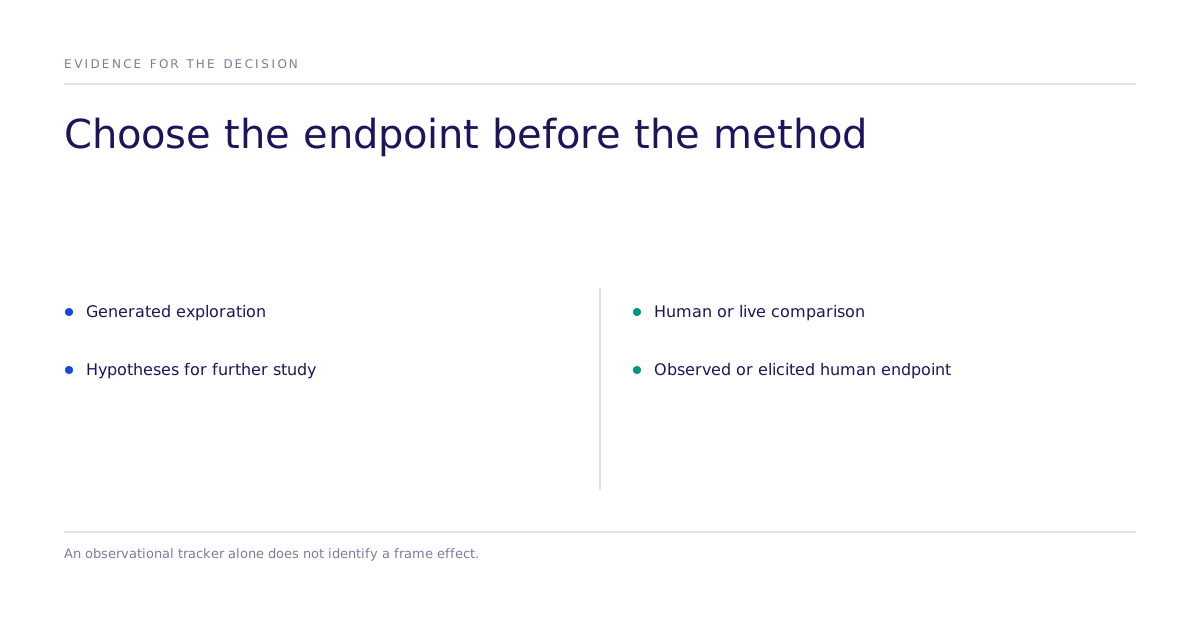
Use people when the endpoint requires observing actual behavior, expression, physical or sensory experience, or evidence of participant testimony. Set the required evidence from the decision's consequences and applicable protocol.
Subconscious uses decision-specific choice studies. Define the alternatives and generated choice endpoint, then decide whether a human or live comparison is needed. Simulated exploration need not precede every human study.
Planning examples for study design
The following scenarios illustrate scoping choices; their budgets, counts, and schedules are assumptions, not observed savings or current vendor quotes.
Suppose a skincare team compares three positioning concepts. Its hypothetical full human scope is four groups across two markets at €18,000; a generated screen plus targeted human follow-up is budgeted at €6,000. The arithmetic difference is €12,000, but it becomes a saving only if the reduced scope supplies the evidence the decision needs. Record what was dropped, including coverage and discovery, and test a potentially excluded concept when a false negative would be costly.
A hypothetical €120,000 campaign could compare five statements using six modeled perspectives selected for explicit segment coverage. A randomized live A/B test can compare shortlisted statements on the campaign endpoint. Inspect the risk of excluding a useful message; agreement among generated perspectives is not six independent buyers.
A public-affairs team could explore three frames in two markets with eight modeled perspectives per market. To estimate a frame effect with people, randomly assign the specified frames to eligible participants, define the response endpoint, and report uncertainty. A post-launch tracker monitors changes in the population; it does not by itself confirm a two-to-one causal frame effect.
What questions should you ask vendors during procurement?
Ask vendors how the audience is constructed, what data grounds it, how prompts and versions are retained, how validation works, and whether humans can inspect the transcript. Review data processing, security, retention, and sub-processors with the appropriate internal owners.
Do not infer compliance from a vendor's location or marketing language. Do not accept claims of zero setup cost, unlimited participants, or a one-hour complete study without checking the contract and workflow.
Compare proposals for the same recruitment, markets, stimulus, moderation, analysis, and validation scope. Record the incremental simulated and human costs, and what evidence a reduced scope would omit.
A practical starting point
Choose modeled perspectives from the segment and decision coverage needed. Preserve varied responses and inspect sensitivity to audience definitions, prompts, and models. No fixed number of generated personas establishes qualitative saturation, independent observations, or population coverage.
Request a delivery estimate for the complete scope, including setup, analysis, quality review, and human fielding where required. Repeated generation time alone does not measure the duration of the research.