How to define the population for a discrete-choice experiment
The decision this step makes
Once a research or insights lead has a causal question, the next decision is who the study represents. Discrete-choice and conjoint-style experiments compare how people trade off attributes, and the answer only means something for the population the study was actually run against (Sawtooth Software, What Is a Conjoint Analysis). A number without its limits is marketing copy. Get the population wrong and the preference results won't map back to the real buyers the decision was supposed to inform.
Why does population matter more than sample size?
Cross-tabulating population traits against which attributes matter to which respondents is what makes a study useful, because different segments trade off price, features, and framing differently (Qualtrics, Conjoint Analysis Technical Overview). This failure mode is published here so a buyer can check for it before trusting the result. A population defined too broadly averages those differences away, and one defined on the wrong traits measures preferences that don't belong to the buyers the recommendation is about.
What traits define the population?
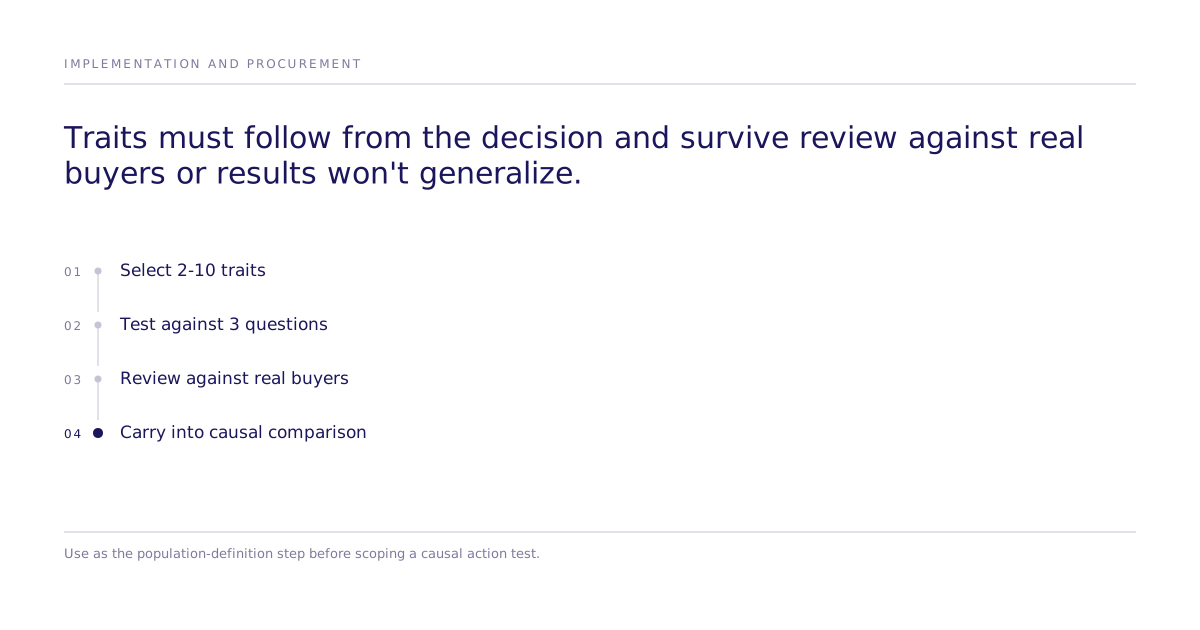
For a synthetic-respondent study, defining the population means selecting the traits (profession, income, age, and similar characteristics) a respondent needs before they're relevant to the comparison. Between 2 and 10 traits is a workable range. Fewer than that leaves the population too broad to be distinct from the general public. More than that starts to over-specify a niche population the real market doesn't resemble.
Traits should follow from the decision, not from a list of available fields. Three questions narrow the choice:
- Who actually makes or influences this decision? If the study is about a purchase, the relevant trait might be role or buying authority, not just demographics.
- Which traits would plausibly change the preference being tested? A trait only belongs in the population if respondents who have it would answer differently than respondents who don't.
- Would a domain expert recognize this group as the real buyer? A population that looks reasonable on paper but doesn't match anyone a sales or product team actually talks to won't generalize.
Reviewing traits before committing the design
Target audience and buyer or segment definitions are supported inputs to a Subconscious causal action test: a team specifies population traits, and Subconscious runs the comparison across actions for that population.
What this step doesn't decide
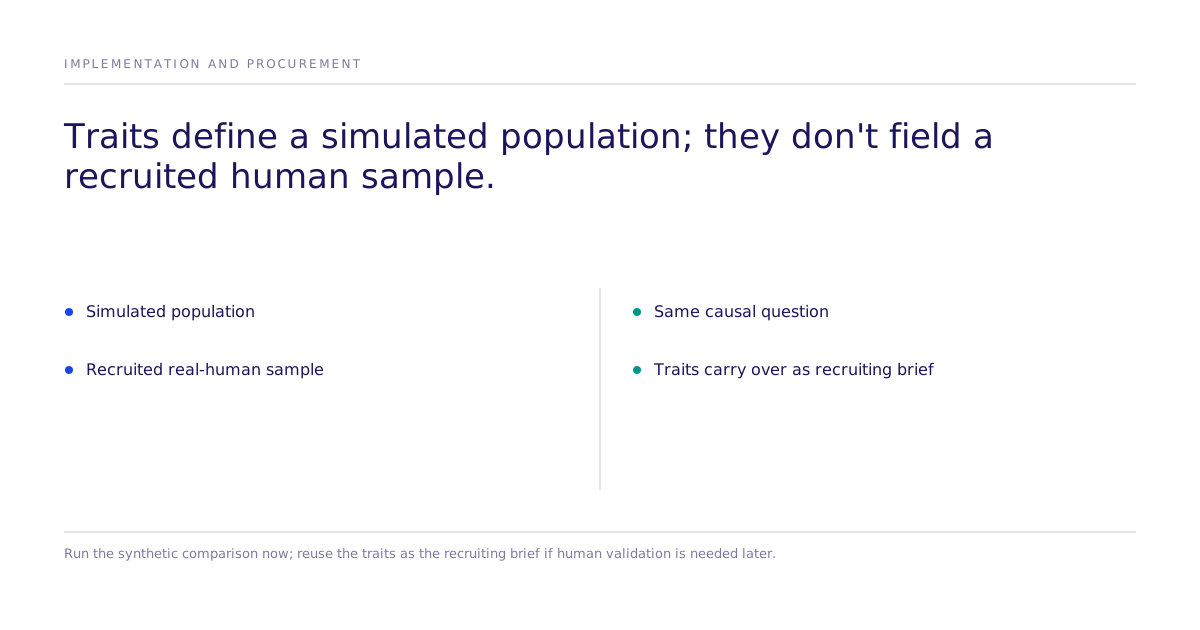
Trait selection defines a simulated population for a synthetic-respondent study. This limit sits on the record next to what the step does do. It does not field a recruited real-human sample: when a decision needs recruited real participants, the same traits guide who to recruit but don't substitute for fielding them. A team can move from a simulated experiment to real-human validation without changing the underlying causal question, but that step is separate from defining the population here.
Where to go from here
With traits named and reviewed, the next design decisions are what's being compared and how results get interpreted. Research covers how Subconscious structures causal action tests once a population is defined, and How we work walks through the process end to end. Teams ready to scope a specific population can book time to talk it through.