How to Roll Out Causal Experimentation Past a Single Pilot
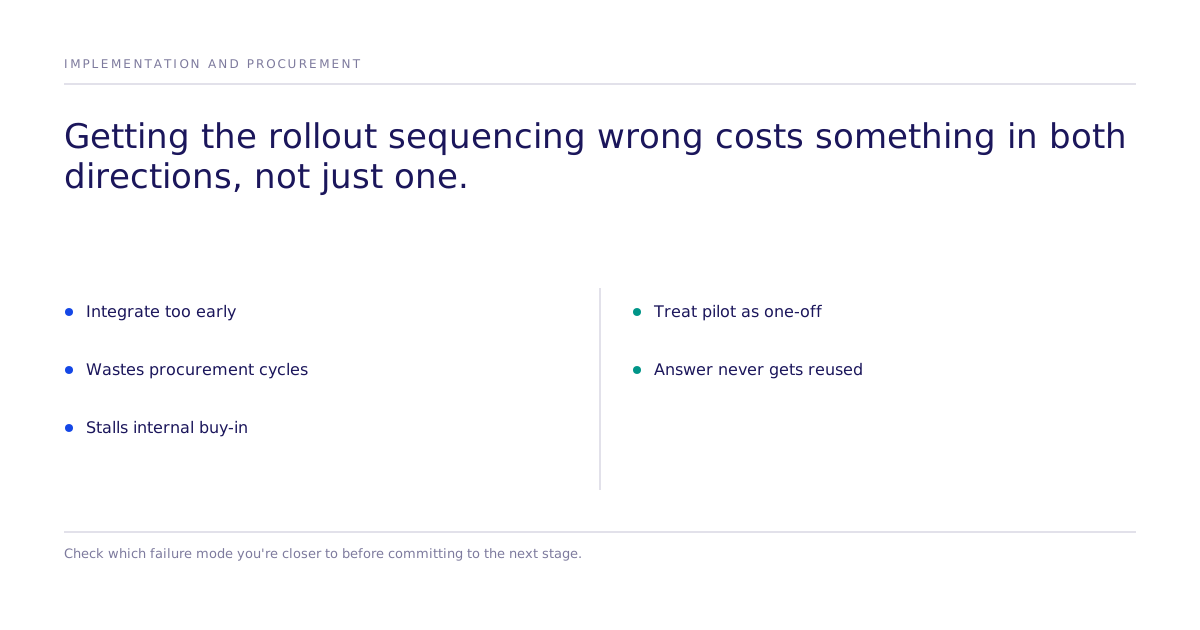
An insights or research-ops lead who has run one causal experiment on Subconscious faces a harder question: how far to commit before the method has proven itself. Buy full integration too early and you spend procurement cycles on a workflow that has not yet earned trust. Treat the pilot as a one-off study and the answer never becomes a repeatable input to launch, pricing, or messaging decisions.
The way out is a staged rollout rather than a single decision. Each stage answers a specific question before the next stage asks for more budget or more workflow change.
Stage 1: How do you prove the causal question on a general population?
Start with one controlled discrete-choice experiment against a general population. The goal is narrow: confirm the causal question is well formed and the experiment produces a clear answer about which action drives the outcome, not to validate every downstream workflow at once.
This mirrors standard practice in discrete-choice-experiment methodology, where pilot testing precedes any scaling of sample size or design complexity (Improving Methods for Discrete Choice Experiments to Measure Patient Preferences, NCBI Bookshelf). A small pilot surfaces design problems before they get expensive to fix.
"Small problems in a pilot study may not have drastic effects on the main DCE results, but certain DCE designs (eg, those with correlated attributes) may require special care, such as added sensitivity analyses."
Alan R. Ellis, Improving Methods for Discrete Choice Experiments to Measure Patient Preferences, NCBI Bookshelf (PCORI) (source)
Stage 2: How do you test against your own customer data?
Once the general-population experiment holds up, the second stage repeats the same causal question against the organization's own customer data. This is where the staged approach earns its name: you are not committing to a new platform, you are asking whether the same causal pattern holds for the customers you actually have.
Pilot-to-scale sequencing like this is well documented in the discrete-choice-experiment literature, including guidance on how pilot results should inform subsequent survey design decisions rather than being treated as final (Improvements to Survey Design from Pilot Testing a Discrete-Choice Experiment, The Patient, Patient-Centered Outcomes Research, Springer Nature).
Subconscious can also validate a study with real human participants at this stage, moving a team from a simulated experiment to real-human validation without changing the underlying causal question.
Stage 3: When should you decide on a recurring cadence?
Only after the causal pattern holds across a general population and a team's own customer data should the team decide whether the question is worth asking on a recurring cadence, rather than as a one-time study. This decision belongs to the team, not the vendor: a pattern that holds once is evidence, but a pattern worth tracking quarterly or before every major launch is a different commitment.
Stage 4: Embed into existing workflows, deliberately
Embedding an experimentation cadence into an existing research or product workflow is a real commitment, and should follow the three stages above rather than precede them. A team that embeds first and validates later risks building process around an untested causal claim.
What this staged approach is not
None of the four stages above should be read as promises about automation. Deciding to run experiments on a recurring cadence does not mean CRM data flows into the platform automatically, and it does not mean the platform runs continuously in the background generating findings without a team defining the next causal question.
Choosing the stage you are actually ready for
The cost of getting this sequencing wrong runs in both directions: committing to deep workflow integration before a single experiment has proven the causal question wastes procurement cycles, and treating the pilot as a one-off leaves a real answer sitting unused instead of becoming a repeatable input to decisions.
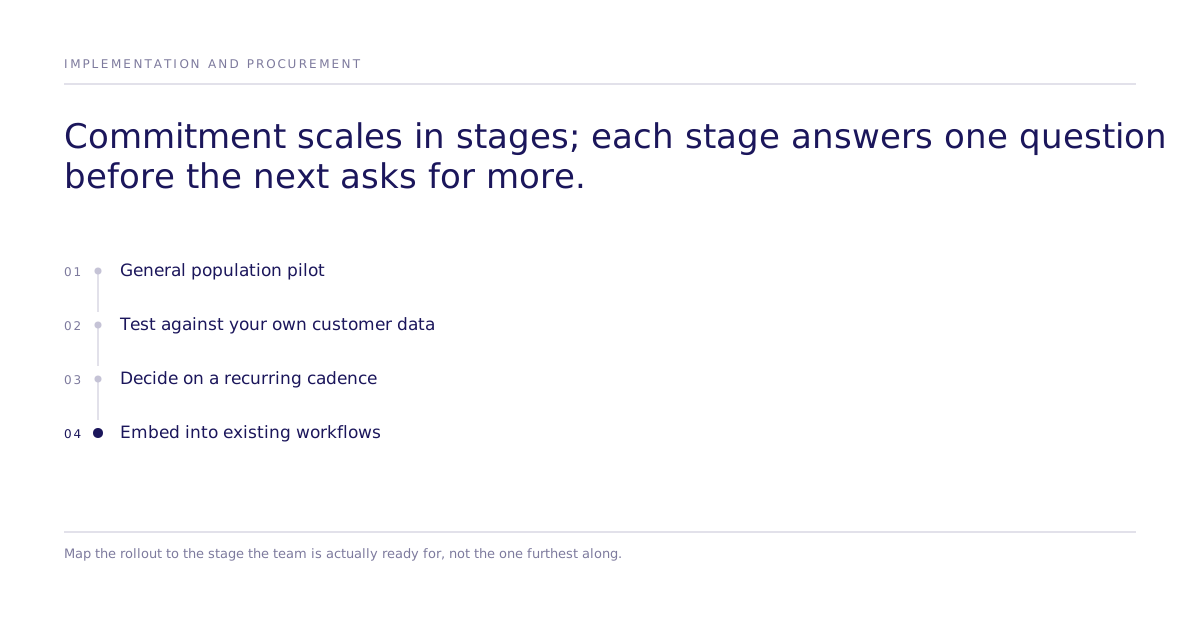
Map your rollout to the stage you are actually ready for, not the one furthest along. Start with research to see how a single experiment is structured, or book a session to scope which stage fits your team's current data and workflow.