Brand Awareness Research: Turning a Recall Number Into a Causal Decision
A CMO staring at a tracking-wave readout usually has one number: the share of respondents who say they have heard of the brand. That figure cannot say whether a campaign moved it, whether a competitor's launch ate into it, or whether next quarter's budget should follow the channel that produced it. Before committing spend to another wave, the real decision is whether to keep reading a single descriptive percentage or to design a test that traces a change in recall back to one cause.
A recall score collapses several different questions into one
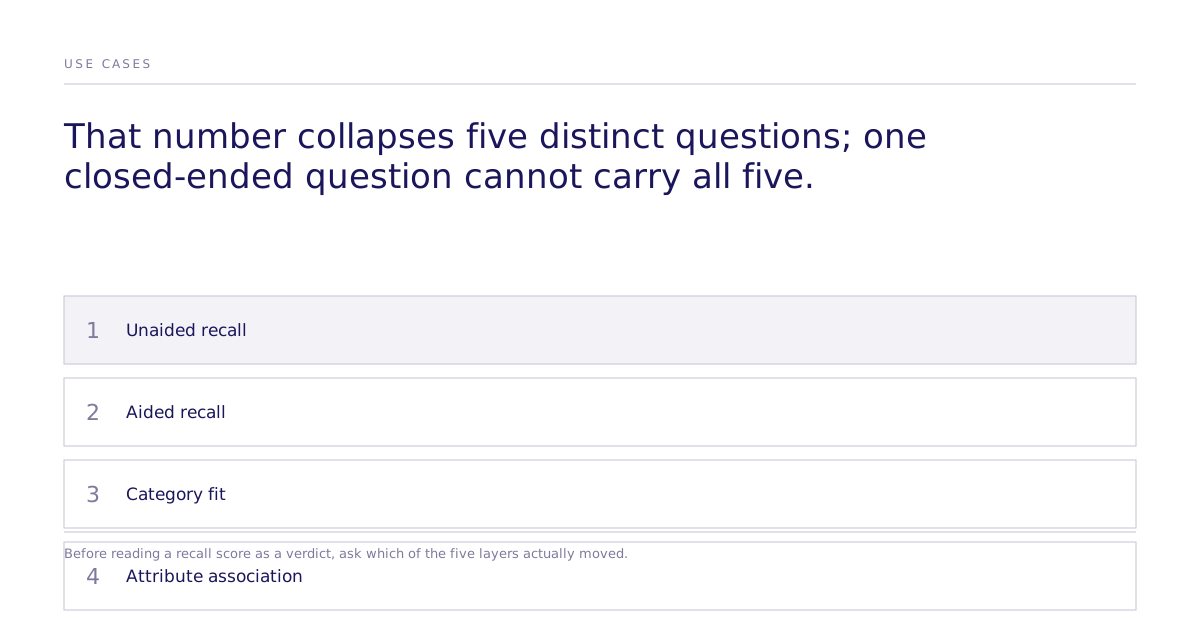
Awareness is not one construct. Market-research practice separates it into layers, each answering a different question about where a brand sits in a buyer's head.
- Unaided recall: does the brand surface when someone names the category unprompted? A brand missing from the first few unprompted answers has a different problem than one people simply forget when asked directly.
- Aided recall: does the brand register once its name is shown? This is the easier bar to clear, and a wide gap between aided and unaided scores usually means the brand is visible but not top of mind.
- Category fit: which category do respondents place the brand in? A premium tool filed under a generic label is not competing where its team thinks it is.
- Attribute association: what comes to mind alongside the name: speed, cost, trust, confusion? This is the content behind the score, not the score itself.
- Competitive standing: recall only means something relative to the other brands fighting for the same buyer attention.
Standard industry guidance treats unaided and aided recall as distinct, sequential questions in a study design rather than interchangeable proxies for the same thing (SurveyMonkey; Drive Research). A single closed-ended question cannot carry all five layers at once.
Why can't a single wave tell you what caused the change?
Closed-ended surveys force awareness into a scale: on a scale of one to five, how familiar are you with this brand. That question returns a score without a reason: it cannot say why someone recognizes the name, what they remember about it, or whether the association helps or hurts the brand.
Group interviews go deeper on the "why," but carry a different distortion. One participant states an opinion, the rest nod along, and the moderator records agreement that is closer to social pressure than independent recall. A brand that runs one wave before a campaign and one wave after has two snapshots and no way to separate the campaign's effect from seasonality, a competitor's move, or plain survey noise.
How do you measure brand awareness as an experiment, not a snapshot?
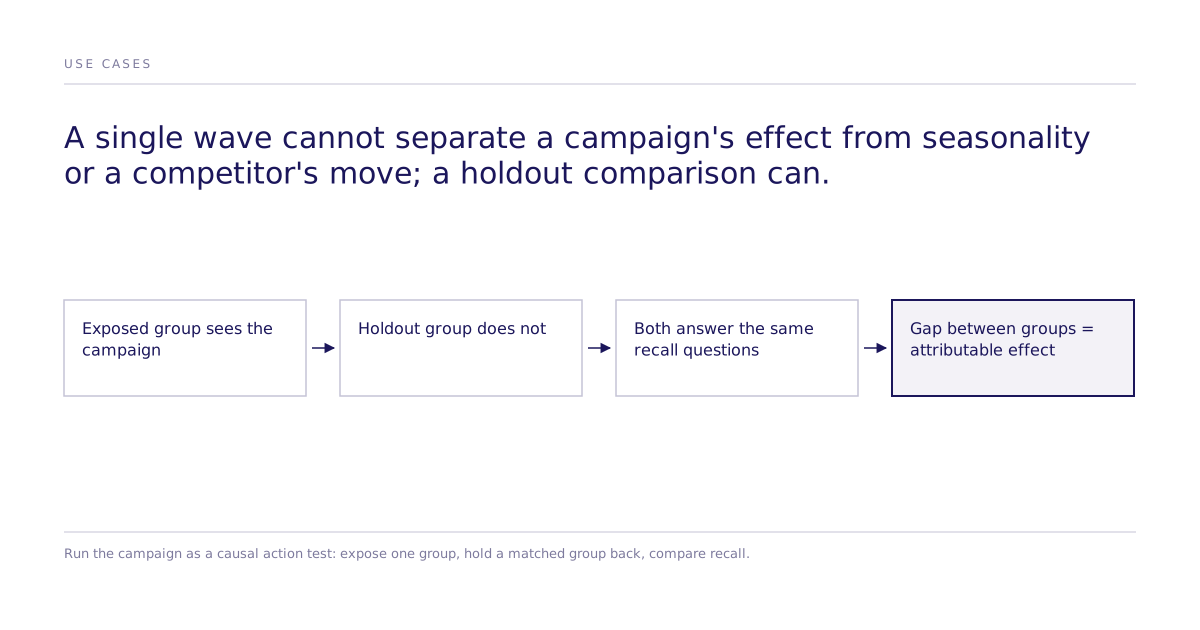
The fix is not a better survey question. It is a study design that isolates one variable. Instead of asking a single audience whether they have heard of a brand, expose one group to a message or campaign concept and hold a matched group back as a comparison. Ask both groups the same unaided- and aided-recall questions afterward. Any difference between the exposed group and the holdout is attributable to the thing that changed between them, not to whatever else moved in the market that week.
Where does a causal action test fit into brand awareness research?
Subconscious runs this kind of comparison as a causal action test: a message, concept, or campaign treatment is defined as an action, tested against a holdout, and the two outcomes are compared directly with uncertainty stated alongside the result, instead of a single top-line number. That structure covers the two situations a brand team faces most often with awareness work.
- Pre/post campaign measurement. Capture a baseline before launch, run the same protocol on a comparable audience after launch, and read the difference as an effect of the campaign rather than an assumption.
- Competitive benchmarking. Run the identical recall and association questions against audience definitions built around a competitor's buyers and the brand's own buyers, so the comparison happens in one study instead of two fielded months apart with different samples.
Subconscious can run these comparisons against a person-level audience graph covering 800 million real people, supporting the specific buyer segments a competitive or pre/post study needs rather than one generic sample. When a team wants to move from that comparison to a real-human check on the same question, Subconscious can also test or validate the study with real human participants, without changing what is being asked or compared. See how this fits into a broader research program or worked comparisons from past studies.
What this does not replace
A causal action test answers one question well: did this specific message, concept, or campaign move recall, and by how much. It is not a packaged awareness-tracking product, it does not substitute open-ended interviews for a structured protocol, and it carries no data-residency or compliance guarantee. The brand team still owns the segment definitions, the questions asked, and the interpretation of category fit and attribute association described above.
Setting up the comparison
Three decisions determine whether the test answers the real question.
- Name the action. Define exactly what the exposed group sees: one message, one concept, one campaign cut. A vague "the new campaign" as the treatment makes the result hard to attribute to anything specific.
- Match the holdout. The comparison group needs the same audience definition as the exposed group, differing only in exposure. An unmatched holdout reintroduces the noise the test was built to remove.
- Ask the same layered questions of both groups. Unaided recall, aided recall, category fit, and attribute association, asked identically before and after exposure, so the result shows which layer moved and which did not.
Once those three are fixed, a team can plan a study that answers not just whether recall moved, but which specific action moved it. Talk through a study design or see what a causal action test setup looks like before the next wave goes into the field.
A study that treats these layers as one number keeps producing a percentage nobody can act on. A study built as a comparison, with a matched holdout and a named action, produces a number a budget decision can rest on.