AI Brand Positioning: Test Your Brand Story First
A marketing leader picking which brand story to fund is making a bet that is hard to unwind. Once media and production dollars commit, the company lives with that story for months. Choose wrong and the cost is not one bad campaign. It is a stretch of budget spent teaching customers a version of the brand they find confusing or easy to forget.
What does a brand positioning statement need to survive?
A workable brand position needs a defined target, a category the buyer already recognizes, and a reason to believe that holds up once customers compare it with alternatives (Harvard Business School Online). Getting there means answering questions a team cannot settle by debating in a room:
- How do target customers describe the brand today, unprompted?
- Which competitors occupy the same mental shelf?
- Which candidate direction shifts perception or intent, and for whom?
- Which language in the story feels native to the buyer instead of internal jargon?
Interviews, brand-association studies, and structured tests with recruited participants answer these questions well but slowly, and that cost is a reason teams often skip straight to a single favored direction instead of comparing several.
Why is brand positioning testing comparative instead of a single verdict?
Brand teams typically draft three to five candidate directions and need to know which one wins, and against whom. The same story can read as authoritative to one buyer segment and as inaccessible to another, so a single average reaction hides the decision that matters.
This is where a controlled comparison run as a simulated experiment is more useful than reading each direction in isolation. Subconscious tests competing positioning directions or narrative drafts as alternatives against a defined buyer population and measures which one produces the strongest, most consistent response before a team commits production budget to it.
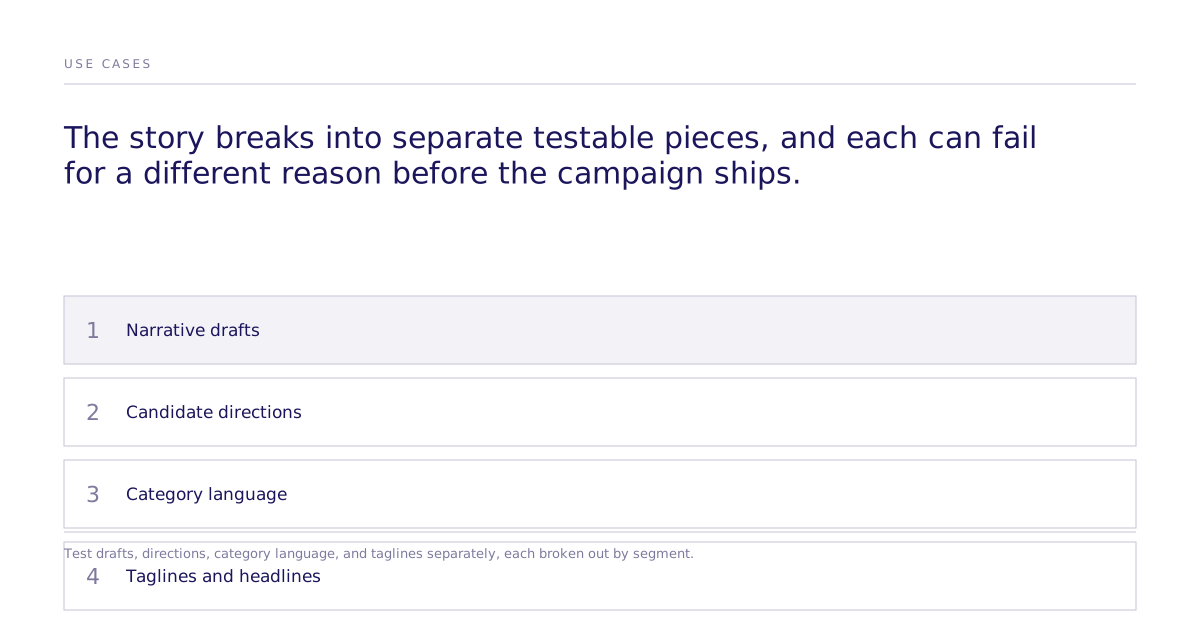
Testing the pieces before the story is final
Narrative drafts
Present each narrative under identical conditions and ask what the company appears to do, who it appears to serve, and which claims a buyer would want proof of. A flat or negative reaction is informative: it can mean the story puts the brand in the wrong category or promises something the segment does not value.
Candidate directions
Treat the drafted directions as alternatives in one design, tested against a consistent target behavior. This is most useful when a team is split on which direction "feels right," because the disagreement gets resolved by measured reaction instead of internal opinion.
Category language
Ask buyers to describe the problem, the category, and the alternatives in their own words. Comparing that language against the brand's internal phrasing is often how a team finds out its copy sounds native to itself and foreign to the market it is trying to reach.
Taglines and headlines
Compare candidate lines on memorability, clarity, category fit, and whether they move the target behavior at all. Traditional rounds of this kind of testing carry meaningful cost and lead time; a faster comparison pass narrows the set before that spend happens, without claiming to replace it.
Segment by segment
Run the same comparison across each buyer segment separately before averaging anything. A position that lands with one group and misses with another is a segmentation finding, not noise to smooth over.
A sequence for pressure-testing a direction before it ships
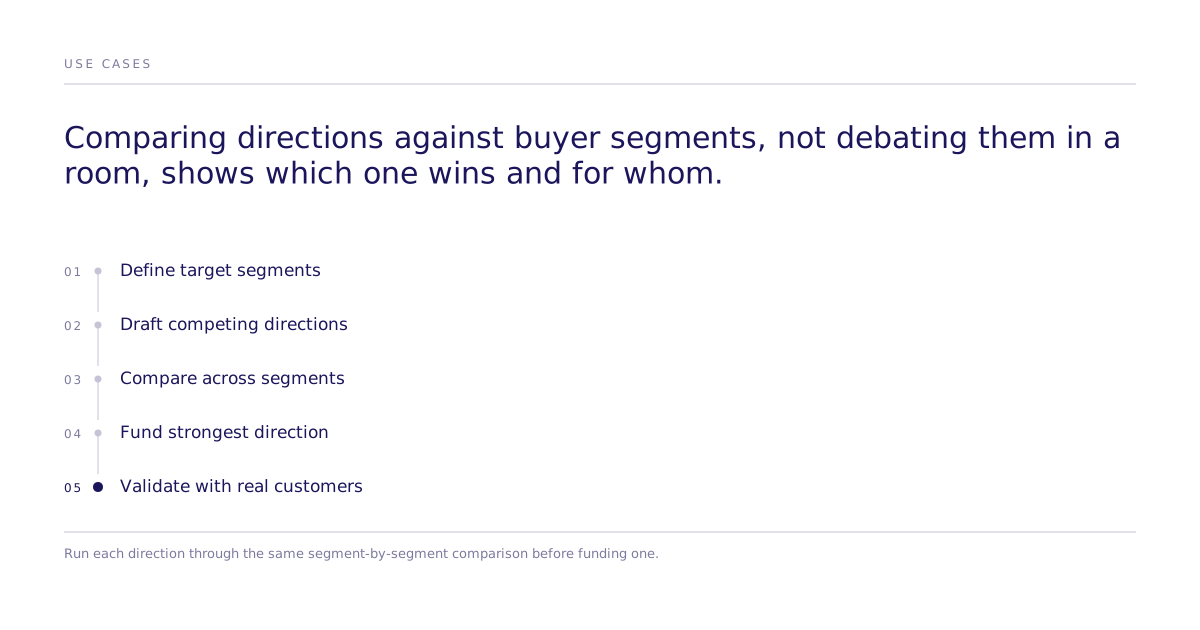
The workflow a team can run before committing to a single direction:
- Define the target segments. Pick the two to four buyer groups the strategy actually depends on.
- Draft competing directions. Write three to five distinct positions rather than one preferred story plus straw men.
- Compare across segments. Run every direction through the same design and the same measured behavior, segment by segment.
- Fund the strongest direction. Pick the direction with the clearest, most consistent lift, not the one with the most vocal internal support.
- Validate with real customers. Confirm the funded direction holds up before the campaign goes wide.
What can't a simulated brand positioning test settle?
A simulated comparison is weaker on genuinely novel ideas that break the category's existing patterns; there is less established behavior to draw on. It also cannot stand in for the sensory or emotional weight of an actual brand encounter: a film, a retail environment, packaging, or a sound identity all need a real audience in the room.
Use the simulated pass to cut weak directions and surface hidden assumptions early. Reserve real people for the experiential dimensions and for the final call before a story goes into wide production.
Carrying the direction to real customers
The point of the comparison stage is not to skip real research. It is to walk into that research already knowing which direction deserves the budget. Subconscious can test or validate the resulting study with real human participants, using the same causal question the simulated comparison was built around. Teams that want to see the comparison method applied to their own candidate directions can talk with the team.