AI Campaign Effectiveness Research: Test the Strategy First
A brand and marketing leader who commissions a six-figure campaign usually finds out whether the message worked only after the media is bought, the creative is running, and a brand-lift study has had four to eight weeks to close. By then the budget is spent, and the next planning cycle is already underway. The decision that mattered, whether this message, this creative direction, and this channel plan would move the target audience, was never tested before it became irreversible.
Why does the standard measurement cycle arrive too late?
A number without its limits is marketing copy, so this cycle's limit gets named plainly. A brand-lift study is built to confirm impact after a campaign runs, not to compare alternatives before one is chosen (Happydemics). Marketing-mix models need several quarters of spend history before they produce anything a planner can act on. Post-campaign surveys carry recall bias and self-report distortion on top of the wait. None of these tools were built to answer a question before the money commits.
The misses sit on the public record next to the hits, and cost is one of them. Cost compounds the timing problem. A rigorous lift study is expensive enough that most campaign budgets cannot fund one for every message, creative route, or channel plan under consideration (InfluenceFlow). Teams fall back on click-through and conversion metrics, which describe direct response, not the perception shift a brand campaign is built to create.
Naming a failure mode is what lets a buyer check it, and this one gets named directly. There is a third failure that gets less attention: scope. Creative gets tested on its own. Copy gets tested on its own. Media plans get scored on reach and frequency. Almost nobody tests whether the creative, the message, and the channel work as one system, or whether a claim that reads as credible on a podcast still reads as credible on Instagram.
Why is a campaign one behavioral system, not three separate tests?
Testing a finished ad in isolation answers a narrower question than testing the strategy behind it. Campaign effectiveness depends on how the audience definition, the strategic concept, the creative route, the channel context, and the exposure sequence interact, not on how each element scores by itself.
That means comparing alternatives before anything is finished: the raw concept ("we are telling this audience X, through these channels") against a competing concept; a creative direction built on humor against one built on customer proof; a message placed on LinkedIn against the same message placed on a podcast; an awareness-then-consideration sequence against a version that skips straight to retargeting. Each comparison isolates one variable so the result stays interpretable.
Running the comparison as a controlled experiment
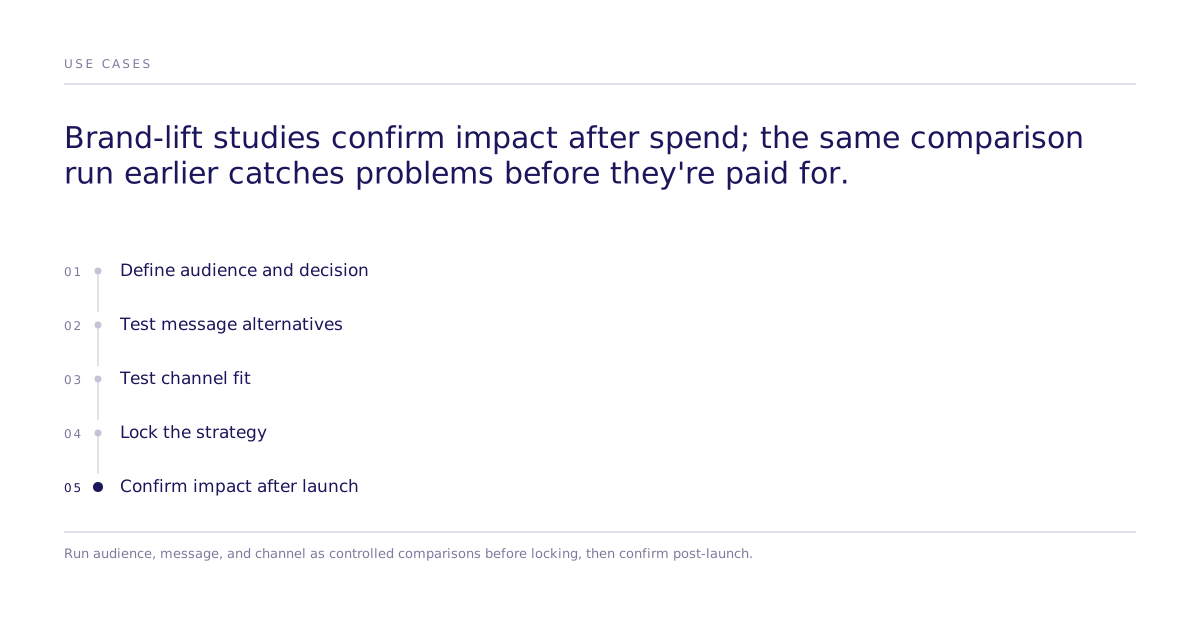
Subconscious runs this as a causal behavioral experiment rather than a single reaction check. The workflow starts with defining the target audience and the decision at stake, then compares campaign alternatives, message against message, creative route against creative route, channel plan against channel plan, against that audience under controlled conditions. The output is a causal effect and, where the study design supports it, a confidence interval for each alternative, not a single plausible-sounding answer.
A score published without its ceiling is marketing, so the ceiling gets published too. That method is validated against real outcomes, not just internally consistent. The underlying causal methodology reaches 87% of the measured human ceiling on one study: 0.832 rank correlation against the published human result, where two independent samples of real humans reach 0.959. Across all 43 studies that pass design filters the mean is 0.73. And because the comparison runs against a person-level audience graph covering 800 million real people, kept separate from any recruited panel, a marketing team can define a specific audience segment rather than settle for a generic one.
What does this replace, and what does it not replace?
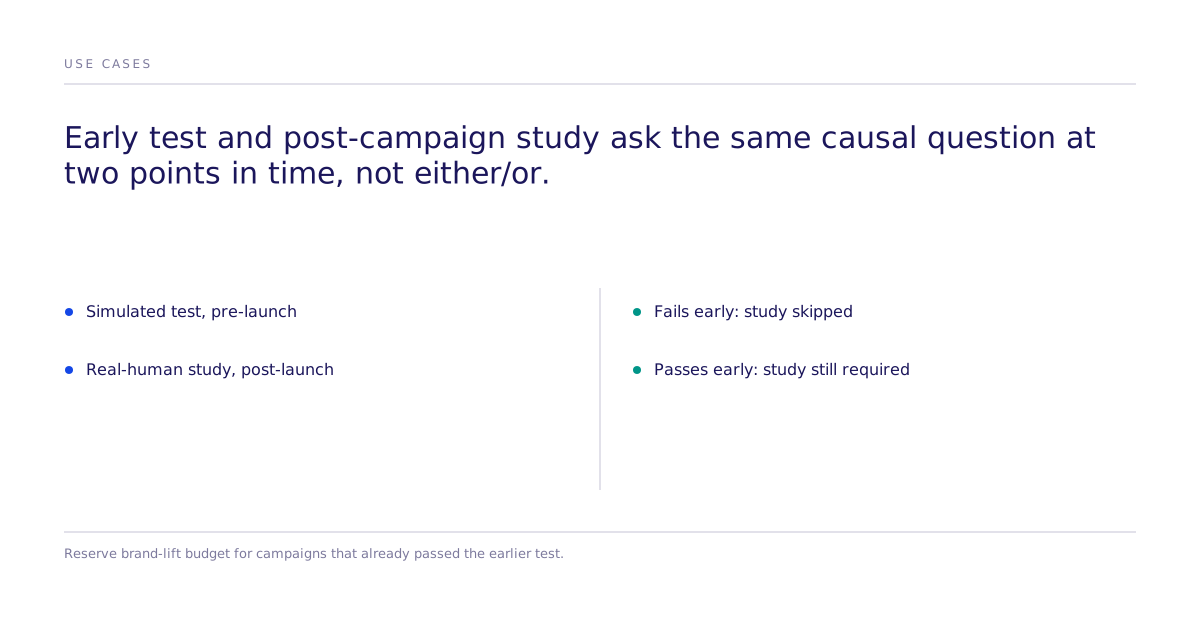
This process replaces guessing at message-channel fit before a campaign locks. It does not replace a post-campaign brand-lift study with real respondents. Subconscious can move from a simulated experiment to a real-human validation study without changing the underlying causal question.
Used this way, the earlier test and the later study answer the same question at two points in time: does this message, in this creative form, through this channel, change how the target audience thinks about the brand. A campaign that clears the earlier test still needs the later confirmation. A campaign that fails the earlier test never has to reach the expensive one.
Where this changes a marketing leader's decision
The clearest use is a brand campaign built to shift perception rather than drive an immediate click, since perception is the hardest outcome to measure after the fact and the costliest to get wrong before it. Product launches carry the same weight for a different reason: the first impression a launch campaign makes is difficult to undo, so testing the launch strategy, not only the launch ad, lowers the risk of a rollout that misses. Repositioning work benefits because the real question, whether a new message actually shifts an established perception or just bounces off it, can only be answered by testing message and audience together. And a performance campaign that has plateaued despite creative iteration often has a strategic problem, not a tactical one, which single-ad testing will not surface.
A marketing leader carrying a campaign decision this quarter can see how a study like this gets scoped before committing the media plan, rather than after.