AI Competitive Positioning Research
Competitive positioning determines who a product is for, what problem it solves, and why a buyer should choose it over an alternative. Many teams revisit that decision once a year, even while competitors and customer priorities keep changing.
AI-assisted research can shorten the cycle. The useful result is not an invented customer quote. It is a smaller set of positioning hypotheses that a team can test with buyers and in market.
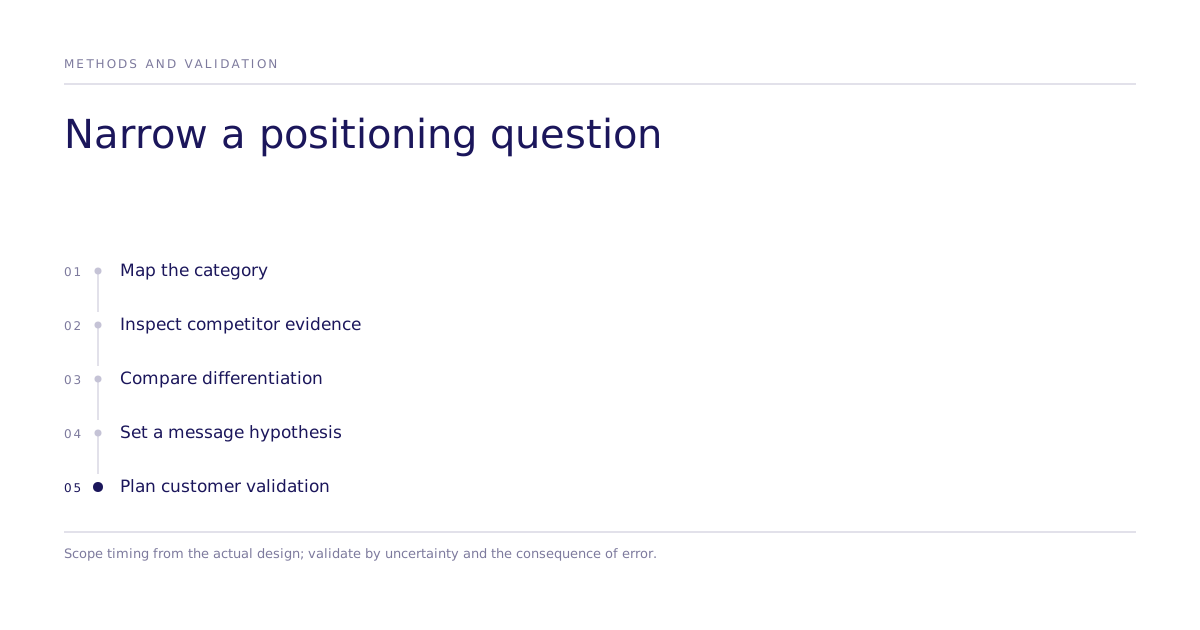
The three positioning questions
Clear positioning answers three questions:
- Who is this for, specifically?
- What problem does it solve for them?
- Why is it preferable to the alternatives they could choose?
Strong positioning does not claim to be best at everything. It creates a clear reason for a defined audience to choose one offer in a real decision.
Why is competitive positioning research difficult?
Positioning depends on how customers define the category, describe the problem, and compare alternatives. Surveys often flatten that language into preset options. Interviews capture more depth but take time to recruit, conduct, and analyze, a tradeoff documented in research on qualitative interviews versus surveys.
The common failure is conducting the research once and reusing it for years while the market changes.
Use AI to narrow the field
Map the category
Define the target buyer and ask how they group the available options, which attributes matter, and what triggers evaluation. Treat the answers as hypotheses about category structure.
Compare competitor perceptions
Use public information, reviews, and approved customer evidence to describe each alternative. Probe what appears credible, confusing, risky, or distinctive. A simulation should not invent private experience with a competitor.
Test differentiation
Compare positioning statements against the same audience definition. Check whether each claim is clear, relevant, credible, and distinct. Ask which behavior the statement should change, such as consideration, trial, or willingness to evaluate.
Establish a message hierarchy
Test multiple directions and identify which messages should lead for each segment. A supporting proof point should not be mistaken for the main position.
Simulate a competitive decision
Ask the audience to compare the offer with two or three competitors and explain the criteria used at each step. The comparison is useful when the inputs are grounded and the alternatives are realistic.
Compare several audience types
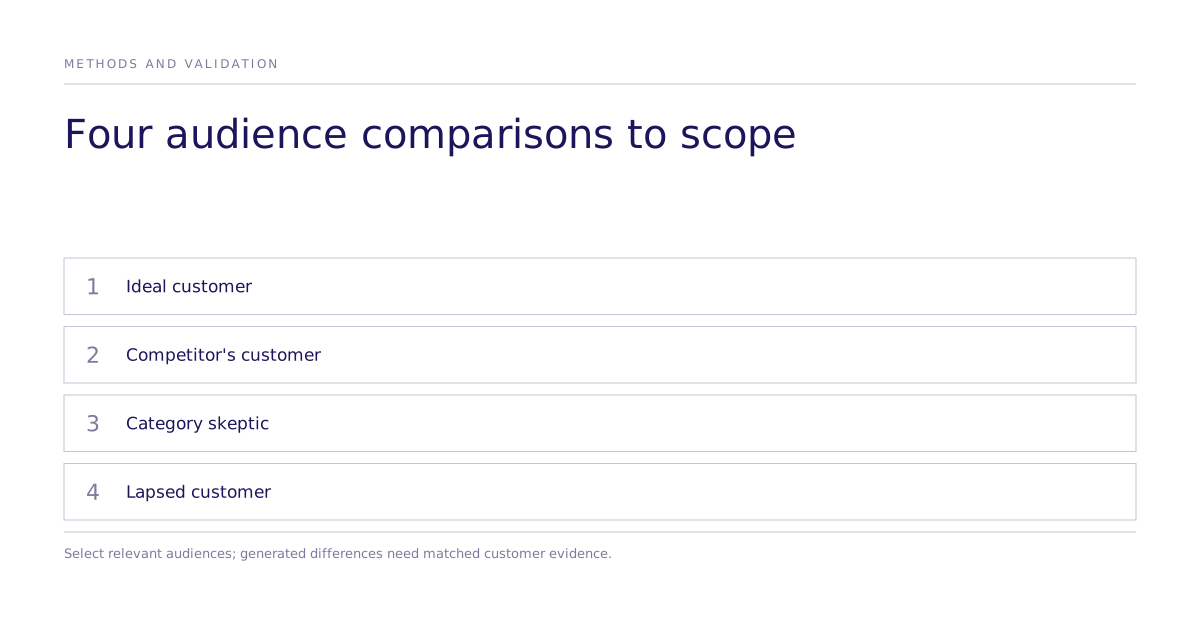
A positioning panel can include an ideal customer, a current competitor customer, a category skeptic, and a lapsed customer. Running the same protocol across multiple customer types can reveal a claim that works broadly, a claim that polarizes, or a segment that needs different language.
Scope the exploration around the evidence and alternatives available. Its output should be a focused validation plan; estimate lead time from the actual design rather than assuming a fixed afternoon delivery.
How often should you monitor positioning changes?
Teams can run positioning checks quarterly or even monthly rather than annually. Keep the audience definitions and questions stable enough to compare results. A sudden change in simulated response is an early signal to investigate with real customer research, not proof that the market has shifted.
How do you turn findings into action?
Extract candidate language and propose differentiation claims and competitive white space as hypotheses. Retain the current baseline, uncertain directions and alternatives with weak audience coverage. Prespecify the evidence required to eliminate a direction and the risk of discarding a human-preferred option; then plan customer or channel comparisons on the intended outcome.
For final positioning choices, combine customer conversations with outcome evidence. Modeled exploration can help prioritize a test plan, while human evidence can inform candidate generation, screening and the final comparison. Choose the sequence from the uncertainty and cost of a wrong choice.
Subconscious supports decision-specific experiments on messaging and go-to-market actions, run the way described on the how we work page. The experiment should define the audience, alternative positions, outcome, and validation plan before it runs. Book a walkthrough to design one around a specific positioning decision.