AI Concept Testing Tools and Platforms in 2026
Concept testing compares reactions or choices before a product, campaign, package, feature, price, or position commits substantial budget. The number of concepts, lead time, and cost depend on exposure design, respondent burden, sample allocation, and analysis. Compare quotes for the actual scope and plan the human or field evidence needed for the decision.
The 2026 market includes synthetic audiences, qualitative tools, stakeholder simulations, and recruited human research. The descriptions below reflect primary vendor documentation checked in October 2026. They summarize offered workflows, not an independent performance ranking.
Neutral alternatives
What does Electric Twin do?
Electric Twin builds synthetic audiences using customer data and describes concept and creative testing workflows. Its documentation discusses comparison with held-out survey data. Inspect the relevant audience benchmark, supported stimuli, and transfer limits rather than using funding as evidence of validity.
What does Aaru do?
Aaru publishes a September 2026 evaluation of survey distributions and a separate brand-purchase ranking comparison. These are different endpoints. Ask for evidence matched to your concept, audience, and outcome; an agreement coefficient is not a universal accuracy percentage.
What does Evidenza do?
Evidenza offers synthetic market research with B2B and brand-strategy workflows. It may be relevant when professional recruitment is difficult. Inspect grounding, matched validation, service involvement, and the actual study terms.
Synthetic Users
Synthetic Users offers simulated qualitative research for product and UX exploration. Use generated reactions to identify hypotheses, then check consequential findings with users and realistic stimuli.
SYMAR, formerly OpinioAI
SYMAR's terms identify the operator as OpinioAI International doing business as SYMAR. Its pricing page, checked in October 2026, lists Project at €99 or $119 per month with 400 credits, and Program starting at €199 or $239 per month. Credit use varies by model and input; enterprise add-ons are separately priced. Confirm the proposed study's allowances and total scope.
Lakmoos
Lakmoos describes neuro-symbolic models and custom AI audiences built with a private data layer. Request the method and validation evidence for the intended category, along with a study audit trail. Security marketing is distinct from research validity.
Artificial Societies
Artificial Societies, reached through the former societies.io address, describes simulations of individual and wider social dynamics, including strategic communications and stakeholder decisions. Inspect whether the proposed design measures an individual response or a network effect and how that result is validated.
Attest
Attest provides research with real consumers. Include a recruited alternative when the concept decision needs human reactions or a reference task. Check sample, format, questionnaire, and cost for the specific study.
Experial
experial offers AI research using simulated audiences, people, or both, with concept and customer-feedback workflows. Specify which response source will be used and how grounding, recruitment, and validation are handled.
Choose the method before the vendor
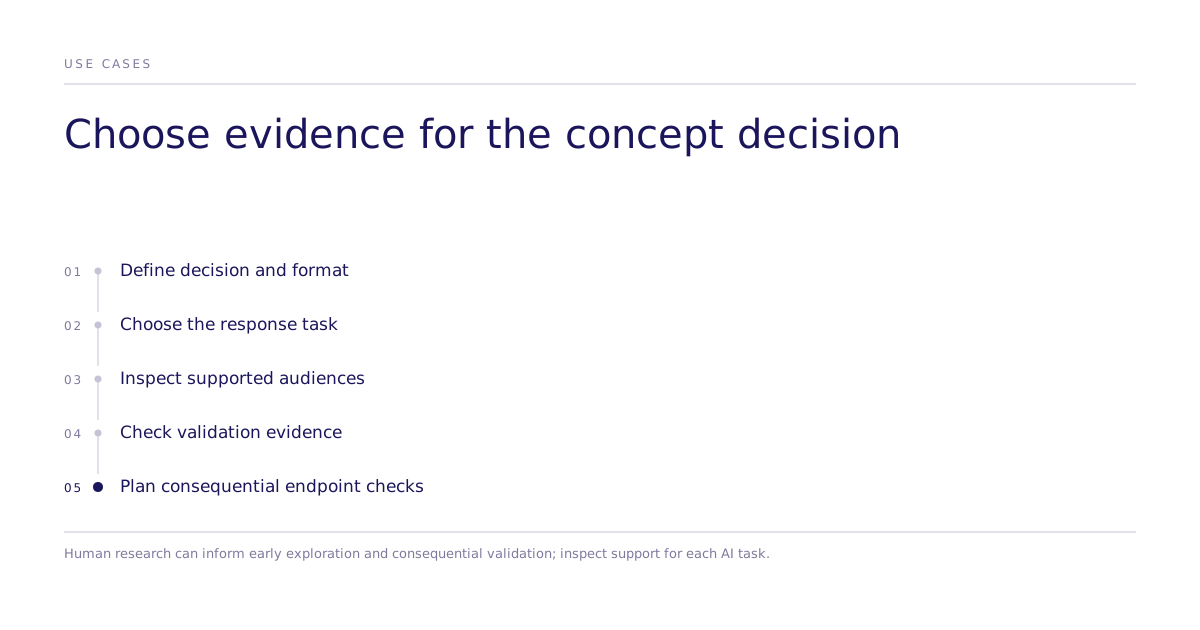
Start with the behavior and decision. Text, images, decks, landing pages, video, and prototypes require different evaluation methods. A qualitative interview can explain confusion. A controlled comparison can estimate which concept changes an outcome.
Audience definition matters as much as the interface. The model should incorporate approved information about motivations, constraints, objections, and decision criteria. It should not be tuned to produce a preferred result.
Validation claims need metric and task detail. Bisbee and colleagues' study of synthetic survey replacements identifies limitations in matching human survey patterns and relationships. It is evidence about its evaluated models and questions, not a score for every commercial concept platform. Ask for held-out results, exclusions, uncertainty, and human agreement relevant to your brief.
AI-assisted testing versus recruited research
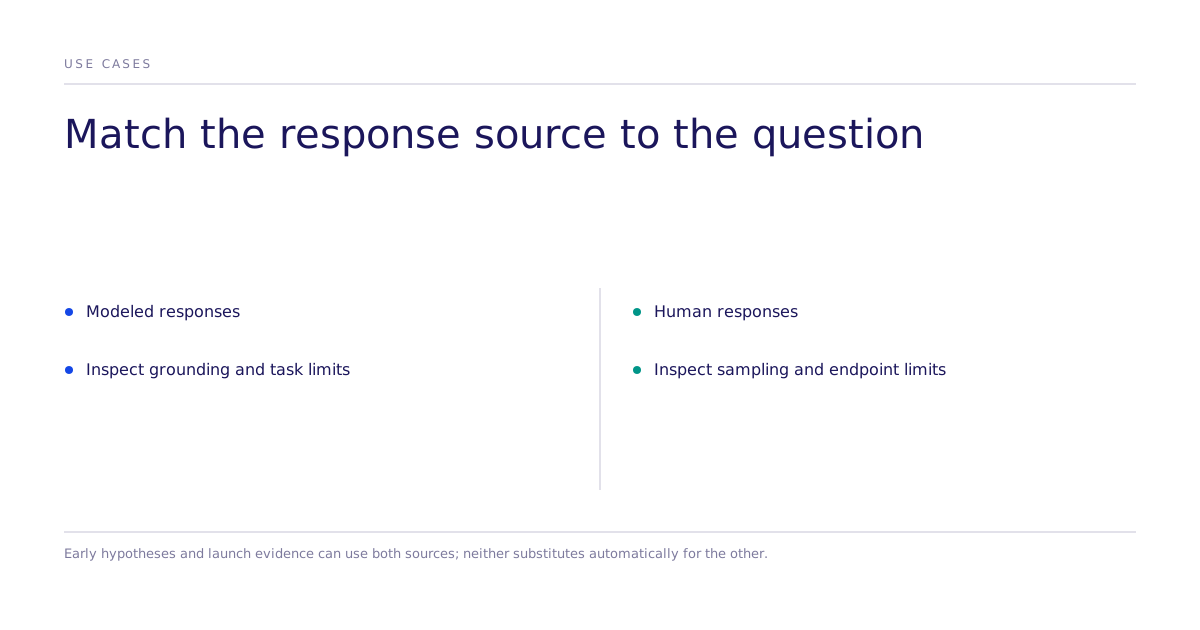
A simulated pass can skip fresh recruitment when the audience and stimuli are already supported, but setup, validation, and analysis still take time. Request end-to-end lead times and costs for both stages. Use early screening to prioritize alternatives, then obtain human or field evidence for the high-stakes endpoint.
A reliable evaluation checklist
Check whether the platform:
- Supports the actual concept format.
- Defines and calibrates the target audience.
- Separates qualitative explanation from causal comparison.
- Records the alternatives, outcome, and assumptions.
- Exposes validation evidence rather than a single accuracy number.
- Lets a team repeat the study consistently.
- Protects approved customer context.
- Makes clear where human validation is still required.
Subconscious is relevant when the concept decision can be framed as a controlled experiment on a defined audience. It should not be presented as automatically supporting every concept-test format or as replacing the final human-grounded decision.