AI Market Segmentation: Test Behavior, Not Demographic Labels
Segmentation fails when a label looks useful in a deck but does not predict response to a product, price, or message. Two 35-year-old marketing directors in the same industry can have different constraints, risk tolerance, and buying behavior.
A useful question is which action changes which measured outcome in a defined audience. A designed study can estimate that contrast when its randomization, analysis, and population evidence support it.
Why demographics are not enough
Demographics can help define and recruit an audience, but their usefulness depends on the decision and available evidence. Circana's segmentation discussion emphasizes combining behavioral signals with other context. Test whether the proposed segments explain relevant variation rather than assuming one segmentation basis always wins.
Synthetic audiences can help teams explore how context and attitudes may interact. They do not establish that a fixed persona represents every real person in a segment.
How do you build segments around decisions?
Start with the behavior the team needs to change, such as purchase, adoption, renewal, or response to a message. Then define the relevant audience differences and compare the same alternatives across them.
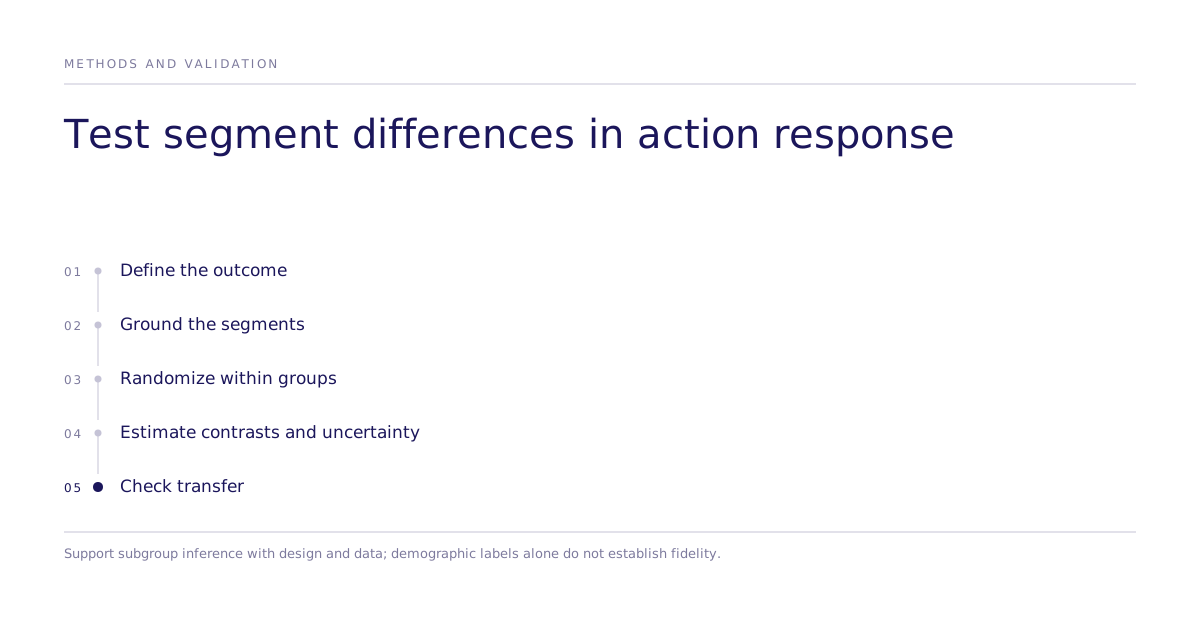
For an illustrative experiment, compare alternatives within several audience definitions. Randomize the relevant stimuli within each segment, keep measurement consistent, and estimate treatment-by-segment differences with uncertainty. Merely showing one message to two groups does not establish a causal segment difference.
Practical uses
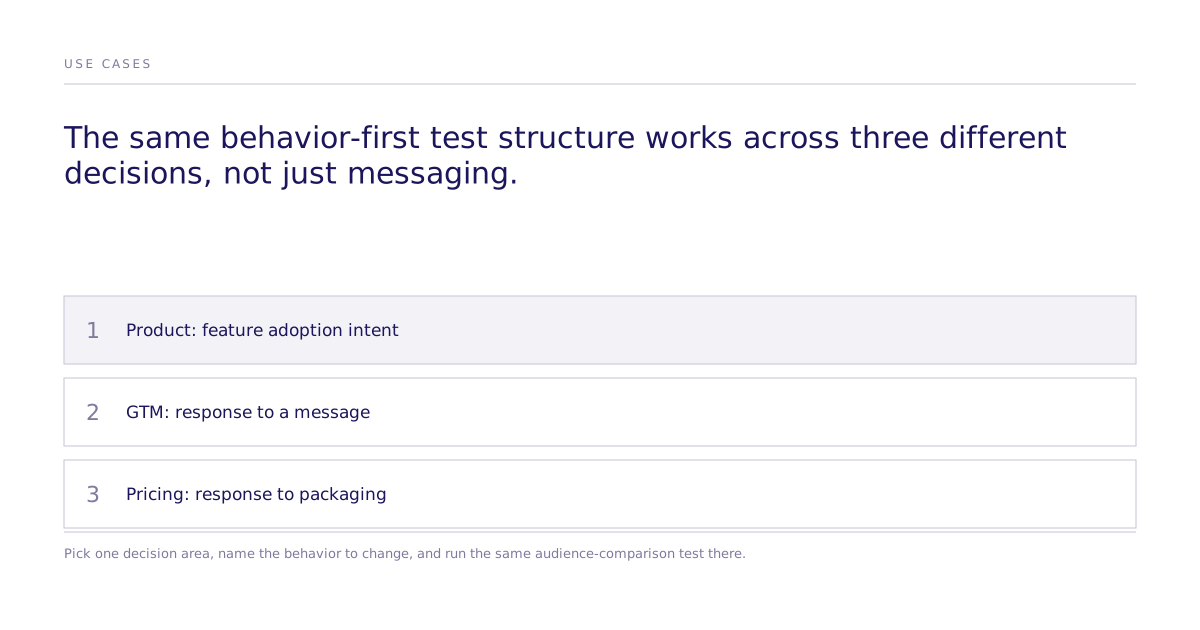
Product strategy
Compare feature concepts before development. Ask which alternative changes adoption intent and what assumptions need human validation.
GTM and messaging
Test the same value proposition across roles or contexts. Avoid claiming that one phrase “hooks” an entire demographic. Use the result to choose a stronger real-world test.
Pricing scenarios
Different audiences may respond differently to price points or packaging. Frame this as decision-specific scenario testing. Do not present it as automated price optimization or a universal measure of willingness to pay.
What is a simple starting exercise for segmentation?
Define two contrasting customer types using observed decision-relevant differences. Explore how each responds to the same concept, then turn the finding into a randomized comparison of alternatives within each group. Check subgroup support, uncertainty, and transfer with human research or relevant behavior.
Good segmentation does not sort people into clever names. It makes a decision testable.