AI Message Testing: Compare Copy Before Launch
Marketing teams often learn whether a message works after production and media spending are committed. A campaign can take weeks to develop, then reveal three weeks later that the tagline confused buyers or the call to action missed.
Traditional message-testing studies are often planned at 4-6 weeks and $15,000-40,000 per study. Those are example planning ranges, not current Subconscious pricing or delivery commitments. Decision-specific simulation creates an earlier comparison point.
Start with the behavior
Define the action the message should change: attention, comprehension, preference, sign-up, or purchase. Compare concrete alternatives under the same audience and stimulus conditions.
Taglines and ad copy
Ask what each version communicates, who it appears to address, and what is confusing. A conversational response can explain why a phrase succeeds or fails, but it does not establish a conversion rate.
Subject lines
Compare a subject line across ten audience definitions and inspect differences. The result is a hypothesis for a real email experiment, not proof that someone will open.
Campaign concepts
A week before launch, test the core idea, emotional angle, and call to action while changes are still possible. A planning sprint might compare five emotional angles, then take the strongest alternatives into human validation.
Why common methods answer different questions
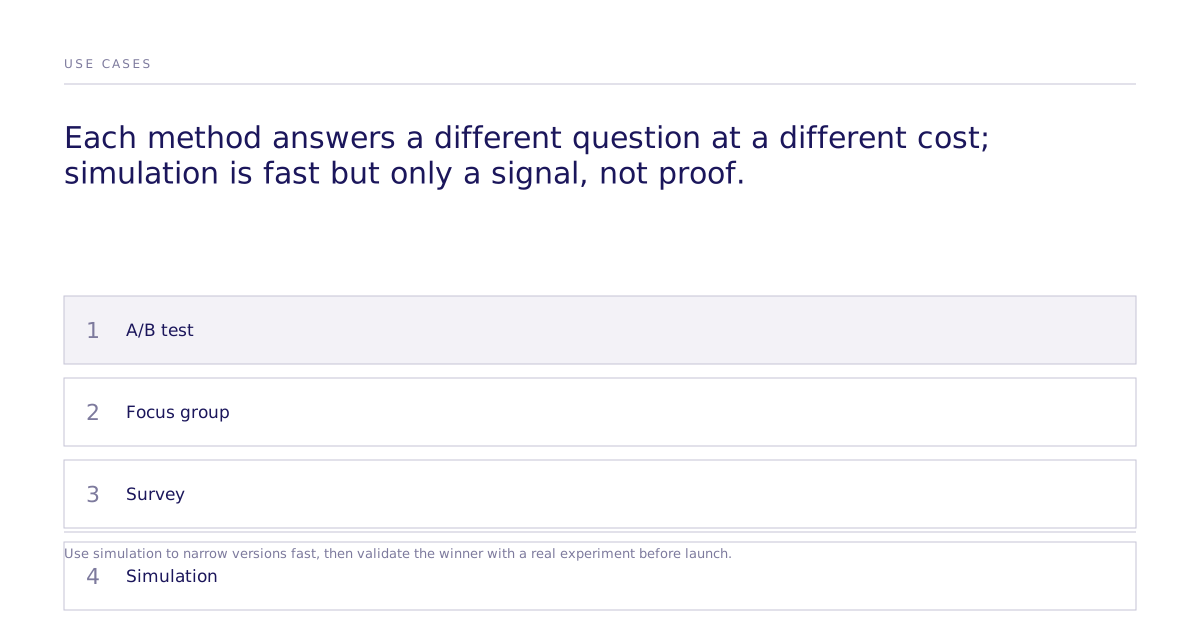
An in-market A/B test can show that Version B performed 15% better than Version A. It measures live behavior but spends real traffic or media to learn.
A focus group can explore reactions from eight people in one session. Group dynamics can distort what participants say, as Solomon Asch's conformity experiments documented: people will give an answer they know is wrong to match a group.
A survey can report a rating on a 1-5 scale. It may quantify preference without explaining the mechanism. A result such as 62% calling Tagline A “appealing” still needs interpretation and a link to behavior.
Use iteration without claiming certainty
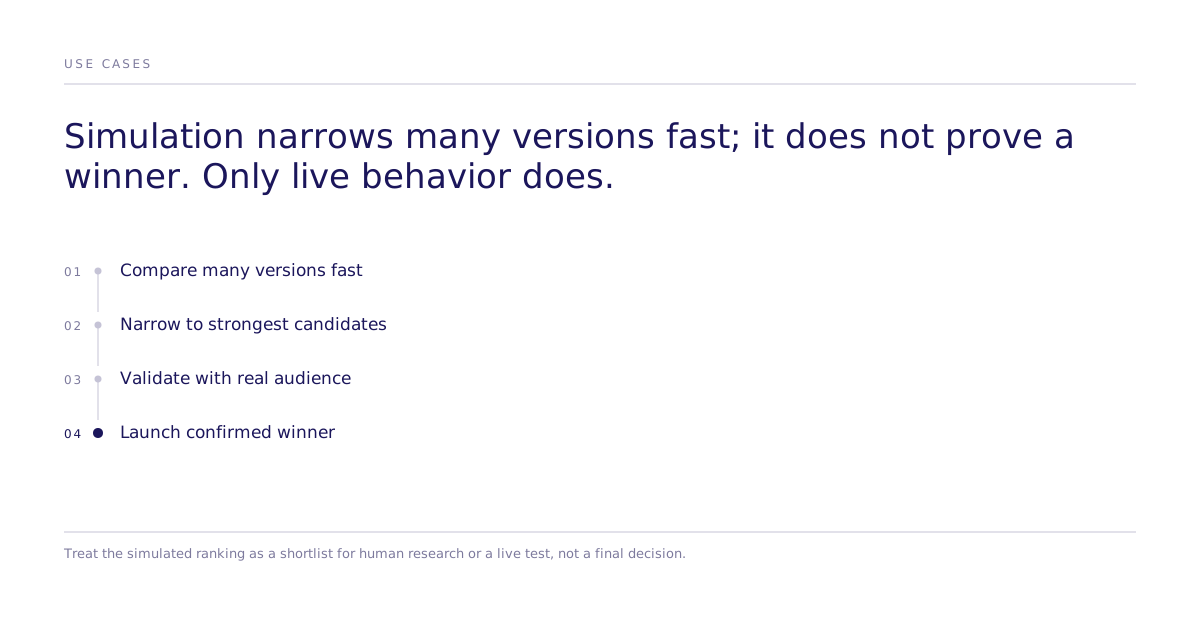
A team can compare Version 1, revise, compare Version 2, then compare Version 3 in a single afternoon. Testing ten versions in a week contrasts with two versions in two months. Speed makes exploration broader, but it does not make simulated reactions equivalent to click-through or conversion data.
Use causal behavioral experiments to compare messages before launch. Use human research and live experiments to validate the winner, or book a walkthrough to test a specific message. Simulated intent is a signal, not a guarantee.