AI for New Product Development Research: Test Each Decision
New product development contains decisions about opportunity, concept, positioning, pricing, and launch. If research appears only after months of development, the team learns when changing course is most expensive.
Concentrating research into one or two checkpoints leaves opportunity, feature, and launch assumptions untested. Map the decisions that customer evidence could change before choosing a research calendar.
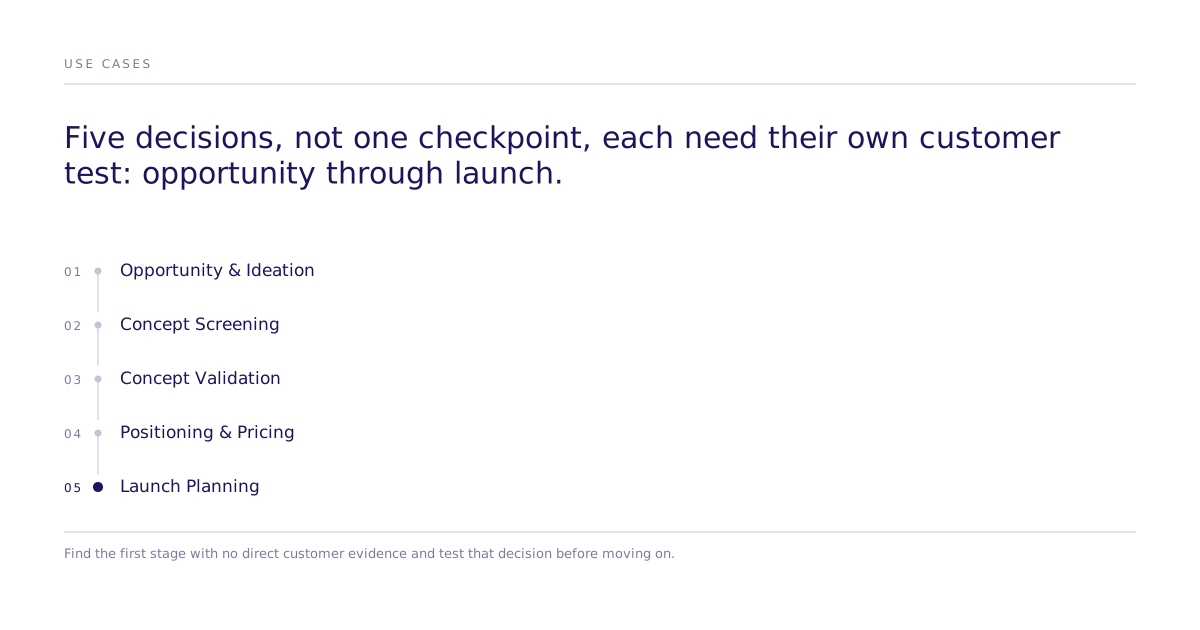
Find the missing decisions
Map where customer evidence enters the process:
- opportunity identification;
- concept generation and screening;
- concept validation;
- positioning and pricing;
- launch planning.
When concept testing starts only after an opportunity has been selected, it cannot recover the alternatives discarded earlier. Add evidence at the opportunity stage and revisit launch assumptions when the offer changes.
Test actions at each stage
Opportunity and ideation
Explore customer problems, workarounds, and unmet needs before generating solutions. Use simulation to form hypotheses, then validate the important ones with people and observed behavior.
What happens during concept screening?
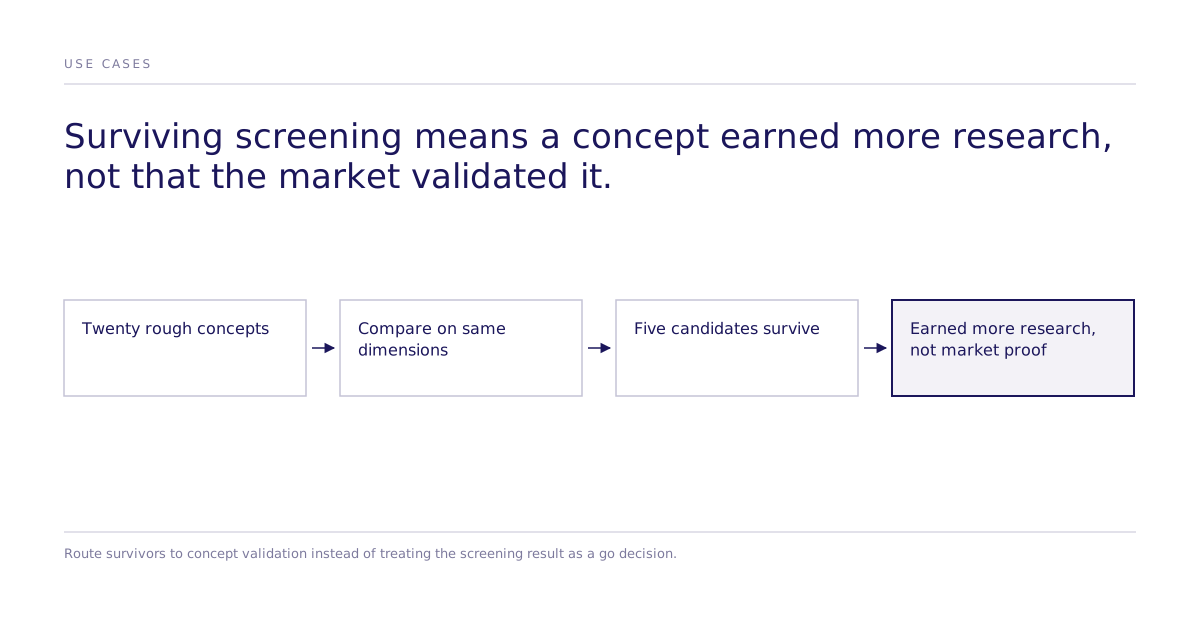
A hypothetical planning exercise might reduce twenty rough ideas to five candidates. Compare the same dimensions across each concept. Survival earns more research; rejection can also be a model error. Retain a few rejected concepts for a human check before closing the opportunity.
Concept validation
Compare shortlisted concepts on comprehension, relevance, objections, and directional preference.
How should positioning and pricing work?
Compare “save time,” “reduce risk,” and “increase revenue” as distinct frames. Pricing work should remain decision-specific scenario testing unless a current study supports a stronger output.
Launch planning
Test messages, audience definitions, and adoption triggers before day one. Ask how a buyer would describe the product and what objection would stop the next action.
How do you use repeated small studies carefully?
One workflow uses three capabilities: audience definitions for each phase, rapid iteration, and comparison across five customer types. These are study-design examples, not universal product limits.
For CPG, the decision may involve a concept, claim, or package. For software, it may involve feature bundles or onboarding. For services, it may involve packaging and buyer language. In every case, the experiment should name the action and outcome.
Start with the first live decision where customer input is missing. Use simulations to organize hypotheses, then test both promising and potentially overlooked options with real customers. Research comparing LLM outputs with a held-out population panel finds uneven fidelity across attributes and outcomes, so a plausible response is not individual-level validation. See a worked example in a published case study.