AI Panels for Beta Testing: Find Questions Before Real Users Arrive
Use a simulated audience to propose questions for a beta program, then examine the actual product with real users. Nielsen Norman Group’s discussion of synthetic users takes a cautious view and argues that user research needs real users. It does not validate simulated beta responses for this product.
The practical boundary is that a simulated panel cannot use the beta product or reveal every issue a real user encounters. Treat the panel as a source of questions for the beta.
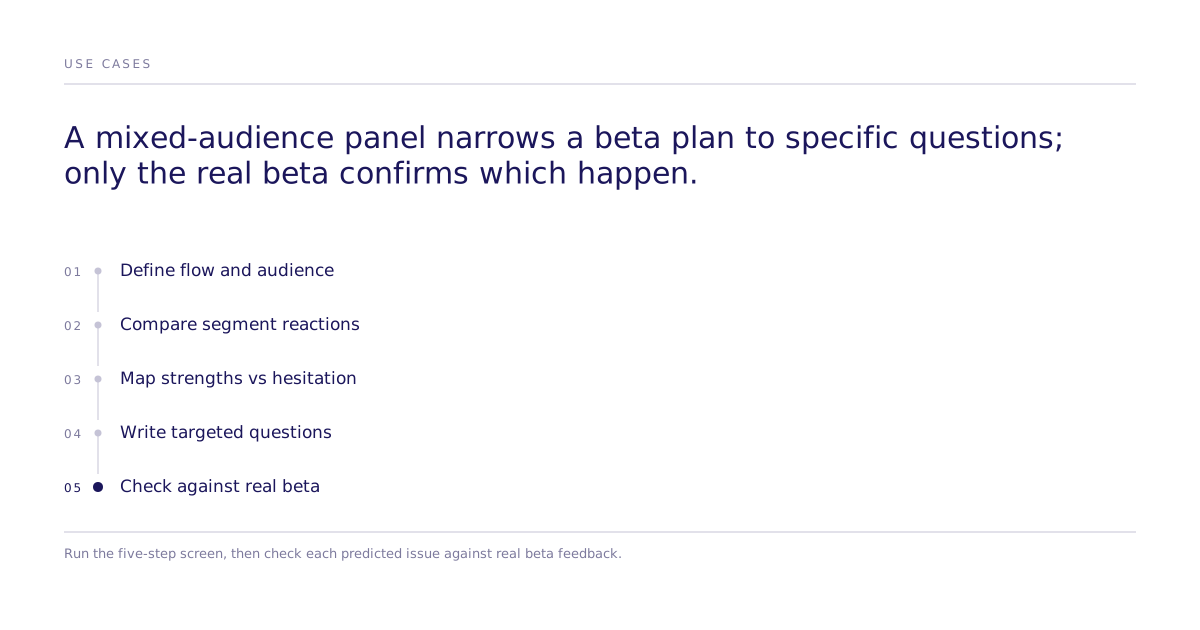
Frame the pre-beta study
What should you define when scoping the beta?
List each feature and flow, what the person sees, what action is expected, and the intended outcome. Describe the current experience, including known rough edges.
Define the launch audience
A hypothetical planning panel might use 10 to 15 audience representations. These are coverage prompts, not independent recruited users or a sample size that establishes precision:
- 2 to 3 enthusiasts;
- 4 to 5 pragmatists;
- 2 to 3 skeptics;
- 2 to 3 low-tech users.
What should you compare at each step?
At each step, ask what the person believes will happen next, whether the value is clear, and what would cause abandonment. The result is a set of hypotheses for the beta plan.
Build a reaction map
Separate shared strengths from segment-specific hesitation and repeated confusion.
Improve the beta instrument
Turn broad prompts into targeted questions. If confusion appears at step 3, ask real beta participants what they expected there and observe what they did.
What can an early screen reveal?
A comparison can expose unclear messages, missing context, or assumptions about how feature A connects to feature B. It can also flag multi-step flows for usability testing.
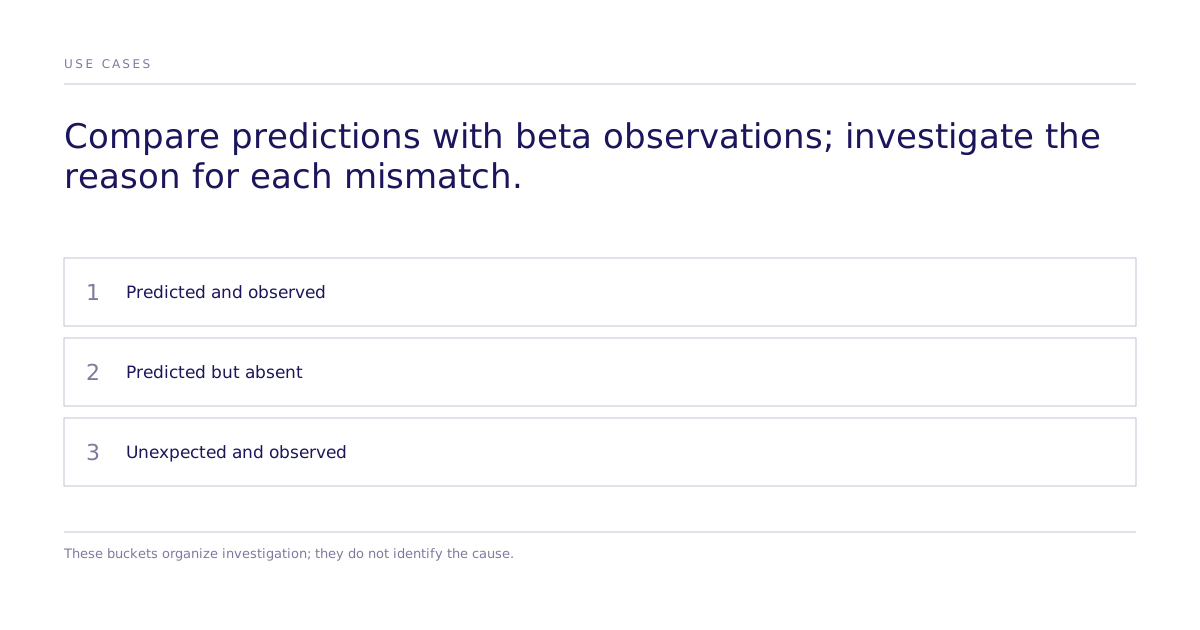
Calibrate against the real beta
Compare modeled concerns with observed feedback:
- predicted issues that appear become evidence about that specific setup;
- predicted issues that do not appear may reflect selection bias or model error;
- unpredicted issues may reflect missing context, audience mismatch, model error, task variation, or limited beta coverage; investigate the cause before changing the panel.
If a beta launches in the next quarter, an example planning exercise is to identify three to five issues for human testing in a single session. Use that list to improve the beta, then let actual behavior decide what needs to change.