AI Research for Product Teams: Testing Decisions Before You Build
Product teams choose what to build, name, price, and launch within short planning cycles. Research is useful when it can change one of those decisions. Identify the unanswered customer question before adding a test to the sprint.
The gap between fast and meaningful
Product research tools sit on a spectrum. On one end: analytics dashboards, session recordings, support ticket analysis. Fast and data-rich, but limited to describing history. On the other end: moderated usability studies and customer advisory boards. High-quality signal, but slow to schedule and coordinate.
In between sits most of what a product team decides day to day: what goes into the next sprint, how a feature gets framed, what a pricing tier includes. These calls get made in Slack threads and design reviews, with no realistic path to a full research cycle before the decision is due.
A controlled discrete-choice experiment closes part of that gap. Instead of asking a panel to describe a reaction, it puts a specific decision (this name against that name, this tier structure against that one) in front of respondents and measures which option changes their choice, with confidence intervals where the design supports them.
When does a causal test fit in the product cycle?
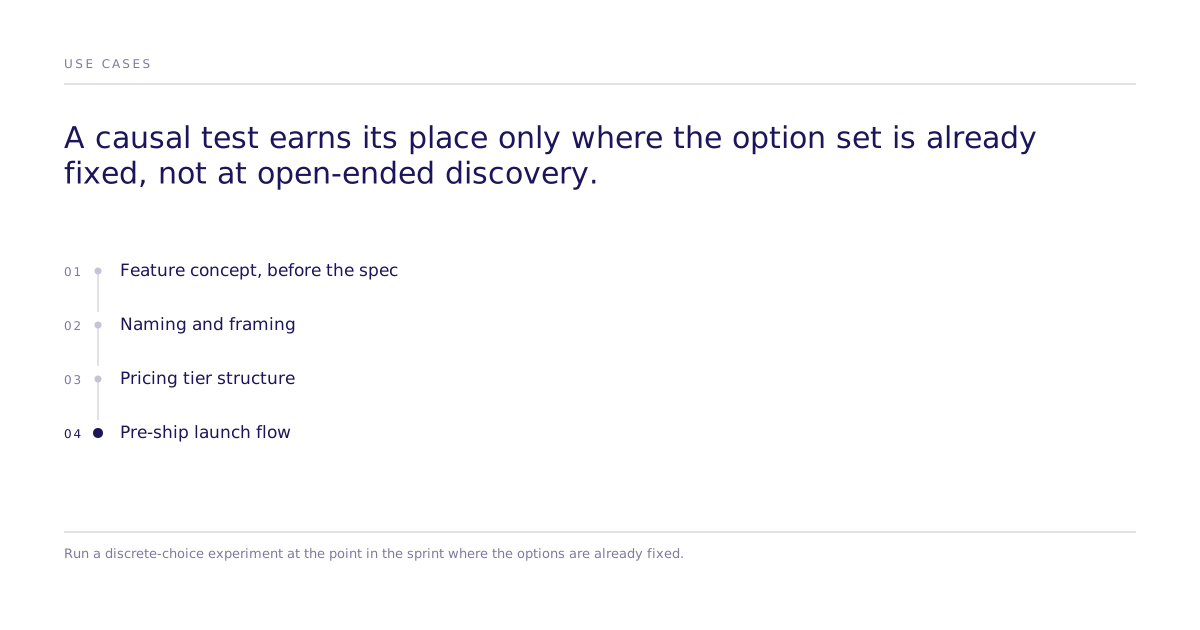
Not every product question needs an experiment. A causal test earns its place when a decision commits real engineering or design time and the team is choosing between distinct, nameable options rather than exploring an open-ended concept.
- Feature concept, before the spec. Two or three competing framings of the same feature, tested against each other, before anyone writes a spec.
- Naming and framing. A feature label or plan name where the wrong choice creates confusion that costs support tickets and churn later.
- Pricing tier structure. Which combination of features and price points changes which tier a buyer picks.
- Pre-ship launch flow. Compare comprehension and stated next steps for alternative instructions; measure actual activation with real users or a live assigned test. Nielsen Norman Group’s discussion of AI-generated users explains why real-user observation remains necessary.
A discrete-choice experiment can compare concrete options and vary one or several attributes according to its design. Specify the assignment and outcome before interpreting which changes affected choices.
What does a causal test replace, and what doesn't it replace?
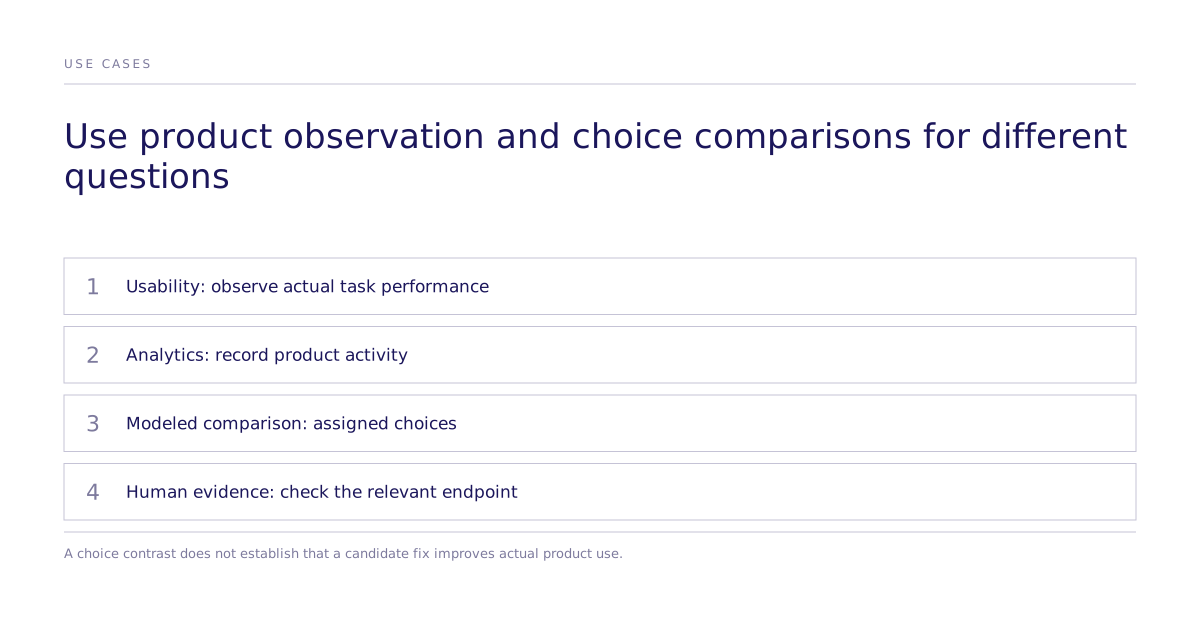
A simulated causal test estimates contrasts in modeled choices under the assigned design. It complements direct usability observation, interviews, and analytics. Observing friction and estimating a choice contrast answer different questions; neither alone establishes that a candidate fix improves actual use.
From simulation to real people, without changing the question
For segment comparisons, confirm how the audience is defined and calibrated and whether each segment has enough relevant evidence. Audience-model size alone does not establish precision for power users, casual users, or a small enterprise buying role.
For a consequential naming or pricing decision, plan aligned human evidence for the same alternatives and endpoint. Agree recruitment, delivery, and instrument changes, and check whether the human result supports, contradicts, or leaves the model unresolved.
What does skipping the check cost?
The failure mode this replaces is familiar: a team builds, names, or prices a feature on internal assumptions, ships it, and finds out only afterward that real customers see it differently. That shows up as engineering and design time spent on the wrong version of a feature, time a short causal test run before the spec was finalized could have flagged.
Where this fits, and where it doesn't
This approach earns its place in decisions with distinct, testable options and real cost attached to guessing wrong. It is a poor fit for open-ended discovery, figuring out what to build rather than choosing between options already on the table.
Next step
Teams that want to see this against a live decision can review how a study runs end to end or look at worked comparisons from other product and marketing teams. For a specific upcoming naming, pricing, or launch decision, book time to scope a test against it, or start from the research methodology if the causal-inference details matter first.