AI Simulation vs. Causal Experiments: Structuring Research for a Consulting Engagement
A consulting engagement can use simulation to prepare hypotheses and stakeholder questions. A client-facing recommendation needs evidence appropriate to its claim: documented market facts, actual stakeholder constraints, or a credible causal design when the claim concerns an intervention effect. A role-played reaction alone does not substantiate those claims.
A directional simulation presented as a causal finding can mislead the client. Label the generated task, source evidence, uncertainty, and unresolved questions before using it in a recommendation.
Where consulting research time actually goes
A consulting engagement can include stakeholder and expert interviews, primary research, workshop preparation, and synthesis. Scope each around the client decision. Simulated role-play may improve preparation, while facts about the client’s constraints require direct sources.
Where directional simulation earns its speed
Three points in a consulting engagement are well suited to a fast, directional AI read rather than a full primary study.
Pre-workshop stakeholder prep
Simulated stakeholder types can help anticipate questions before a workshop, such as objections from finance, technology, or operations. Treat them as hypotheses for actual stakeholders to correct. Do not reduce interview coverage on the assumption that a stand-in represents a specific person.
What are early market-reaction hypotheses?
When a client asks how target customers will react to a market entry move or a pricing change and wants an answer fast, a directional simulation across modeled buyer segments (the satisfied incumbent, the actively-shopping switcher, the price-sensitive buyer, the early adopter) gives the team a structured first read, including which segments look more or less receptive. It is a hypothesis-generation tool, not a market-sizing study.
Pre-presentation stress testing
Before recommendations reach the client's leadership, teams traditionally rehearse internally, with partners playing devil's advocate. Running the deck past simulated stand-ins for the actual decision-makers in the room, built on real stakeholder characteristics rather than a colleague's guess at what the CFO would say, surfaces weak points in the argument before they surface in the boardroom.
Choose evidence for the actual recommendation
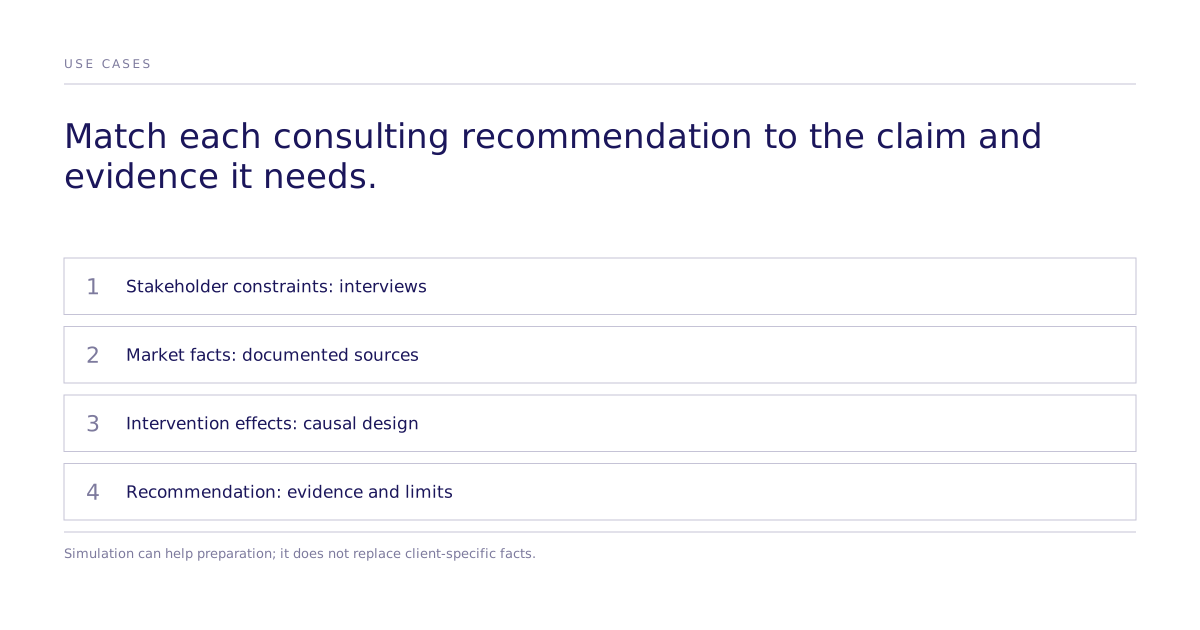
Interviews can document constraints; secondary sources can establish market facts; a credible experiment or causal design can evaluate an intervention. For a simulated choice comparison, specify assignment, endpoint, uncertainty, and fidelity limits. Plan an aligned human study when the decision needs evidence beyond the configured model. Fairchild and Howell’s guidance on discrete-choice experiments discusses choice-task design and analysis; it does not establish this client’s facts or validate a generated audience.
How simulation and controlled experiments fit together
| Consulting activity | Directional simulation’s role | Evidence still needed from people, records, or a suitable design |
|---|---|---|
| Stakeholder mapping | Prepares interview questions and plausible objections | Actual stakeholder coverage and constraints; simulation alone does not justify fewer interviews |
| Market sizing | Tests hypotheses before commissioning primary research | The commissioned primary research itself |
| Customer reaction testing | Proposes segment hypotheses under a configured setup | Relevant human responses; a causal design when claiming an intervention effect |
| Strategy workshop prep | Anticipates dynamics and objections ahead of time | Facilitation and the workshop's own synthesis |
| Final presentation | Stress-tests the argument against simulated decision-makers | The evidence base the recommendation is actually defended on |
Practical considerations
Stakeholder simulations need grounded context. Organizational role, authority, and known constraints matter. Use approved public material and project evidence, label inferred positions, and verify them with the people responsible for the decision.
Treat the shift from simulation to experiment as a pilot, not a wholesale swap. Run the directional read in parallel with the traditional method on one project, compare the two, and only fold simulation into standard methodology once it's clear where it usefully narrows scope rather than replacing judgment.
Preserve the decision question while adapting the human study. Align alternatives and endpoints, document recruitment and instrument changes, and agree delivery. The human result may support, contradict, or leave the generated finding inconclusive.
What are the limitations of a controlled experiment?
A controlled causal experiment does not replace stakeholder interviews, expert calls, workshop facilitation, or a consultant's own synthesis and narrative judgment; those remain human work. It also does not run as an open-ended conversation with a persona.
Inspect the aggregate replication evidence and limits, applied case examples, and research approach. Scope the actual engagement with its client question and required evidence.