Test the Customer Claims in Your Investor Deck Before the Meeting
A founder preparing for an investor meeting needs evidence behind the customer claims in the deck. Access to investor feedback can help refine the presentation, but it does not establish market prevalence, price sensitivity, or demand for a feature.
Choose the claim with the largest evidence gap before the meeting. State what is already observed, what is modeled, and which question a new study would answer.
The claim that actually gets challenged
A pitch deck may claim how many customers have a problem, what they will pay, which feature matters, or how the company compares with alternatives. Each claim needs evidence appropriate to its population and outcome, alongside the broader questions investors ask about the company.
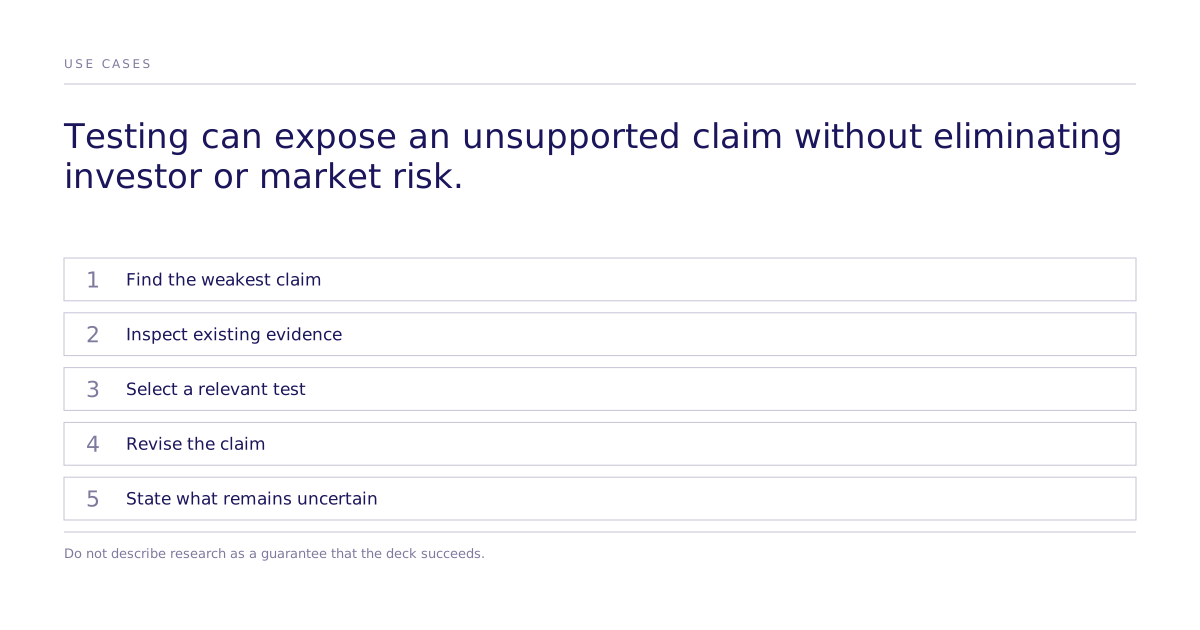
An unsupported customer claim can weaken a meeting and send the business toward a mistaken assumption. Testing can expose that assumption before the meeting; investor judgment and market risk remain unresolved.
How do you test a claim instead of the room?
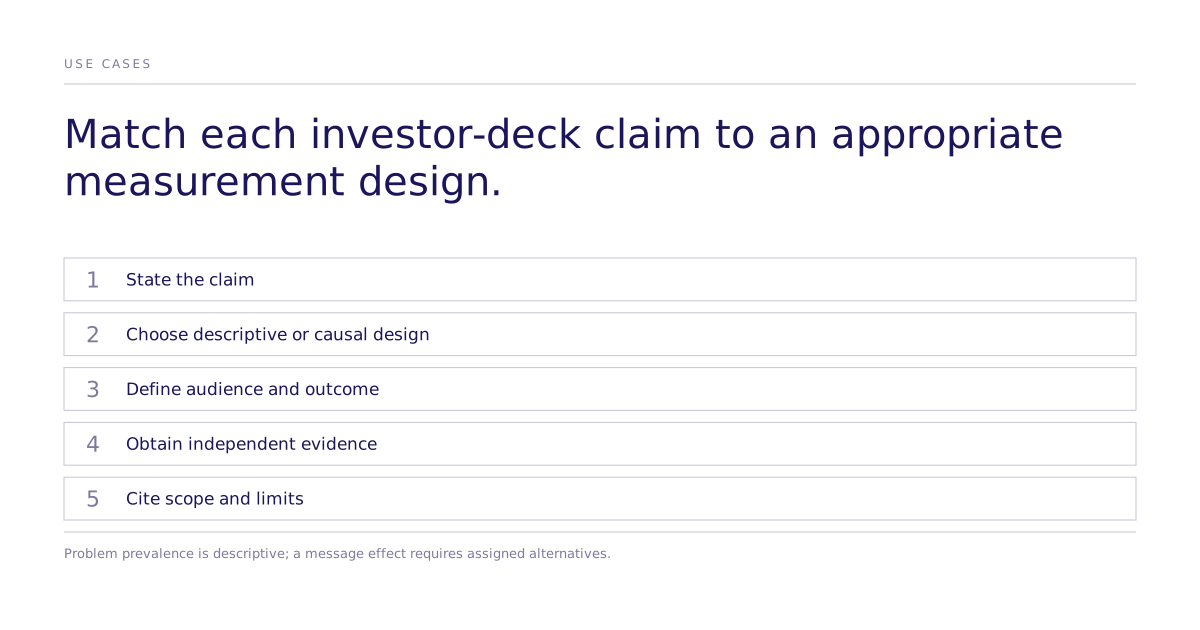
Choose a study that matches the deck claim. A randomized comparison can test how a message or price changes choices within a task. Market prevalence needs a representative measurement design, and willingness to pay needs appropriate price modeling and validation. Aggregate method evidence does not prove an individual claim in a founder’s deck.
An interval describes uncertainty under the study’s assumptions. It does not cover every way a modeled estimate could be wrong. Cite the population, measurement, validation, and remaining limits alongside the number.
How do you move from a simulated test to real-human validation?
Label a simulated estimate explicitly and inspect the claim-specific design, population, measurement, and calibration before using it in a deck. Scope independent human or observed-outcome evidence where needed, confirming recruitment and measurement arrangements. Preserve the question while adapting the study to real participants. Check important rejected claims as well as promising ones; agreement on a human task does not by itself establish actual purchases.
What doesn't this process replace?
Customer-claim testing does not predict how a specific investor will react, provide a warm introduction, or negotiate a term sheet. Affinity’s due-diligence guide includes market, product, financial, legal, and team questions. A study of one customer claim supplies evidence for part of that assessment.
A customer study also cannot establish why a particular fund passed. Record what the study supports and leave investor-specific judgments separate from measured customer evidence.
Which claim to test first
Before the next pitch, choose the claim with the most consequential evidence gap and define an appropriate measurement:
- Problem prevalence: estimate how many buyers have the problem with representative descriptive evidence; this is not an intervention effect.
- Price tolerance: modeled or stated price sensitivity within a specified task; consequential purchase evidence is needed before claiming what buyers actually pay.
- Feature priority: which capability participants choose when trading off the tested alternatives; label generated choices as modeled.
- Positioning: how the specified audience ranks the tested alternatives in the stated context; check transfer to the actual buying setting.
Match the study to the claim: representative descriptive measurement for prevalence, and assigned comparisons for specified intervention effects. Bring the estimate, design-appropriate uncertainty, validation evidence, and remaining limits into the room. Review the study workflow, aggregate method evidence, or discuss the claim and evidence gap.