How to Choose Among 10 AI Ad Creative Testing Approaches in 2026
Choosing among the ten AI ad creative testing approaches means matching the decision a team needs to make, whether high-volume screening, observed reaction, network-level read, or causal comparison, to the category built for that job. A performance marketing lead facing ten finished creative variants has one real decision: which two or three earn a media budget. Sending all ten straight to paid channels burns spend on the losers a pre-test would have caught. The category built around that problem has grown large enough that buyers now compare methods, not just vendors, per the IAB's State of Data 2026 report.
What a pre-flight test should cover
A creative test earns its keep when it ties a stimulus to a decision measure, not a preference score. Screen these before launch:
- The hook: whether the opening seconds of a video or the first line of copy earns attention
- Headline and call-to-action wording
- Image or thumbnail response
- Full video pacing and narrative arc
- Landing-page reaction after the click
- Whether the read changes across audience segments
Preference alone answers "which do people like." A decision-linked test answers "which action moves behavior for this segment," the question that should gate spend.
Ten approaches, sorted by the job they do
Vendors in this category specialize; none covers every job below. The roster shifts often, so evaluate by category first and confirm current scope directly with any vendor under consideration.
What is a decision-specific causal experiment?
Some platforms run controlled comparisons between named creative actions, such as one hook against another or one price frame against another, and report an effect with a confidence interval rather than a single score. Fits a team that already knows the decision it needs to make and wants to know which alternative caused the outcome change for a defined segment.
2. Broad population simulation
Other tools model a wide synthetic crowd to gauge how a campaign might land across a general consumer or media audience. Suits early-stage directional reads before a team narrows to specific creative alternatives.
3. Behavioral spread modeling
A third category focuses on how a reaction propagates through a network rather than an individual response in isolation. Matters when a campaign depends on sharing or word-of-mouth effects, not just first-exposure reaction.
4. Lightweight real-human panels
Some services route a stimulus to paid human respondents for first-click, preference, or short-exposure tests. Work well as a cross-check after a synthetic pass has narrowed the field, trading speed for an observed human reaction.
5. B2B decision-maker audiences
A narrower set of tools recruits or models specific professional roles, such as finance, IT, or procurement buyers, for creative aimed at business audiences rather than consumers.
What is qualitative UX-adjacent testing?
Another category runs open-ended simulated interviews against product pages, onboarding flows, or in-product creative, useful when a team wants reasoning behind a reaction rather than a single score.
7. Lower-cost simulated focus groups
Some entrants offer a lower-cost, lighter-weight substitute for a traditional focus group, aimed at teams that need a directional read without a full research budget. Confirm current plan pricing before procurement, since it moves often in this category.
8. Observed on-page behavior
Heatmap and session-recording tools do not run a pre-launch test at all. They record what real visitors did on a live landing page, closing the loop after a creative has already shipped rather than screening it beforehand.
9. Regulated-industry workflows
A smaller set of vendors build around the audit trail that claims-heavy industries need, such as finance, insurance, healthcare, or automotive, where every tested claim has to be traceable for compliance review.
10. Product-launch response
The last category is purpose-built for gauging reaction to a new product announcement or launch creative rather than ongoing ad rotation, closer to a concept test than a media pre-flight.
One published operating sequence
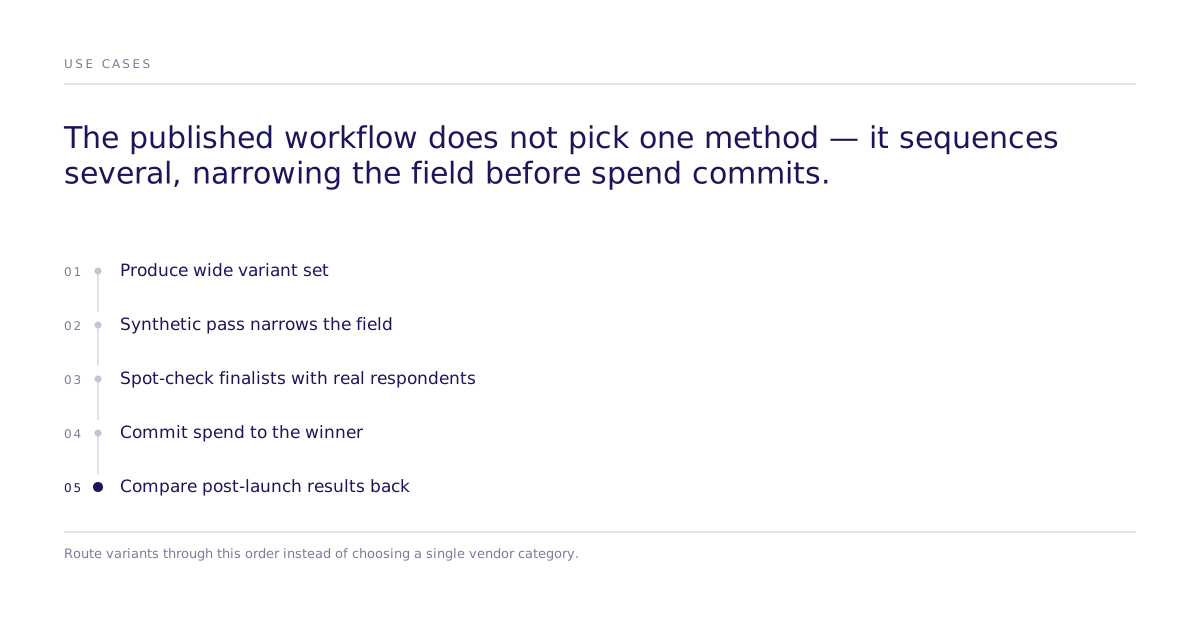
One publicly described workflow sequences these categories rather than picking one: produce a wide set of variants, run a synthetic pass to cut the field to a handful of finalists, spot-check the strongest two or three with real respondents, then commit paid spend only to the winner of that narrowed set. Post-launch performance is compared against the pre-launch read to calibrate the next round. Treat this as one documented sequence, not a benchmark any specific vendor guarantees.
How do you match testing evidence to the decision?
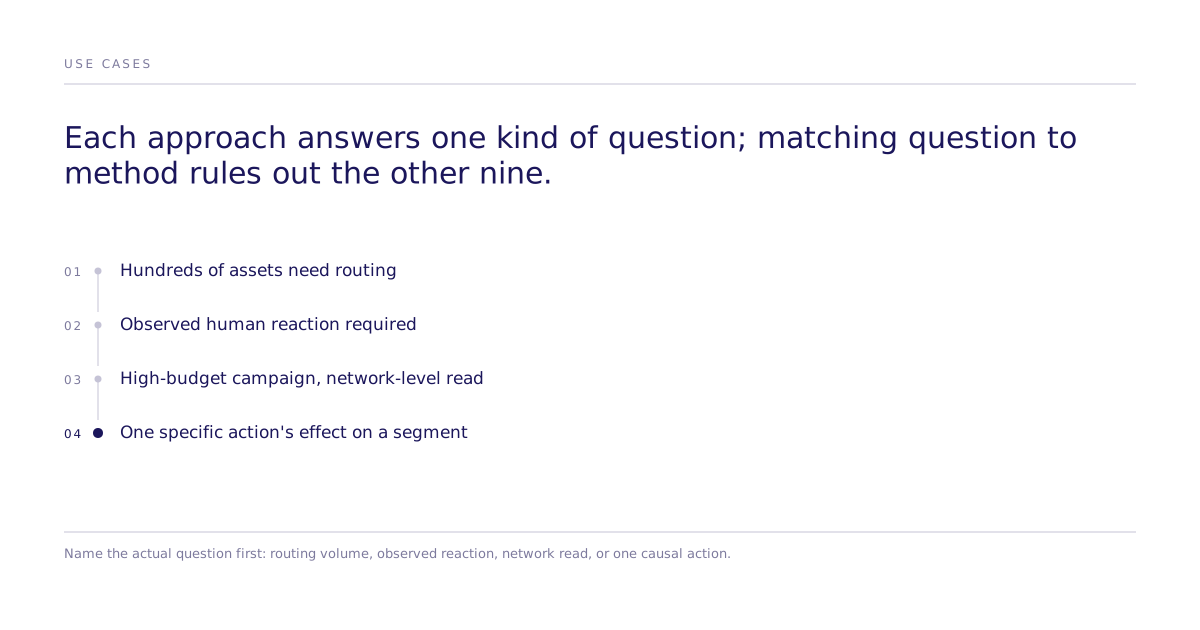
Pick a scoring tool when hundreds of assets need routing through triage before spend commits. Pick real-human testing when an observed reaction is a requirement, not a nice-to-have. Pick a population simulator when a high-budget campaign needs a network-level read before commitment.
Pick a causal experiment when the question is which specific product, price, message, or GTM action changes an outcome for a defined segment, and the team needs to name its assumptions and uncertainty rather than trust a single score. Subconscious runs this kind of study as a controlled comparison among creative alternatives, and the same causal question can move from a simulated read to real-human validation without a redesign when warranted before spend commits.
No category above removes the need for live evidence after launch. The strongest setup treats pre-flight testing as a filter and post-launch behavior as the check on whether the filter worked.