How to Pre-Test a Pricing Increase Announcement Before It Sends
A pricing notice affects trust as well as the bill. Companies can stage notices, review drafts, and discuss options before rollout. The wording cannot guarantee retention, so test comprehension and options while monitoring actual renewals and churn.
Why this decision is harder than it looks
A pricing notice changes what customers need to understand about their bill, terms, and available options. Review three sources of uncertainty before sending:
First, customers need the effective price, date, and explanation. Check whether the letter communicates each accurately and whether readers understand the practical change.
Second, tenure, contract terms, usage, and current plan may change what readers need to know. Loyalty or suspicion are hypotheses to investigate, not reactions that follow automatically from being an early customer or recent signup.
Third, customers may consider alternatives. Test comprehension of the available options and examine relevant switching evidence without assuming the letter alone determines retention.
A pre-send review can investigate these questions. It cannot observe the later renewal or churn response, and its timing depends on the actual study and notice obligations.
The decision this article is about
The drafting decision concerns the rationale, tone, price details, and real options offered. Compare complete, truthful alternatives across relevant customer groups. Distinguish generated responses, human comprehension, stated intentions, and later observed behavior.
What does a pre-send pricing test measure?
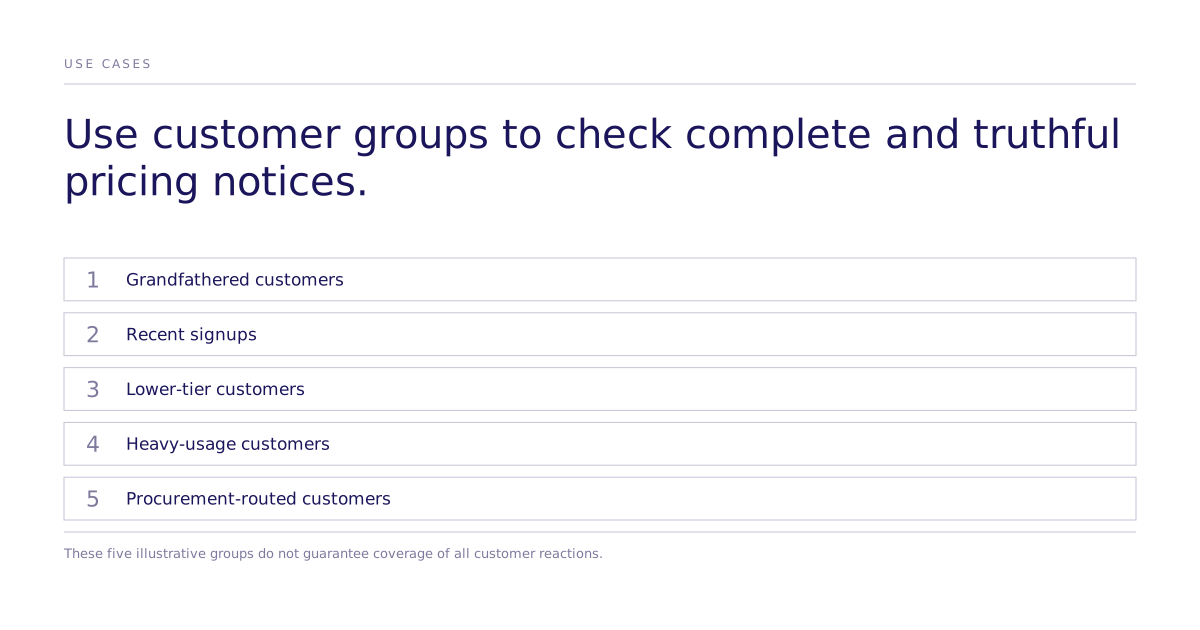
Use tenure, price band, usage, contract terms, and buying roles to define the review groups. The five groups below are an illustrative starting point; measure whether important customers are missing.
| Illustrative segment | Question to check | Drafting risk to inspect |
|---|---|---|
| Early, grandfathered customer (~4 years in) | Do they understand the terms that apply to their account? | Applicable grandfathering terms are difficult to find |
| Recent signup (last ~60 days) | Do they understand when and how the new terms apply? | The notice conflicts with earlier communications or contract terms |
| Lower-tier customer | Can they identify the relevant plan options and prices? | A genuine lower-cost option is difficult to find |
| Higher-tier, heavy-usage customer | Is the explanation specific and accurate for their usage? | The notice leaves the changed bill or scope unclear |
| Procurement-routed customer | Can they communicate the change through their approval process? | The notice omits effective terms or information their reviewers need |
These groups can organize a review of the draft. Check what each reader understands and which account conditions are missing rather than assuming five labels exhaust the customer base.
Which drafting hypotheses should be checked?
Potential drafting problems to check, rather than findings from a documented study:
- The rationale is generic. Check whether a specific, truthful explanation improves comprehension and perceived fairness. Do not invent a justification solely to make a price change sound better.
- Grandfathering is difficult to find. Readers may miss buried terms. Test whether they correctly identify which price and effective date apply to their account.
- The changed scope is unclear. Check whether the notice explains what the new price includes and whether any promised changes are supported.
- Available options are difficult to find. Check whether readers understand genuine plan or downgrade options. Improved visibility may affect stated choice; any retention effect needs independently measured customer behavior.
- Timing and context. Check notice obligations, recipient time zones, and support availability. Do not assume a morning send universally reads as urgent or an afternoon send as considered.
Use actual drafts and relevant customer evidence before finalizing. Label simulated draft reactions separately and check whether important customer groups are missing.
A pre-send sequence, as a working example
One way to sequence this is to test one question at a time as the letter tightens:
- Two weeks out: the rationale check. As an illustrative review step, ask readers to explain the proposed rationale. Differences can suggest ambiguity or relevant account context. If using an excerpt without the price, also check the complete notice before sending.
- Ten days out: the reaction check. Show the letter with the price visible. Ask how it makes the reader feel about the company. This is where "they thought about me" separates from "they sent me a bill."
- One week out: the options check. Ask price-sensitive and procurement-routed customers which actual option they understand and would consider. Failure to choose can reflect confusion, unsuitable options, or task limits; investigate before treating it as a churn prediction.
- Four days out: the forwarding check. Ask the procurement-routed segment what their own approval chain would say if this were forwarded to them.
- Two days out: the headline check. Ask which line would get screenshotted if the letter leaked, and whether that line is fair on its own.
Where does this fit with real customer testing?
The staged questions above are exploratory draft checks. To estimate a framing effect, assign comparable participants to complete, truthful draft alternatives and prespecify comprehension or stated-retention endpoints. A simulated response needs independent validation and does not establish actual churn. Hernán and Robins’ causal-inference textbook provides methodological background; it does not validate a new pricing-notice study.
For evaluation, distinguish cancellations, downgrades, renewals, and usage before and after notice. A randomized or otherwise credible comparison is needed to attribute a change to wording rather than the price itself.
What this doesn't cover
Review contract terms, applicable notice requirements, and legal or compliance concerns separately from the draft test. A modeled reaction cannot guarantee retention, forecast churn without relevant validation, or establish that a proposed rationale is true. Use actual customer evidence and authorized business judgment when choosing which terms to offer.
Beyond the pricing letter
The same planning questions can inform terms-of-service updates, plan migrations, or retirement of a free tier. Adapt the groups, measurements, and review requirements to that change rather than reusing five segments automatically.
Before a price change, review the method, study design, and past applications. Scope a comparison around complete, truthful notice alternatives and the evidence needed for the actual customer base.