How to Test a Meta Title and Description Before You Publish
A search-results title and description is copy a marketing team almost never tests before it ships. The decision is which variant to publish for a given page, chosen by comparing candidates against a defined searcher audience before the page goes live, rather than by publishing a change and watching organic click-through rate move afterward.
Changing a title or description that is already indexed triggers a reindex and can reshuffle the page's ranking, which distorts the click signal for a stretch of time long enough that the team cannot cleanly attribute the shift to the copy change alone. A wrong choice underperforms, and re-measuring it means repeating the same disruption.
Why Is a Live Search-Results Test the Wrong Instrument?
Search engines do not offer a native way to run two title-and-description variants against the same query at the same time. Any change to the live tag rewrites what searchers see immediately, and the resulting rank movement contaminates the very click-through signal the team is trying to read. The team ends up comparing a post-change period to a pre-change baseline that the change itself has made noisy.
The search engine's own behavior compounds the problem: in one 2025 sample, Google changed the displayed title tag on 76% of results, rewriting it from the page owner's own source tag independent of any test the team ran (Search Engine Land). A live test result can reflect that rewrite behavior as much as it reflects the copy being tested.
What a pre-publish comparison should score
A title and description are read in context, not in isolation: alongside competing results, any AI-generated summary above the results, and other rich elements on the page. Four things matter most:
- Intent match. Does the copy match what the searcher is actually looking for, given how the query is phrased and what else appears on the results page?
- Click pull. How strongly does the variant pull the click relative to the other results next to it, and does it say something the neighbors don't?
- Trust signal. Does the source read as credible enough to click? Brand recognition, freshness cues, and tone all play a part.
- Risk of disappointment. If the searcher clicks, does the page deliver on what the copy promised? Copy that overpromises earns the click and loses the visitor, and that pattern of clicking through and immediately leaving works against the page's ranking over time.
A variant that wins on click pull but carries a high risk of disappointment is a trap: it can win the comparison and still be the wrong thing to ship.
A pre-publish workflow
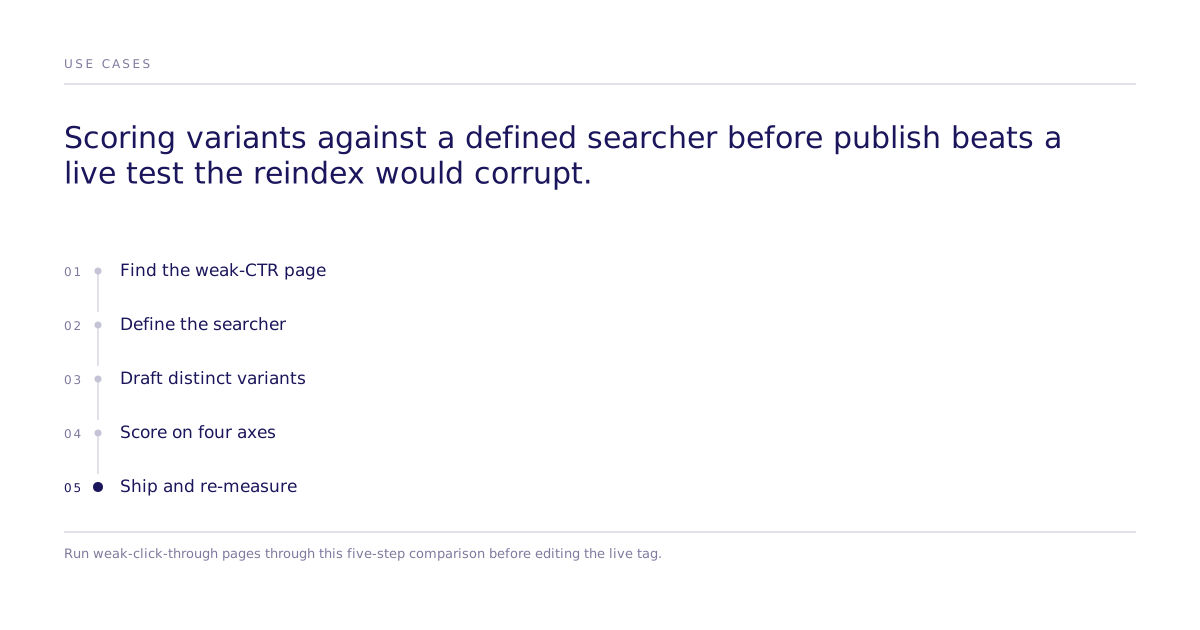
- Identify the page and its current position. Use whatever search-console data the team already has to find pages with strong impressions but weak click-through relative to their ranking position: the pages where copy, not ranking, is the likely bottleneck.
- Define the searcher. Who actually types this query, and in what frame of mind: early research, active comparison, or already decided? A query typed by someone comparing vendors reads differently than the same words typed by someone trying to understand a category.
- Draft several distinct variants, not minor rewordings of the same idea. Distinct angles (closest match to the query, the outcome the searcher wants, the specific thing this page offers that competitors don't, and a curiosity-driven framing) produce more useful spread than five versions of the same sentence.
- Compare the variants against the defined searcher, in the same competitive context they will actually appear in. Score each on intent match, click pull, trust, and risk of disappointment, with a stated reason attached to each score.
- Ship the variant that holds up on all four axes, not only the one with the single highest click-pull score. When two variants are close, the one with lower disappointment risk is the safer ship.
- Read the actual click-through change once the page has had time to resettle after the reindex, comparing it to the pre-change baseline for the same ranking position. If the comparison's pick underperforms in the wild, that is a signal to recalibrate the method, not a reason to stop testing before shipping.
Comparing the three ways teams choose meta copy
| Method | Signal quality | Disruption to the live page | Answers "which variant should I ship" before publishing |
|---|---|---|---|
| Ship whatever the CMS auto-generates from the page title | None: no comparison happens | None | No |
| Publish a change and watch click-through shift on the live listing | Contaminated by the reindex and rank reshuffle the change itself causes | High: every test is a live change | No, only after the fact, and noisily |
| Compare variants against a defined searcher audience before publishing | Controlled: the comparison happens before anything goes live | None | Yes |
What Does This Look Like With Subconscious?
This is a message-testing decision, the same category as testing which offer, positioning, or launch line to use before it ships. Subconscious runs a controlled comparison of title-and-description variants against a defined audience segment and reports which variant is more likely to change click behavior, along with the uncertainty in that estimate, not a search-engine monitoring or rank-tracking tool.
Subconscious does not crawl or observe live search-results pages, does not control or predict how a search engine indexes or rewrites a title tag, and does not measure actual post-publish click-through rate. It estimates relative preference among a defined audience before the page ships. What happens after publication still depends on the search engine's own ranking and rewrite behavior, the searcher's real intent at the moment of the query, and other factors a pre-publish comparison cannot see.
When a page is high-stakes enough to warrant it, a team can also move the top variants from a simulated comparison to a study with recruited, real human participants without changing the underlying question being asked: which variant earns the click. See how this fits into a broader testing workflow or look at comparable studies before deciding whether to run one on your own copy.
Pre-publish comparison does not replace watching the actual click-through number once a page has settled after a change. It replaces guessing which variant to ship in the first place, and it replaces treating the live results page as the only place to find out.