Interrogating a Simulated Persona vs. Testing a Causal Action
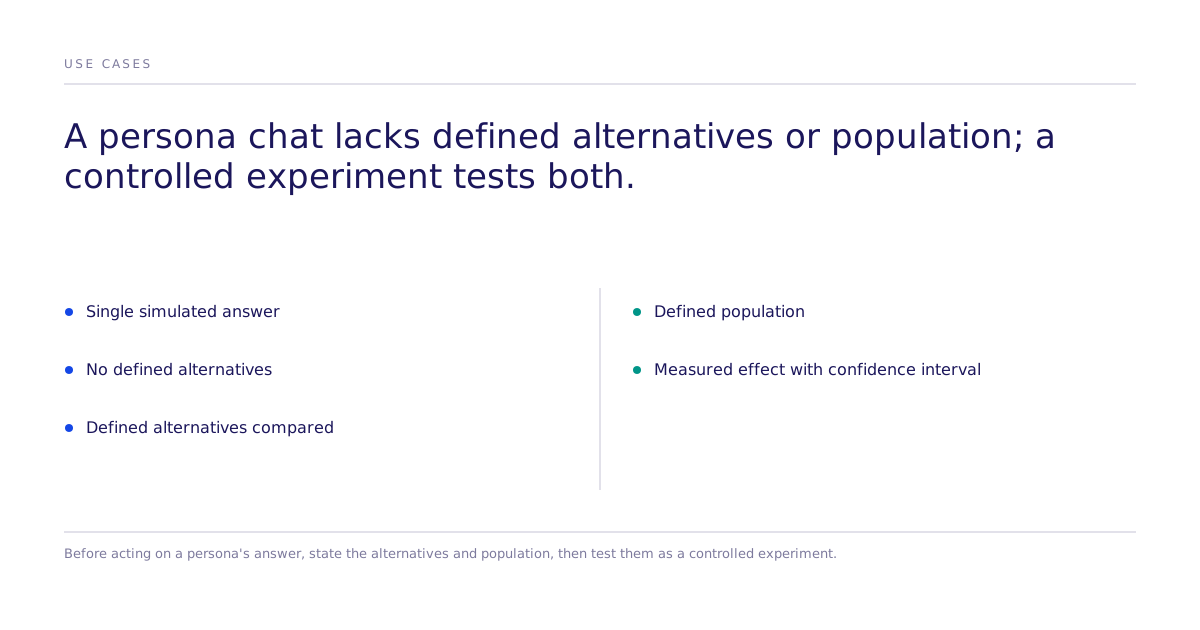
Interrogating a simulated persona means asking one simulated character its opinion, while testing a causal action means running a controlled experiment that compares defined alternatives across a defined population and measures which one changes behavior. Sales enablement, account management, and product teams reach for an interrogatable AI persona: a simulated stakeholder you can question before a meeting, or a simulated customer type you can run a mock advisory session with. That conversation feels informative, but it is one simulated character answering whatever it is asked; it is not a controlled test of what changes a real buyer's behavior.
The decision to make before relying on that conversation: is the answer evidence for a specific commercial choice, such as a pitch angle, an ICP definition, or a segment's likely objection, or does that choice need a controlled experiment that compares defined alternatives across a defined population?
What a persona conversation gives you, and what it does not
A simulated persona is built to hold a consistent point of view across a chat: it can be asked what would make it buy faster, what a competitor does better, or how it would react to a pitch. The conversation is fluent and can surface a plausible-sounding objection.
What it does not give you is a comparison. Nothing in an open-ended conversation defines two or more alternatives and measures which one changes the simulated party's stated position more; the output is shaped by whatever was asked, not by a controlled design. Marketing-research writing on this category makes the same point: these tools extend the A/B test, not replace it, because a single simulated conversation has no built-in comparison (GreenBook, on why most executives can't define this category, 2026).
Why does the difference matter for the decision?
Treating a single simulated conversation as decision-grade evidence carries a specific cost: a fluent objection or preference with no defined alternative and no defined population behind it can send a team into a high-stakes meeting on an assumption, or lock in an ICP definition, that was never tested. The gap surfaces only after the deal or launch fails.
| Approach | What it produces | What it tests | Where it fails |
|---|---|---|---|
| Open-ended persona interrogation | A single simulated character's fluent answer to whatever is asked | Nothing defined; the output follows the question | No comparison, no population, no measured effect |
| Structured persona description | A static summary of a customer type | Alignment on who the buyer is | Tells you what to assume, not what changes behavior |
| Controlled discrete-choice experiment | A measured causal effect with a confidence interval | Defined alternatives (message, offer, ICP criteria) across a defined population | Requires the team to state the alternatives up front |
How does Subconscious approach the same buyer questions?
Subconscious runs a controlled discrete-choice experiment: it compares defined message, offer, or ICP-criteria alternatives across a precisely defined population and returns a measured causal effect with a confidence interval.
That reframes the use cases sales and account teams reach for a persona chat to solve:
- Sales-meeting prep. Instead of asking a simulated stakeholder what it thinks of a pitch, define the competing pitch angles and test which one moves the buyer segment's stated preference.
- ICP definition. Instead of treating a persona's self-description as the ICP, define the candidate criteria as alternatives and test which set of criteria predicts the behavior that matters.
- Customer advisory input. Instead of a mock advisory session with simulated customer types, define the roadmap alternatives and test which one the defined population responds to.
The Subconscious research program explains how these experiments are structured and validated, and the how-we-work page walks through the method.
What does this not replace?
A controlled causal experiment does not replace live discovery calls, account relationships, sales judgment built from real conversations, or role-play training with real people. When a decision warrants it, a team can move the same causal question from a simulated experiment to real-human validation without changing what is being tested.
Keep the terms distinct
Audience reach and participant recruitment are two different things. A structured, population-scale simulation is not the same as a recruited panel of real respondents, and neither one is the same as an open-ended chat with a single simulated persona.
Next step
If the team can name the alternatives, the population, and the behavior that matters, bring that decision to a Subconscious working session. If the answer is still exploratory, the case studies page shows how other teams moved from an open question to a testable one.