Pre-Testing Event and Conference Messaging Before the Booth Ships
A trade show booth gets built, printed, and shipped weeks before a single attendee reads the tagline on it. By the time the team finds out whether the message made someone stop walking or blend into the noise, the budget is already spent.
The decision a CMO has to make before the banner prints
Trade show and conference budgets typically run five to six figures per event, committed to physical production (booth structure, signage, print) before any audience feedback exists (Vendelux, Event Marketing Statistics 2026). Exhibitors already treat this as a return-on-spend problem: industry analysis puts exhibitor ROI at roughly $20.98 returned per $1 spent on average, so the booth's messaging carries a large share of that return (TSNN, CEIR Report: How Do Exhibitors Spend Their Marketing Dollars?). A tagline that fails to register with someone glancing over mid-stride wastes that spend, however well the booth itself is built.
The decision, then, isn't whether the booth looks good. It's whether to compare a small set of candidate taglines, pitches, and framings against the audience the event will actually draw, or finalize creative on internal consensus and find out at the show.
Why don't standard pre-testing methods fit this channel?
Surveys take weeks a print deadline doesn't have. A focus group typically costs thousands of dollars and still only returns a handful of opinions. Live A/B testing needs an audience that doesn't exist until the show floor opens. Event messaging also has to do something most other channels don't: stop someone mid-walk and earn attention in a few seconds, closer to billboard copy than an email subject line, with a live conversation attached once it works.
Comparing messaging as a causal test, not a preference poll
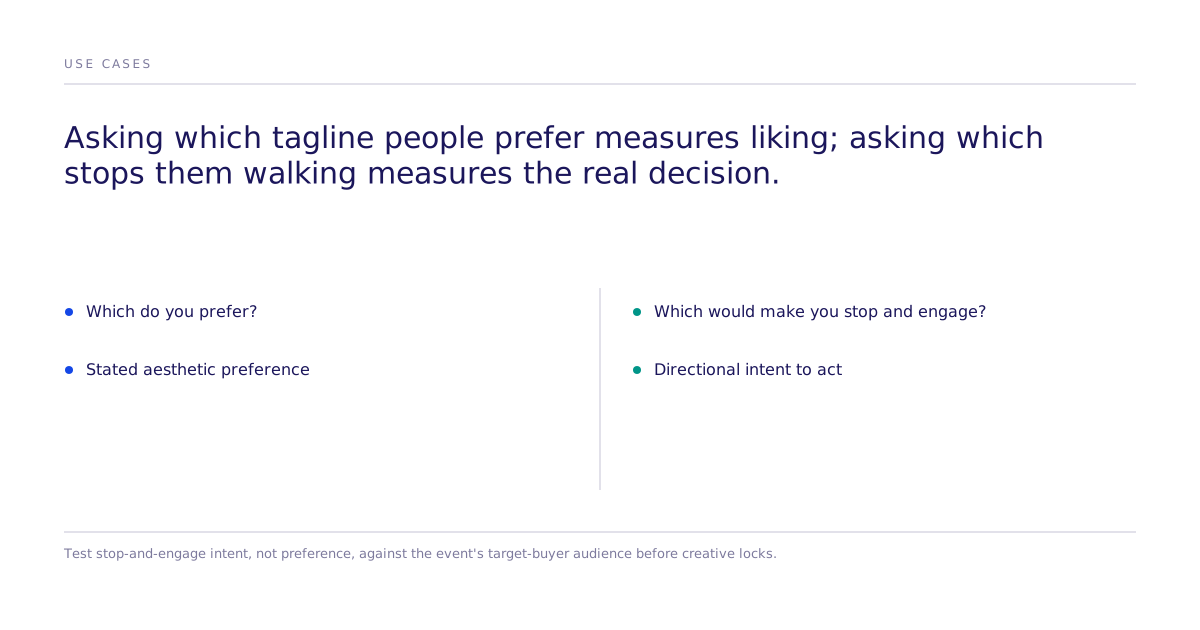
Subconscious can run a controlled comparison of a small set of messaging alternatives, such as tagline options, pitch framings, and opening hooks, against a defined target-buyer audience, testing which variant changes stated intent to engage rather than which one people say they like.
| Question style | What it measures | Why it's the weaker signal for events |
|---|---|---|
| "Which do you prefer?" | Stated aesthetic preference | Doesn't predict a stop-and-engage decision made in seconds |
| "Which would make you stop walking and engage?" | Directional intent to act | Closer to the actual floor-traffic decision being tested |
This is a straightforward use of causal experiments: run the comparison, get a directional read on which framing moves intent, then finalize creative with that evidence instead of a debate inside the room.
What does a messaging test catch that internal consensus won't?
A messaging comparison surfaces reactions a team's internal debate tends to miss, such as a tagline that reads as interchangeable with every other vendor on the floor, or a framing that lands specifically because it names a problem the audience is already trying to solve.
Where this extends beyond the booth tagline
The same comparison logic applies to other event-adjacent decisions: a speaking-session title and abstract, an executive dinner invitation angle, a webinar registration headline, or a post-event follow-up sequence, each a small set of alternatives, a defined audience, and a decision that has to lock before a deadline.
Where does this testing method run out?
A pre-event message comparison can't fully reproduce the physical booth environment, the competitive noise of dozens of other vendors on the floor, or true walk-up attention span, so it estimates which message performs better in a controlled comparison, not the exact real-world lift in foot traffic or on-site engagement. Treat the result as directional, and pair it with observation at the event itself. Subconscious's real-human validation path lets a team move from that simulated comparison to a recruited-participant read on the same question without changing what's being tested; see how we work for the mechanics.
Common ways this goes wrong
- Testing copy without visual context. A booth is a visual environment; words alone tell half the story, so describe the full setup being tested, not just the tagline.
- Asking about preference instead of action. "Which do you like" and "which would make you stop" produce different answers. Frame the comparison around the behavior that matters.
- Ignoring the competitive floor. A booth doesn't stand alone at a conference, and a comparison that ignores the surrounding noise overstates how any one message will actually perform.
A useful next step
Before creative locks for the next event, run the candidate taglines or pitch framings through a controlled comparison against the event's expected attendee profile, and treat the result as one input alongside internal review, not a replacement for watching what happens on the floor. Recent case studies show how that comparison-to-validation path has played out on other campaign decisions, and a demo is the fastest way to see it run against a specific event audience.