Running Client Workshops on Evidence Instead of Opinions
A client workshop can end with apparent agreement that stakeholders interpret differently afterward. Before the session, define the actual decision, accountable owner, existing evidence, and questions the group still needs to resolve.
Workshop participants’ agreement does not establish customer response. The Compass pretesting guide recommends feedback from the priority audience for communication materials. Use stakeholder discussion for context and decision-making, and inspect whether additional buyer evidence is needed.
Where workshops actually break
Possible workshop risks to investigate include:
- Deference to seniority. A senior participant’s confidence can discourage challenges. Ask for the evidence supporting each claim and invite relevant counterexamples.
- Unclear agreement. Record the decision, assumptions, responsibilities, and unresolved questions so stakeholders can check what was agreed.
- Missing customer evidence. Identify the gap and compare available research methods and timing before assuming the project must stall.
- Too many alternatives. Choose a narrowing method that fits the question. A vote measures the room’s preference, which may differ from buyer response.
These failures cost real money: rework, scope creep, and a client relationship that erodes every time a "final" decision gets re-litigated.
The decision this article is about
Identify which workshop questions concern buyer response and which require stakeholder judgment. A vote supplies the room’s preferences, while a study supplies evidence under its design. Choose each method for the inference the decision needs.
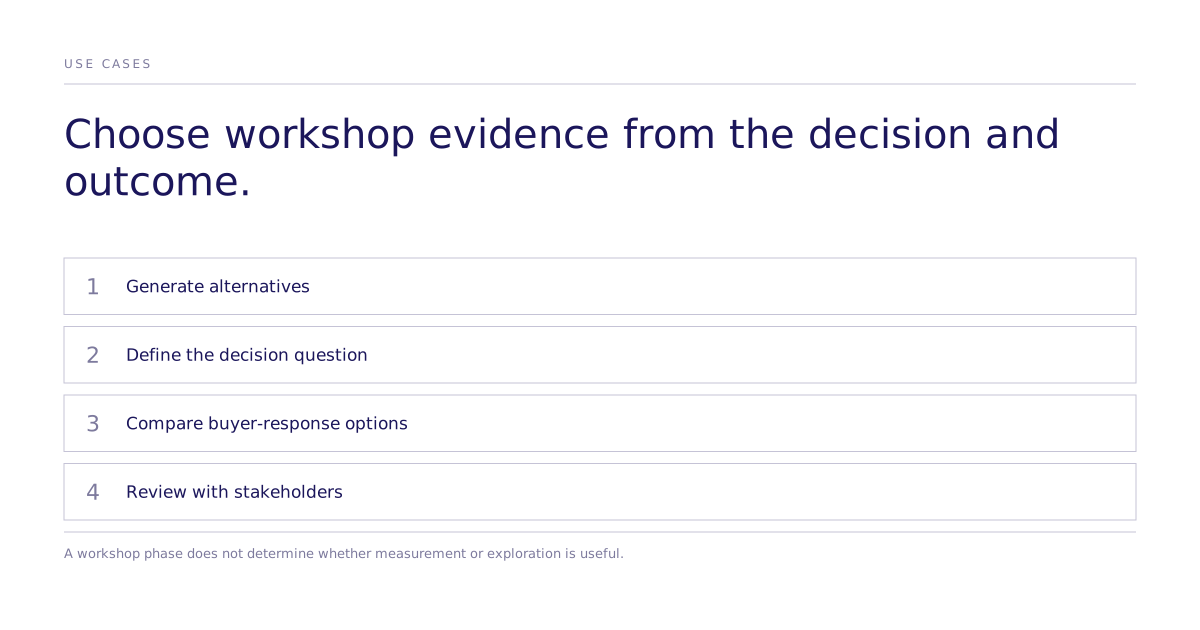
Subconscious can structure randomized comparisons of specified buyer-facing alternatives. Define the generated-response endpoint, estimator, and uncertainty, and check calibration. Scope independent human evidence separately, confirming participants and measurement.
A decision path for the room
Generate alternatives. Use stakeholder context, existing research, and exploratory responses to develop options. Do not mistake the first result considered for a complete comparison.
Compare relevant options. When an unresolved buyer-response question matters, define alternatives, assignment, endpoint, and the evidence needed. Review estimates and uncertainty instead of forcing a winner or assuming the highest score settles the workshop.
Challenge the proposed direction. Examine objections, possible misunderstandings, factual support, and relevant counterexamples. Generated objections remain hypotheses to check against actual evidence.
Resolve stakeholder decisions. Culture and alignment can involve qualitative or quantitative evidence, but measurement does not decide what the team values or who is accountable. Choose a method from the actual question and constraints.
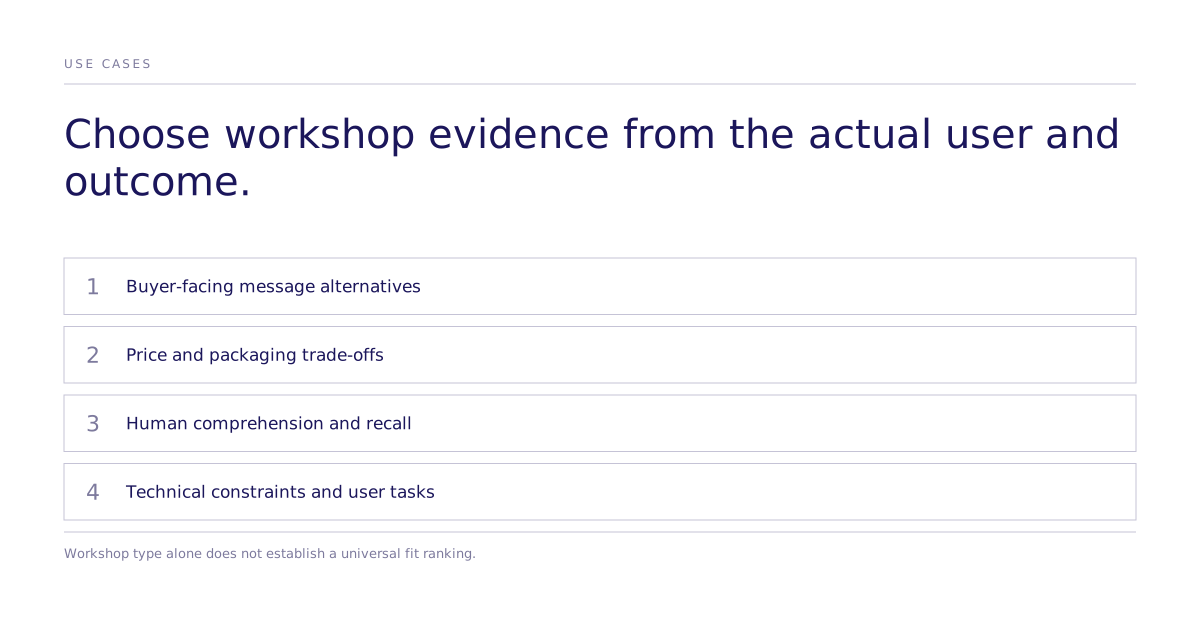
Compare buyer-facing positioning, creative, or pricing alternatives when the outcome is defined. Naming recall requires actual human exposure and measurement; generated statements about remembering do not measure memory. Technical decisions need evidence suited to their users and constraints.
What this changes about the workshop itself
Plan a study and a later review session when that sequence fits the decision. A documented assigned comparison supplies evidence under its specified protocol; it does not promise a live audience test inside the workshop or an immediate result.
Report the alternatives, assignment, endpoint, estimator, uncertainty, calibration, and limitations. Scope independent human evidence separately when needed, confirming recruitment and measurement. A generated-task estimate does not establish actual market performance.
What are the limits of this approach?
Match evidence to the workshop question. A modeled audience is distinct from actual workshop participants or a recruited customer sample. Explain who or what supplied each response and what inference the design supports.
What does this mean for the facilitator?
Before the workshop, identify claims about buyer response and the evidence gaps that could change the decision. Combine appropriate studies with stakeholder judgment. Review the method and applied comparisons within their actual scope.