Target Group Simulation: Testing Campaign Concepts Before Production Spend
A brand or marketing leader deciding whether to run a campaign concept through a structured pre-launch test, or go straight to production and media spend, is weighing testing first against finding out only after launch that the creative never landed with the intended audience.
The decision: test the concept, or commit the budget
Before a campaign goes into production, someone has to choose among headline, offer, and positioning variants. That choice often gets made on instinct, a stakeholder's preference, or a quick internal read, then the team commits media and production budget to whichever variant won the room. Untested creative that misses its audience is a recognized source of wasted ad spend, which is why pre-launch testing exists: to catch a weak concept before it reaches media (Segwise: Creative Effectiveness: How to Score Ads in 2026).
A controlled pretest can compare variants before the full production commitment (Swayable’s creative pretesting guide). A simulated screen still needs an evidence plan for finalists and costly missed alternatives.
Where do informal testing methods break down?
Two workflows commonly stand in for a real pre-launch test, and each has a distinct failure mode:
The internal opinion round. A handful of colleagues, or the loudest voice in the room, pick a favorite headline. This is fast, but it tells the team what people inside the building think, not how the target audience will respond.
A moderated focus group. A moderator guides participants through the concept and analyzes their reactions. Structured groups can compare variants, but group dynamics and a small purposive sample limit population estimates. Use the format for explanation and discovery rather than assuming it isolates a market-wide effect.
Internal opinions and group discussions can suggest alternatives. To estimate a comparison, specify how versions are assigned, which endpoint is measured, and how uncertainty and segment differences are assessed; a focus-group format alone neither supplies nor excludes that design.
A structured way to compare campaign variants
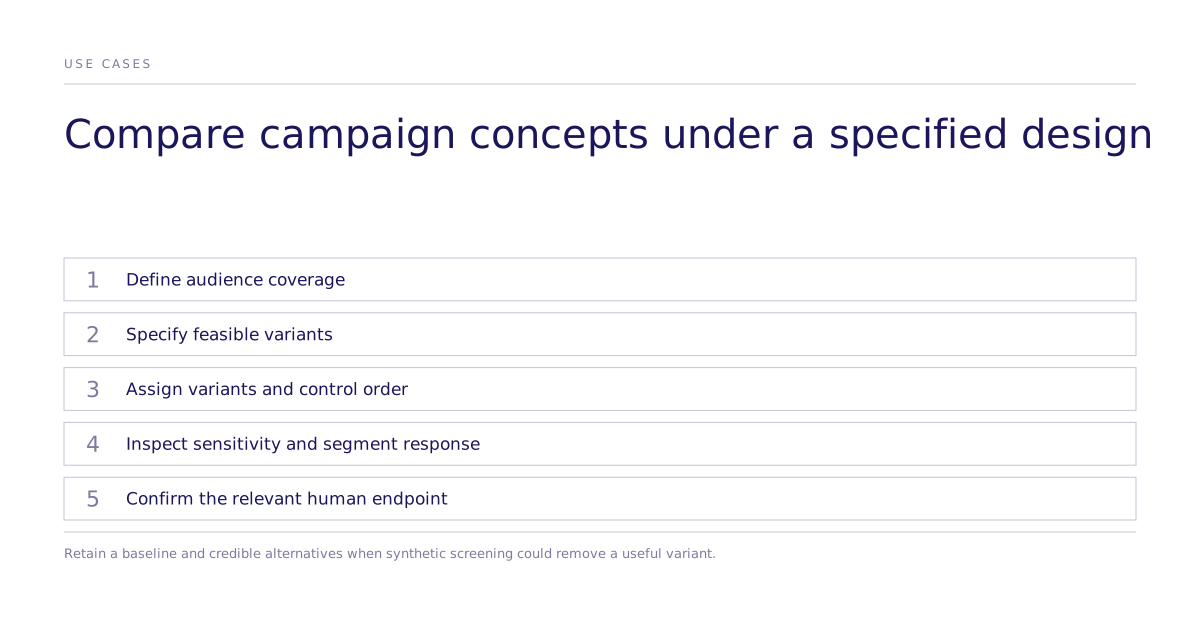
The underlying design is a controlled comparison, not a group discussion:
- Define the audience. Name the roles, contexts, and situations the campaign must reach. Select segments and study size around coverage and the precision needed for the comparison, rather than a fixed segment count.
- Define the variants. Specify feasible headline, offer, or positioning alternatives. Choose their number around the assignment design, precision, and cost of the later human check; simulation does not establish unlimited study capacity.
- Run the comparison. Assign variants under matched conditions, accounting for order if participants see several. Prespecify wording and seed sensitivity checks and inspect whether rankings and effect estimates change. Stable model output can still be systematically wrong; confirm consequential results with matched human evidence.
- Read where modeled segments diverge. Estimate differences with design-appropriate uncertainty. A single moderated focus group may suggest segment hypotheses, but its small purposive sample does not establish population-level contrasts.
- Choose alternatives for the next check. Retain a baseline and credible challengers when a false negative would be costly. Use relevant human or field evidence before committing production and media budget.
Where does Subconscious fit, and where does it stop?
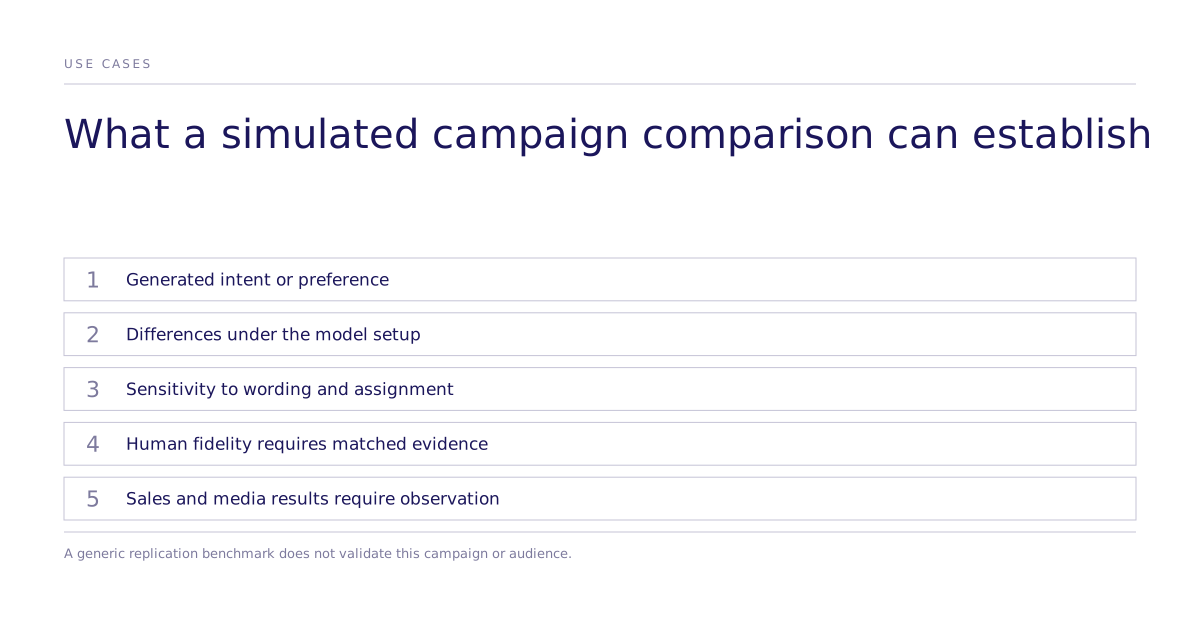
Subconscious compares variants in a simulation of the defined audience. Its replication research evaluates agreement of estimated choice-parameter rankings across studies; it does not validate this campaign or its sales outcome. A consequential campaign result needs a matched human or field check of the relevant endpoint.
Stating what a tool cannot do is what lets a buyer check its scope before they rely on it. Subconscious does not replace an executive's or creative director's judgment call on which concept fits the brand, and it does not replace real human research entirely. Its audience graph is a testable population built for comparing actions, not a recruited panel standing in for a market-research firm's field study. A simulated read is the first pass on a campaign decision that carries real budget risk, not the last word.
Limitations
A simulated comparison estimates which versions configured respondents select or favor under the tested task. It does not observe sales, media performance, or channel delivery. Use it to prioritize the next check while accounting for screening error and the cost of discarding a useful alternative.
Next step
Name the audience segments and variants under consideration, then scope the comparison. The evidence record reports aggregate agreement in estimated human and synthetic choice-parameter ranks; case studies provide applied examples. Neither validates this campaign by itself.